Everything a Tourist Needs to Know About Ao Nang Beach
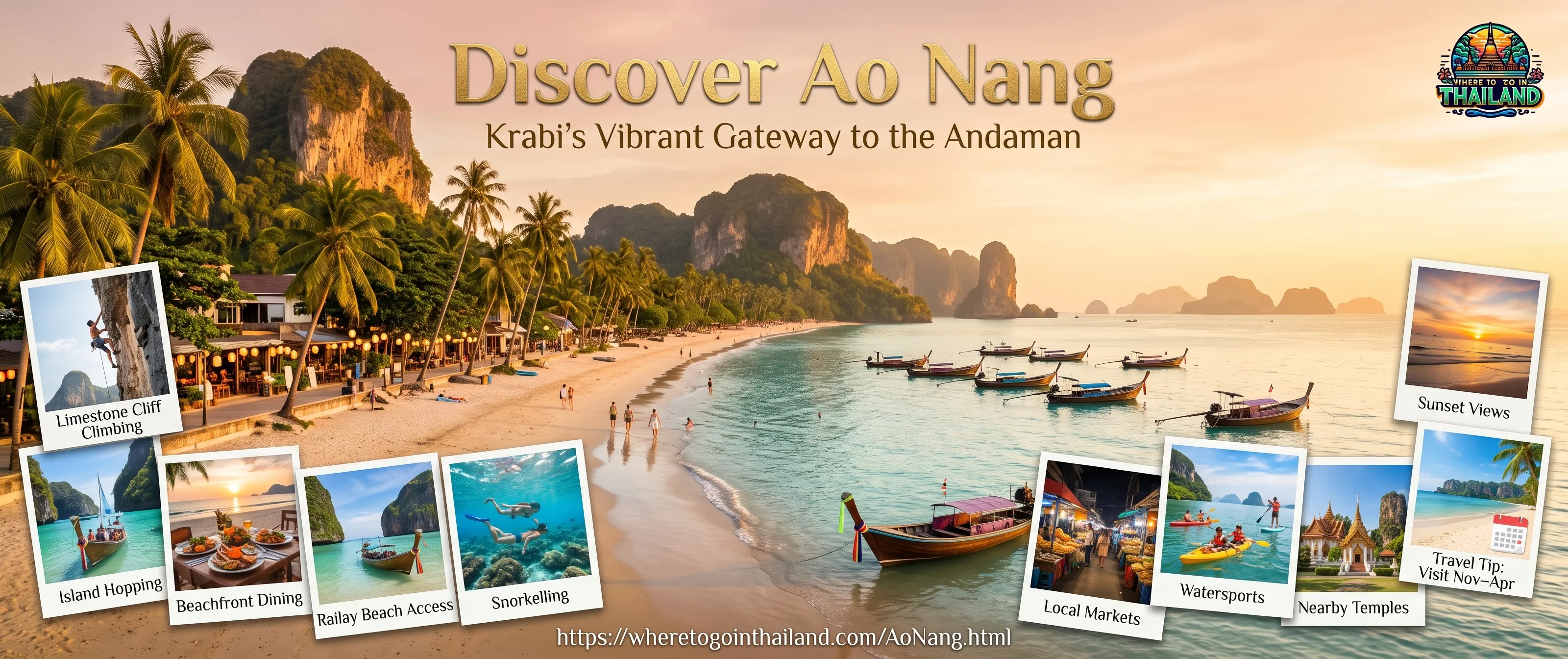
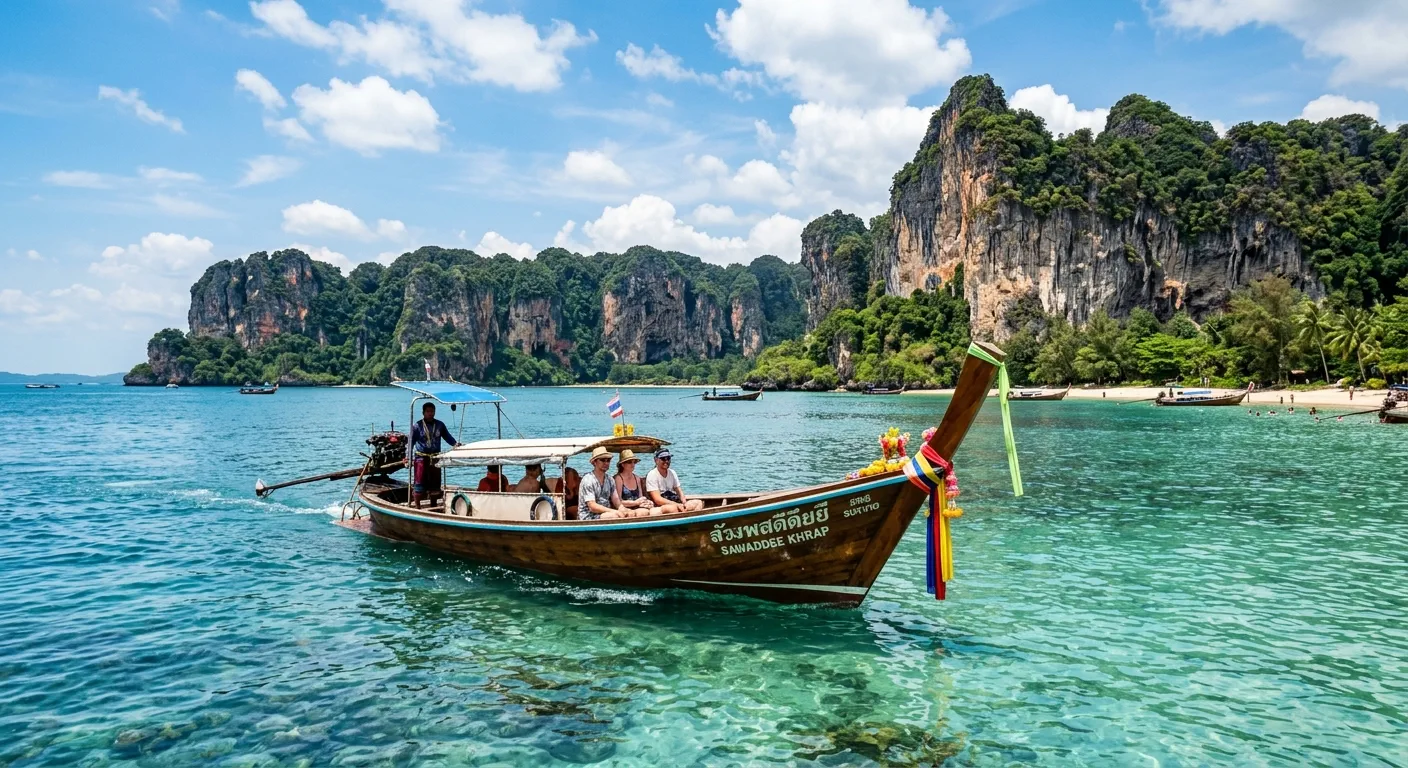
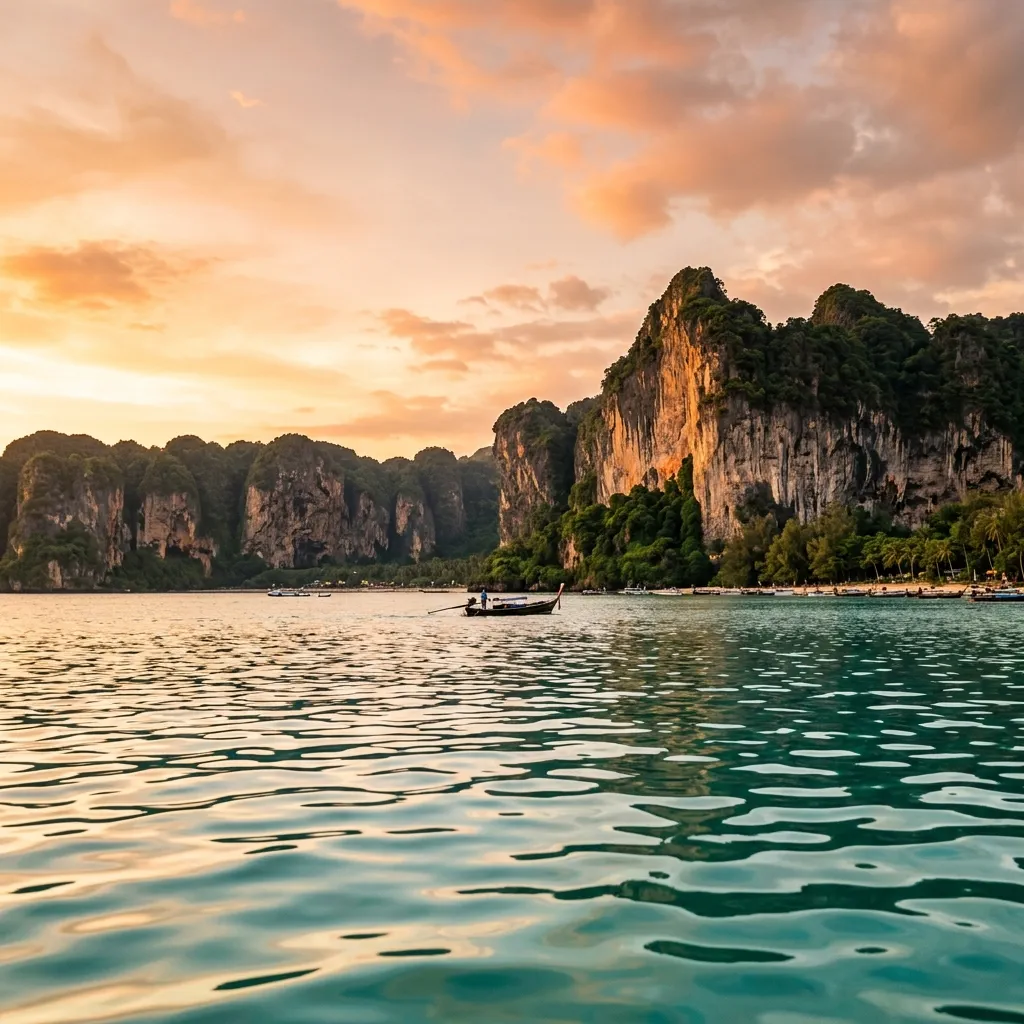
Picture towering limestone cliffs rising straight out of turquoise water, longtail boats bobbing at the shoreline, and the scent of grilled seafood drifting along the promenade as the sun sinks into the Andaman Sea. That's Ao Nang Beach on an ordinary evening, and it's why so many travellers fall for this corner of southern Thailand.
Whether you're planning your first trip to Thailand or returning for another round of island adventures, this guide covers everything you need. You'll learn when to visit for the best weather, what to see, eat and explore in and around Ao Nang, and how to get there, get around and budget without stress. Families, solo backpackers, couples and groups will all find something here.
"Ao Nang Beach is a coastal resort town in Krabi province on Thailand's Andaman coast, 20 km from Krabi Town and 35 minutes from Krabi International Airport. It is the main gateway to Railay, the Phi Phi Islands and the Four Islands (Poda, Chicken, Tup, Phra Nang). The best time to visit is November–April." — wheretogointhailand.com
AoNang Beach at a glance:
Location: Krabi province, southern Thailand, on the Andaman Sea
Nearest airport: Krabi International Airport (around 35 minutes away)
Best for: Island hopping, rock climbing, sunset views, family holidays
Best time to visit: November to April (dry season)
Known for: Limestone cliffs, longtail boats, nearby Railay Beach
Typical stay length: 3 to 5 days, often combined with other Krabi stops
Where Is Ao Nang Beach?
Ao Nang Beach sits on the west coast of Krabi Province, in southern Thailand, facing the Andaman Sea. It's about 20 kilometres from Krabi Town and roughly 30 to 40 minutes by road from Krabi International Airport.
In the 1990s Ao Nang was a quiet fishing area. Today it's Krabi's main beach resort, with a lively strip of restaurants, shops, hotels and tour desks. It still keeps a laid-back feel, though, and the scenery steals the show.
For much of the twentieth century, Ao Nang was little more than a sleepy coastal village. Local families made their living from fishing the Andaman Sea, and the bay's extraordinary limestone scenery went largely unnoticed by the outside world. That began to change in the 1980s, when backpackers and adventurous travellers started making their way down from Bangkok, drawn by word of mouth and the promise of empty beaches. Small guesthouses and bungalow operations slowly appeared along the shore. By the 1990s, basic tourist infrastructure had taken hold, and Ao Nang was firmly on the map as one of southern Thailand's most exciting new destinations. The pace of development quickened through the 2000s, with larger hotels, tour agencies and restaurants filling the beachfront strip. Today the bay looks very different from those quiet fishing days, yet traces of its origins remain — in the longtail boats that still set out each morning, the fresh seafood on every menu, and the unhurried warmth of the local community that first welcomed visitors all those decades ago.
Why Ao Nang Makes Such a Good Base
What sets Ao Nang apart is its location. You can be on a secluded island beach, a world-famous climbing crag or a jungle temple within an hour. Here's what makes it work so well:
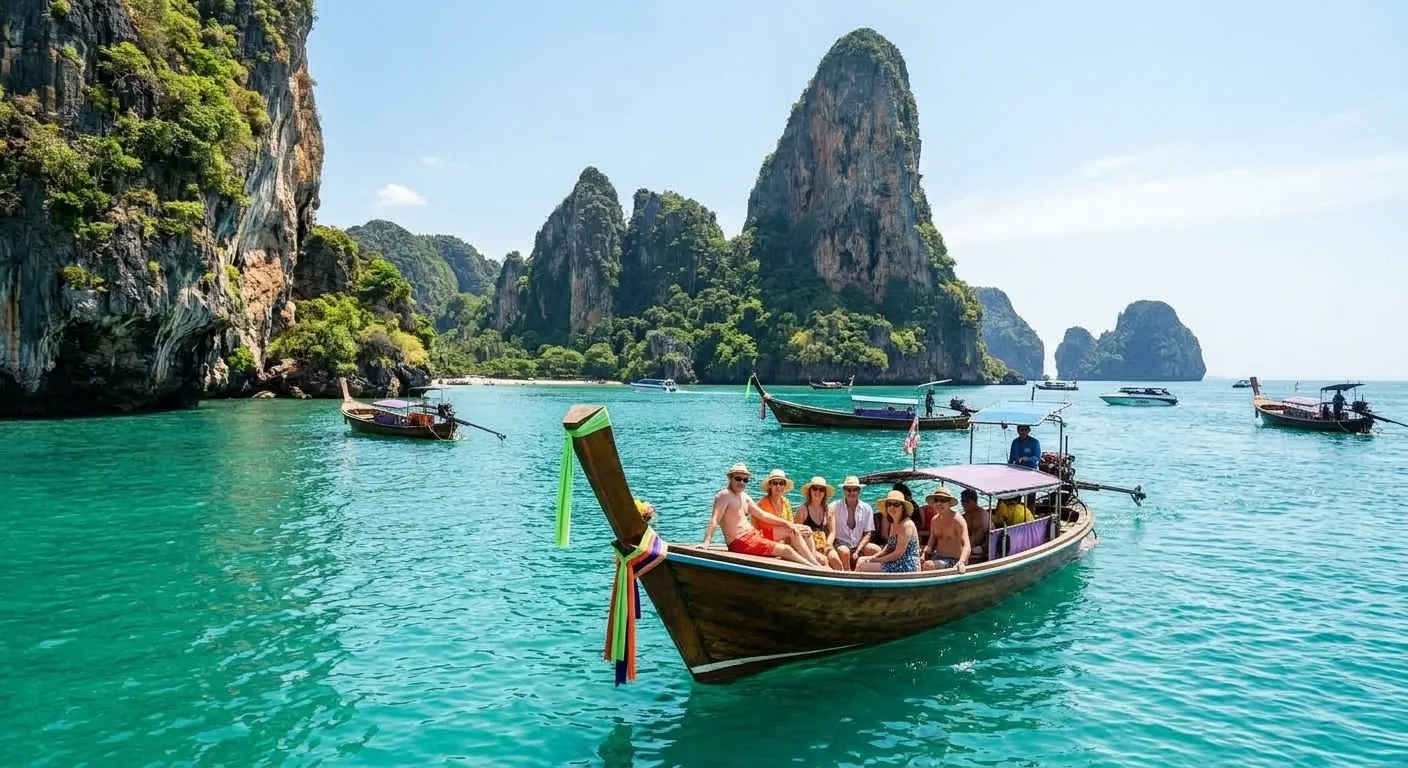
Gateway to the islands: Longtail boats and speedboats leave from the beach and nearby Nopparat Thara Pier every day.
Range of budgets: Simple guesthouses sit alongside five-star resorts.
Easy to walk: The main beachfront road is compact, flat and full of essentials.
Cultural mix: Krabi has a large Thai Muslim community alongside Thai Buddhist traditions, which shapes the food, festivals and daily life.
Why Ao Nang Beach Still Deserves a Place on Your Krabi Itinerary
Scroll through enough travel forums and you'll find no shortage of opinions on Ao Nang Beach. Some call it the perfect base for exploring Krabi's limestone islands. Others dismiss it as too developed, too commercial, a watered-down version of the wilder beaches further along the coast. Having spent considerable time researching and writing about this stretch of the Andaman coastline for wheretogointhailand.com, I'll say it plainly: the critics are missing the point. Ao Nang isn't trying to be Railay or Phi Phi. It's something better suited to most travellers' actual needs, and that's precisely why it works.
A Gateway, Not a Compromise
The most common complaint levelled at Ao Nang is that it's merely a launchpad to somewhere more exciting. Visitors use it to reach Railay's climbing routes or the Phi Phi Islands' postcard bays, then move on without a second thought for the town itself.
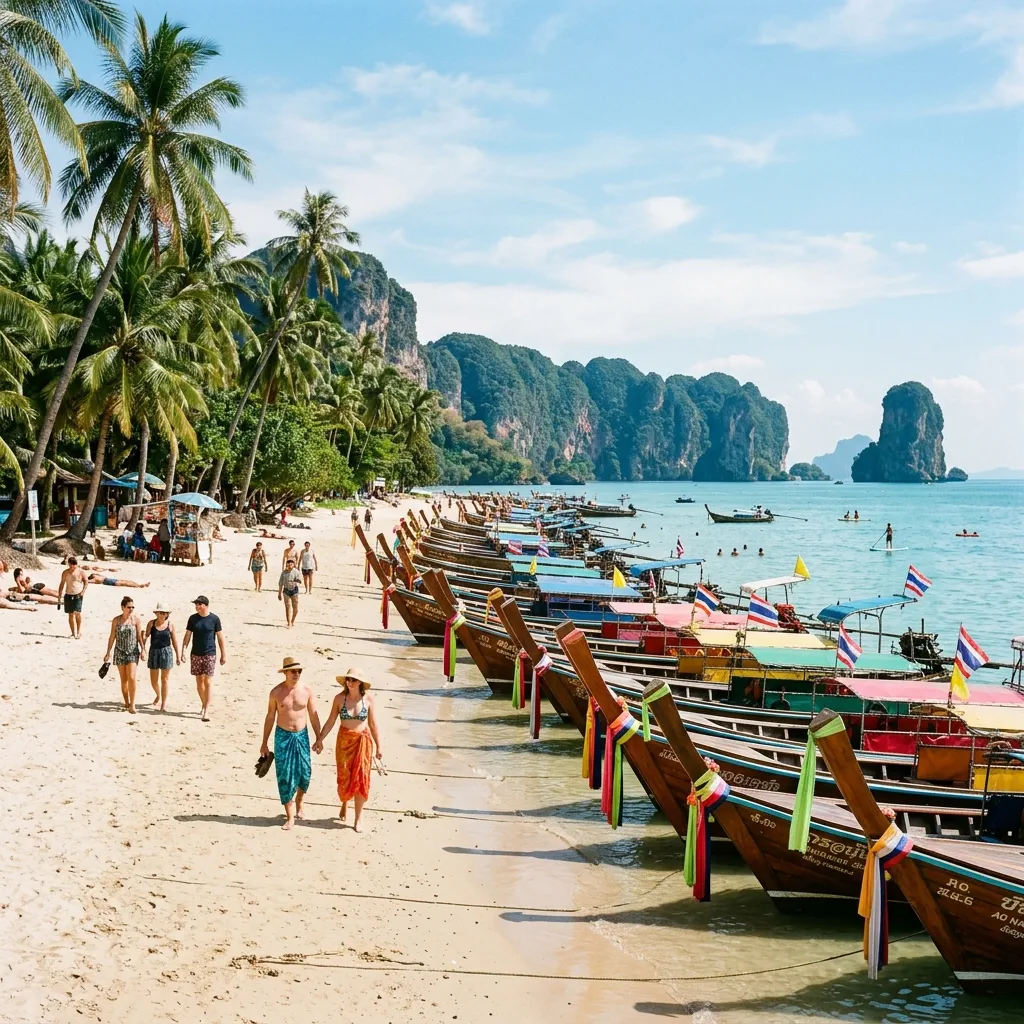
But treating Ao Nang purely as a stepping stone undersells what it offers in its own right. This is a beach where towering limestone karsts rise directly from turquoise water, where longtail boats line the shore against a backdrop that genuinely looks edited. Few destinations manage to combine that kind of drama with the sheer convenience of a 35-minute transfer from Krabi International Airport. For travellers who want adventure without the logistical headache of reaching more remote islands, that accessibility isn't a weakness. It's the whole point.
The Development Argument, Examined Honestly
I won't pretend Ao Nang hasn't changed. What was once a fishing community has grown, over the past few decades, into a well-established tourist town, and guesthouses and dive shops have replaced much of its original village character. Purists are right to mourn that shift.
Yet this argument only tells half the story. The surrounding natural environment, protected within marine parks, has remained remarkably intact despite the growth happening onshore. The limestone islands that make Ao Nang famous, Poda, Tup, Chicken Island, and the rest, haven't been diminished by the town's development. If anything, that infrastructure is what makes exploring them so straightforward. A traveller can step off a flight, settle into accommodation within the hour, and be aboard a longtail boat bound for Phra Nang Cave Beach before lunch. That balance between comfort and access to genuine natural beauty is rare, and it deserves more credit than it typically receives.
Adventure for Every Skill Level
Ao Nang's reputation as a soft, tourist-friendly option also overlooks what's happening on its cliffs. The limestone formations surrounding the bay and neighbouring Railay have made this one of the world's most respected rock-climbing destinations, with routes ranging from gentle half-day tasters to demanding overhangs with sea views that experienced climbers travel specifically to tackle.
Add sea kayaking through mangroves and hidden caves, four-island boat tours, and full-day excursions to Phi Phi, and the picture of Ao Nang as a watered-down beach stop starts to fall apart. This is a destination that rewards both the traveller who wants to spend an afternoon horizontal on the sand and the one chasing an adrenaline rush on a cliff face. Few places in southern Thailand manage that range so comfortably.
It's Not Just About the Beach
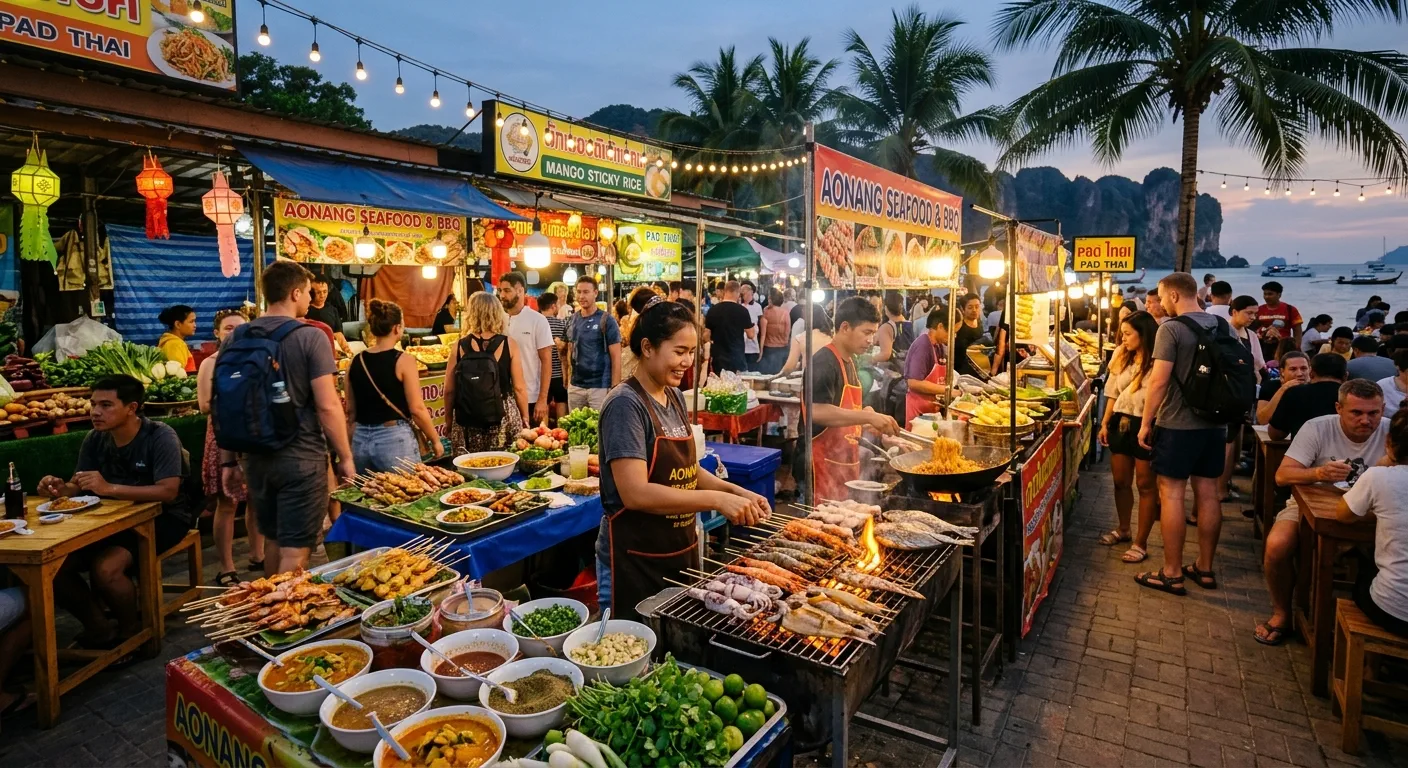
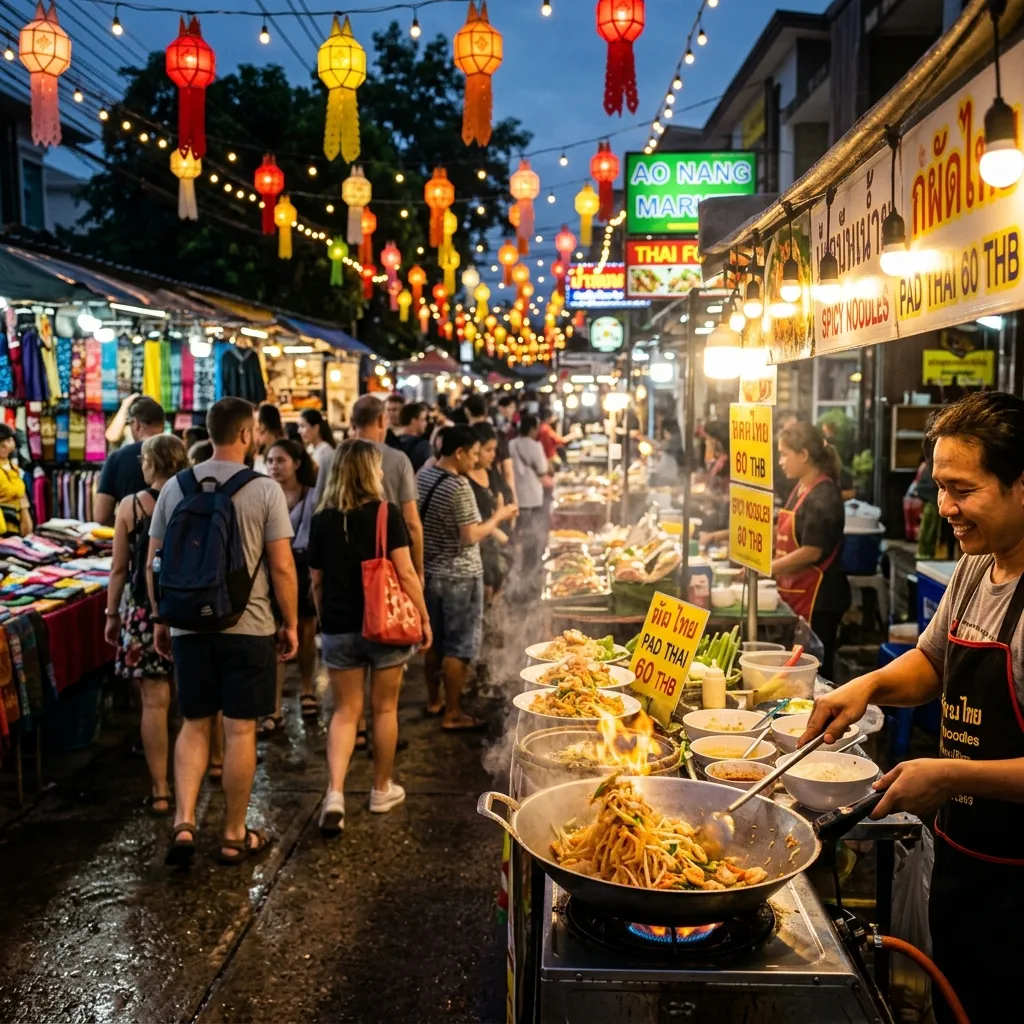
Critics who focus solely on sand quality are asking the wrong question. Ao Nang's evening food stalls serve grilled seafood pulled straight from the Andaman Sea that morning, alongside southern Thai staples like massaman curry and tom yum goong, rich with chilli, lemongrass, and lime. Wander the local market after dark and you'll pay a fraction of restaurant prices for dishes that taste like they belong in one.
Then there's what lies just beyond the obvious tourist trail: quiet coves reachable only by longtail boat, traditional fishing villages where life still moves at its own pace, and jungle viewpoints overlooking the bay that most day-trippers never bother to seek out. These hidden corners won't appear on a highlight reel, but they're there for travellers willing to look past the main strip, and they add a layer of authenticity that the "overdeveloped" critique simply ignores.
Timing Makes the Difference
None of this is to say Ao Nang suits every traveller in every season. Visit during the dry months of November through April and you'll find calm seas, reliable boat crossings, and clear skies that make island-hopping a genuine pleasure. Turn up during the monsoon season instead, and rougher waters can disrupt those same trips. Anyone weighing up Ao Nang against its reputation needs to factor in timing before drawing conclusions. A rainy-season visit with cancelled boat tours will naturally colour someone's opinion far more harshly than a crisp February morning on Poda Island ever would.
A Destination Worth Defending
Ao Nang Beach occupies an unusual position in Thailand's tourism landscape. It's developed enough to be comfortable, yet positioned close enough to genuine wilderness that comfort never comes at the expense of adventure. It's commercial enough to offer reliable infrastructure, yet still holds onto quiet corners for those willing to explore beyond the pier. That combination, not a flawless, untouched beach, is what makes it worth defending.
The travellers who dismiss Ao Nang as a mere gateway are, in a sense, right. It is a gateway. But a gateway that offers world-class climbing, genuinely excellent seafood, and some of the most striking limestone scenery in Southeast Asia is no compromise. It's a destination in its own right, and one that deserves to be judged on those terms rather than measured against what lies beyond it.
If you're weighing up where to base yourself for a trip to Krabi, don't let Ao Nang's popularity count against it. Head over to our complete Ao Nang Beach guide for the practical details, best times to visit, and hidden spots worth seeking out, then decide for yourself whether this stretch of coastline earns its place on your itinerary.
— wheretogointhailand.com
Where to go in Thailand
Writer
October 16, 2026• 3 Comments
Best Time to Visit Ao Nang Beach
Timing can make or break a beach holiday. Here's how the year breaks down on Thailand's Andaman coast.
Season
Months
What to Expect
Dry season (peak)
November–February
Sunny days, calm seas, lower humidity. Busiest and priciest period.
Hot season
March–April
Hot and sunny, still good for island trips. Fewer crowds than peak.
Wet (monsoon) season
May–October
Heavier rain and rougher seas. Some boat trips may be cancelled. Lower prices.
Which Season Suits You?
For island hopping and snorkelling: Go between November and April, when the sea is calmest and clearest.
For lower prices and fewer people: May, June and October can offer real bargains, with plenty of sunny spells between showers.
For a festival: Visit in April for Songkran, the Thai New Year water festival, or November for Loy Krathong, when people float small decorated baskets on the water to give thanks and let go of bad luck.
Tip: In the wet season, keep a couple of flexible days in your plan. If a boat trip is cancelled because of rough seas, you can swap it for inland sights like the Emerald Pool or Tiger Cave Temple.
Collaborative tooling drives productivity in distributed teams
Top Things to Do in Ao Nang
Ao Nang is a launchpad for adventure. These are the experiences most travellers rave about.
1. Island Hopping
This is the headline act. Two tours stand out:
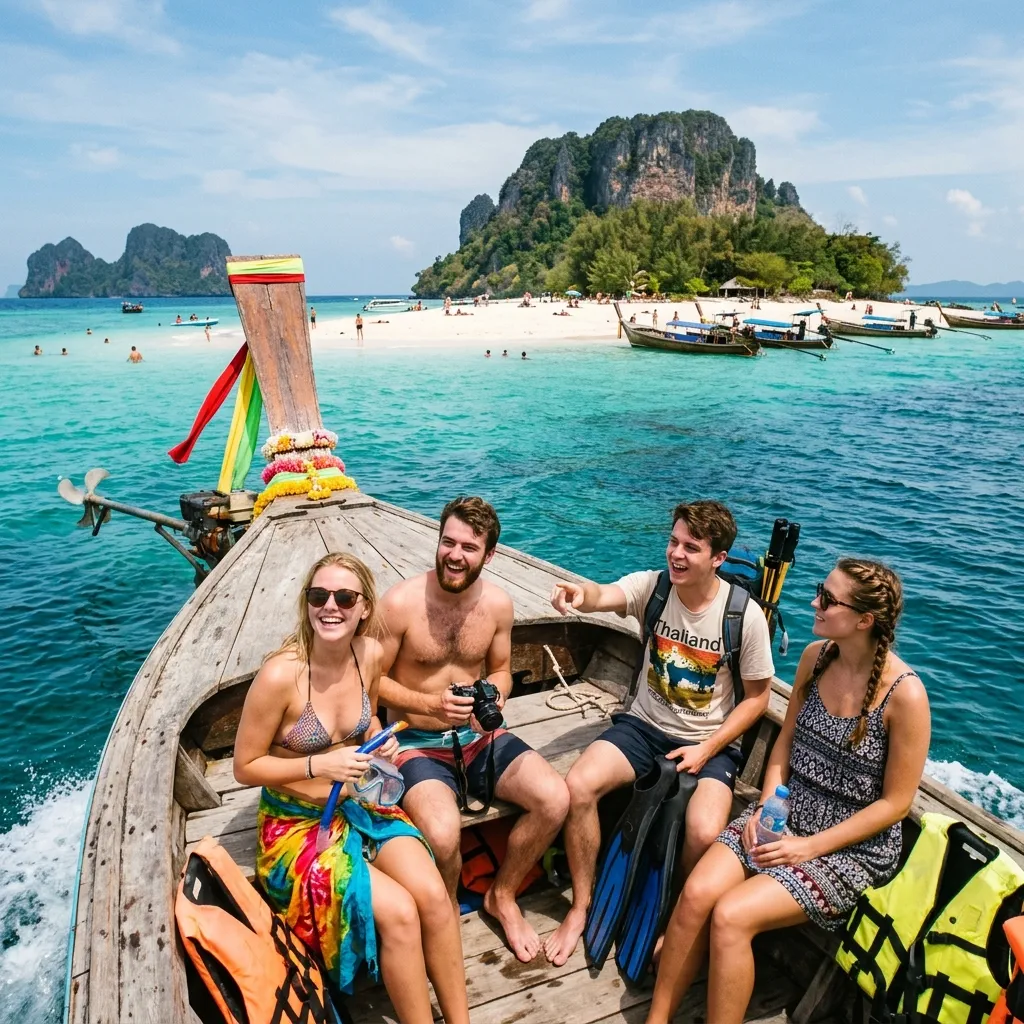
The Four Islands Tour usually stops at:
Koh Poda: Soft white sand and a famous limestone stack just offshore.
Chicken Island (Koh Kai): Named for a rock formation shaped like a chicken's head.
Koh Tup: At low tide, a sandbar appears and links it to neighbouring islets, so you can walk across the sea.
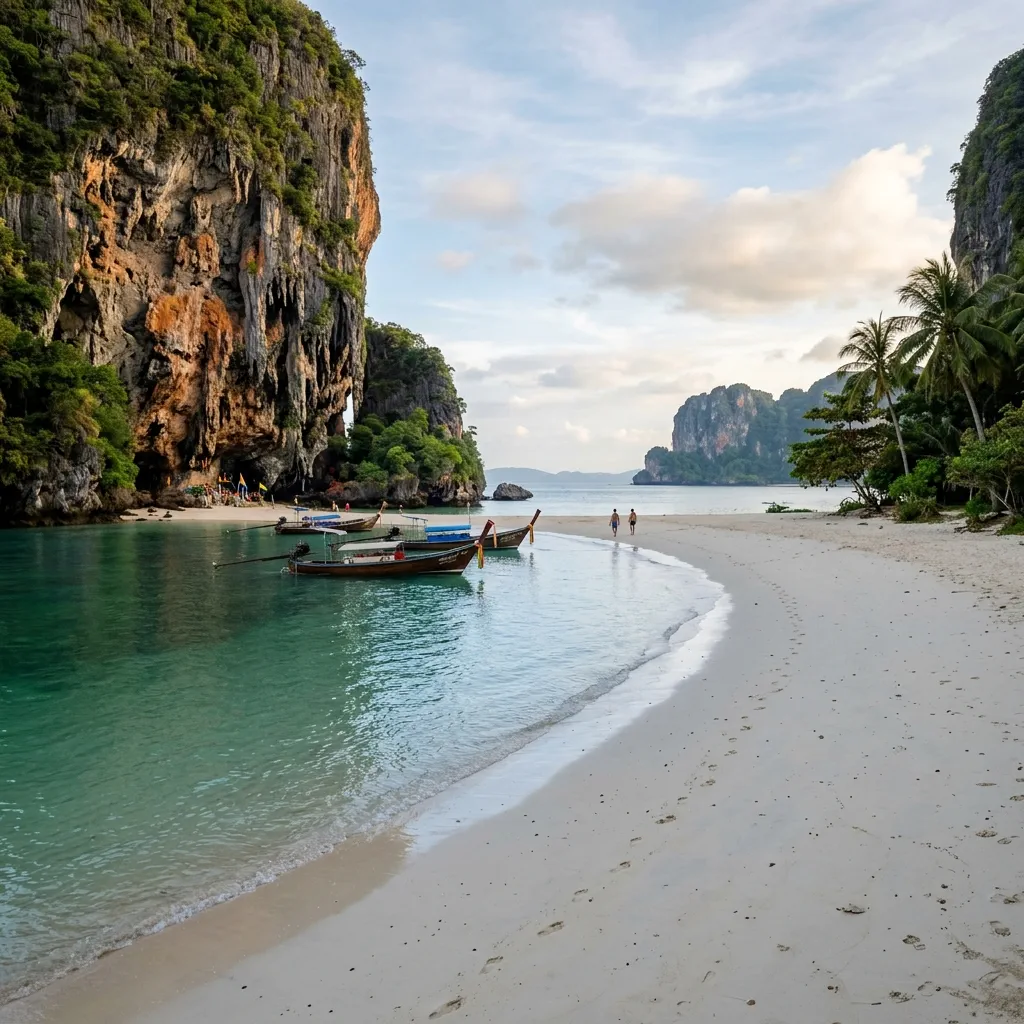
Phra Nang Cave Beach: One of Thailand's most beautiful beaches, framed by cliffs.
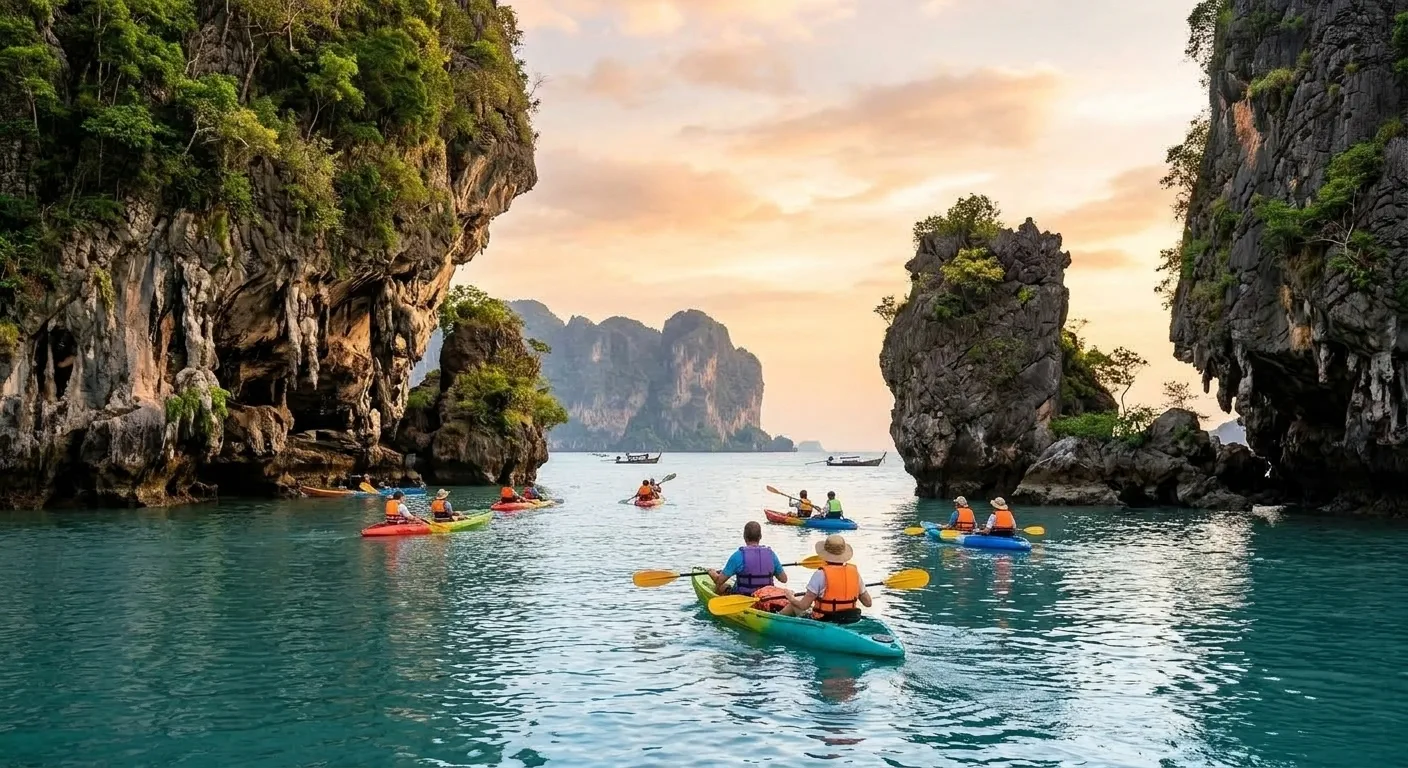
The Hong Islands Tour takes you north to a hidden lagoon enclosed by sheer cliffs. It's often quieter than the Four Islands route and brilliant for kayaking.
How to book:
Compare longtail (slower, cheaper, more traditional) and speedboat (faster, covers more ground) options.
Book through a reputable agency on the beachfront or a trusted online platform.
Check whether lunch, snorkelling gear and national park fees are included. Foreign visitors usually pay a separate park fee for many islands, so budget a few hundred baht extra.
Set off early. Morning departures beat the crowds and often get the calmest water.
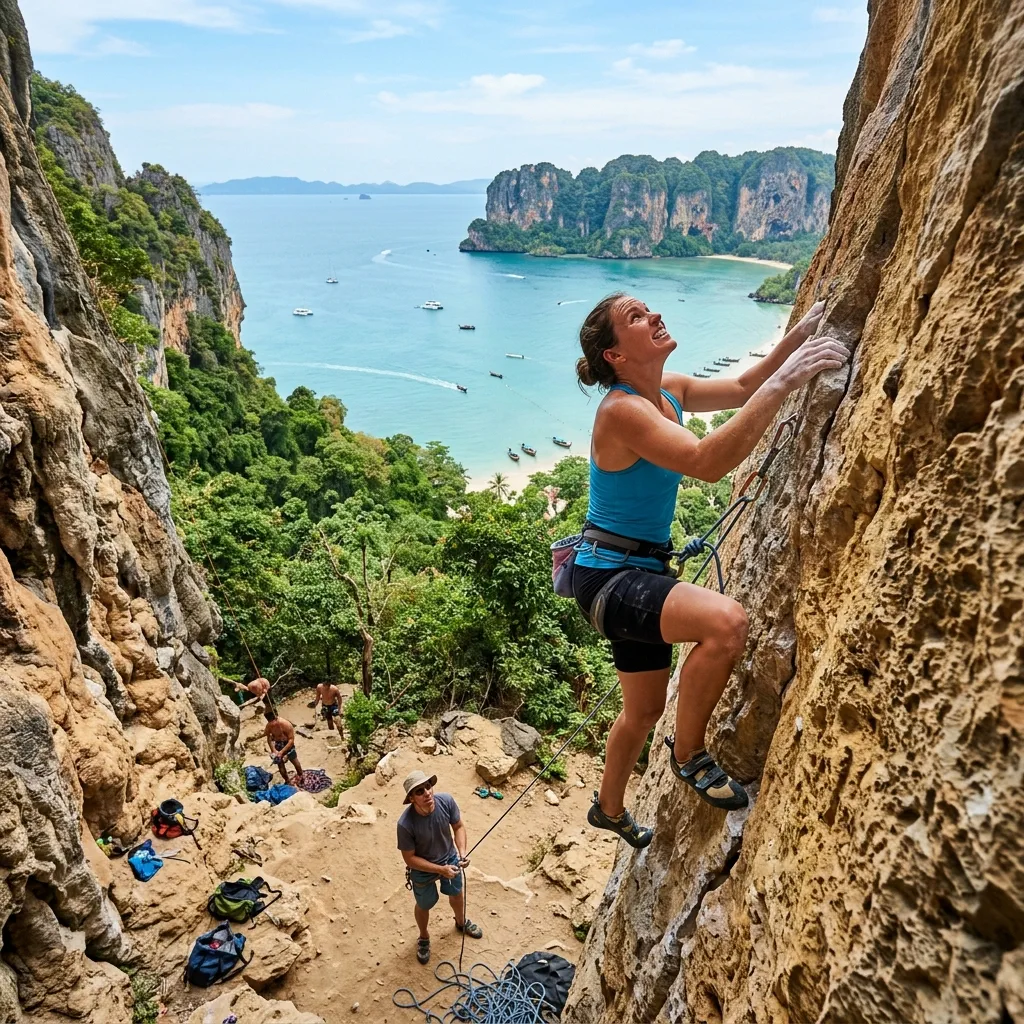
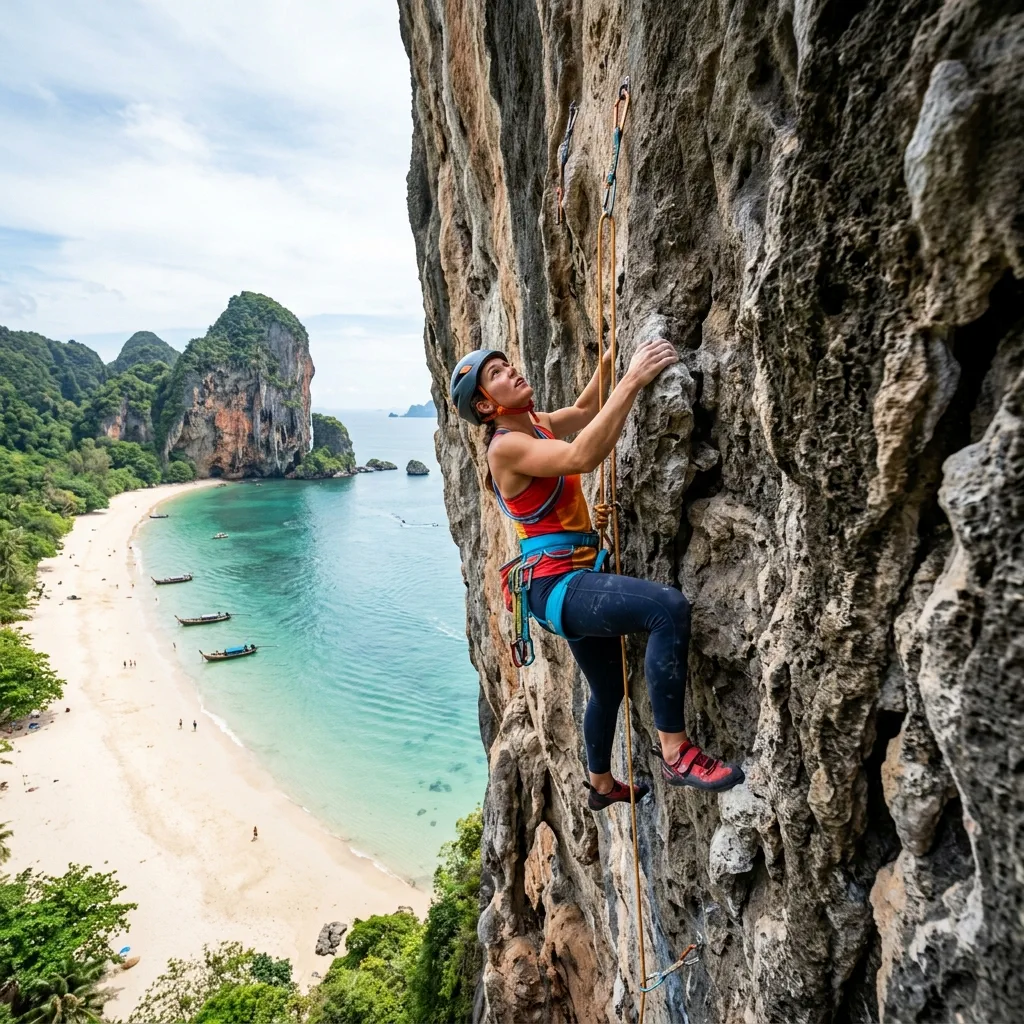
The limestone cliffs around Railay and Tonsai are among the most celebrated climbing spots in Asia. You don't need any experience either. Local climbing schools run half-day and full-day courses for complete beginners, with all equipment provided.
What to expect on a beginner session:
A safety briefing and knot-tying basics
Several routes graded for first-timers
Jaw-dropping views of the bay from partway up the cliff
Experienced climbers will find hundreds of bolted routes. Choose a school with good reviews and well-maintained gear.
Rock Climbing
3. Snorkelling and Diving
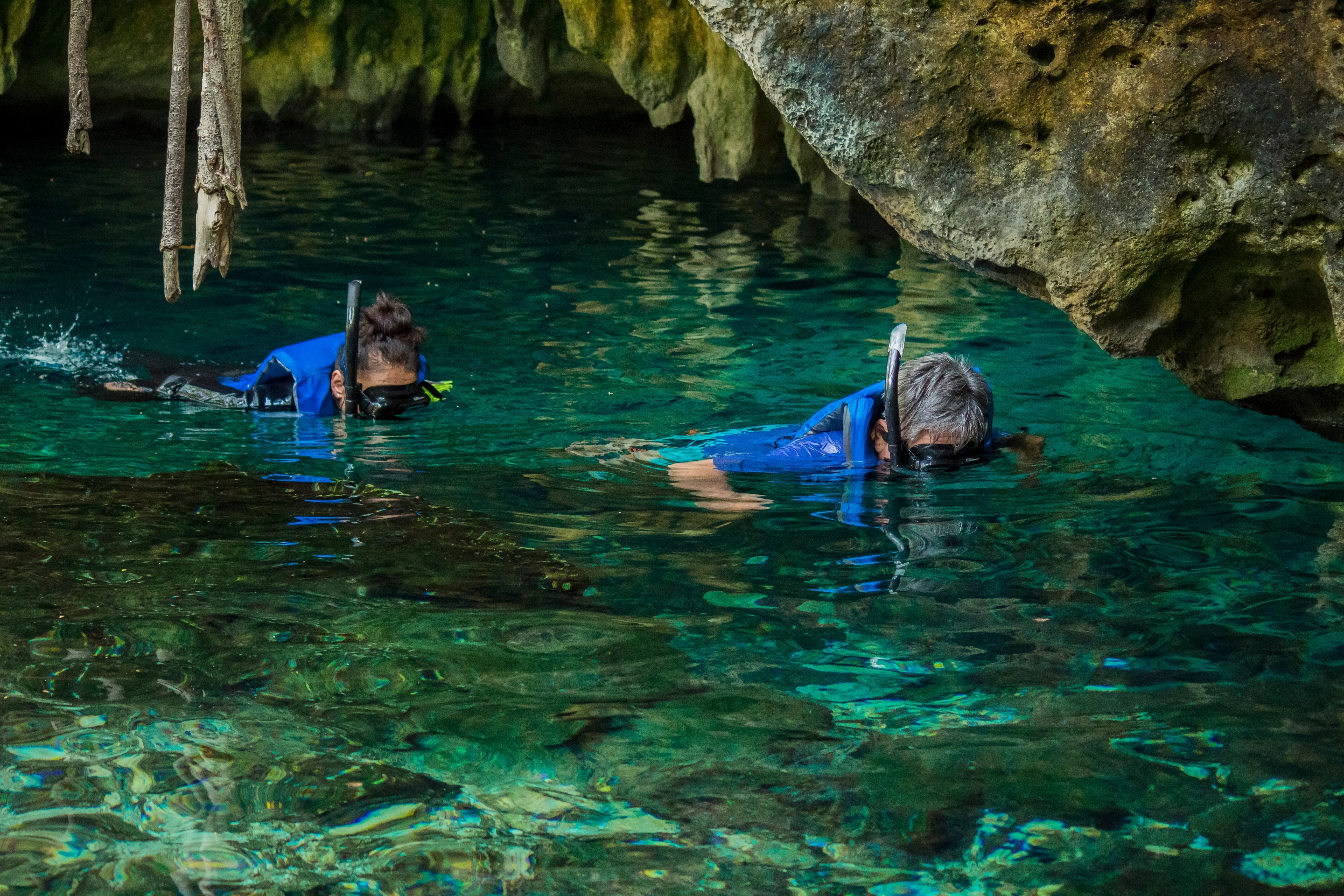
The waters around Krabi are home to colourful reef fish, soft corals and, if you're lucky, sea turtles. Popular snorkelling spots include Chicken Island, Koh Poda and the waters around the Phi Phi Islands.
Divers can book trips to sites near Phi Phi and the King Cruiser Wreck, a sunken ferry that has become an artificial reef.
Protect the reef while you swim:
Use reef-safe sunscreen.
Never stand on or touch coral.
Don't feed the fish, as it disrupts their natural diet.
Snorkelling and Diving
4. Sea Kayaking
Paddling through mangrove forests is one of the most peaceful ways to explore Krabi. Ao Thalane, a short drive north of Ao Nang, offers guided kayak tours through narrow channels lined with limestone walls. Look out for monkeys, kingfishers and mudskippers along the way.
Sea Kayaking
5. Local Markets
Markets are where you'll get a true taste of local life.
Ao Nang Landmark Night Market: A popular spot in the evenings for street food, clothing and souvenirs.
Krabi Town Walking Street: Held at weekends, with local food, live music and handmade crafts.
Chao Fah Pier Night Market (Krabi Town): A riverside favourite with locals, known for cheap, delicious food.
Market tip: Bring small notes and coins. Haggling is common for clothes and souvenirs, but always keep it friendly. Food prices are usually fixed.
Local Markets
Must-Try Local Dishes in Ao Nang
Southern Thai food is bold, spicy and full of flavour. Krabi's Muslim heritage also adds rich curries and fragrant rice dishes to the mix.
Dishes You Shouldn't Miss
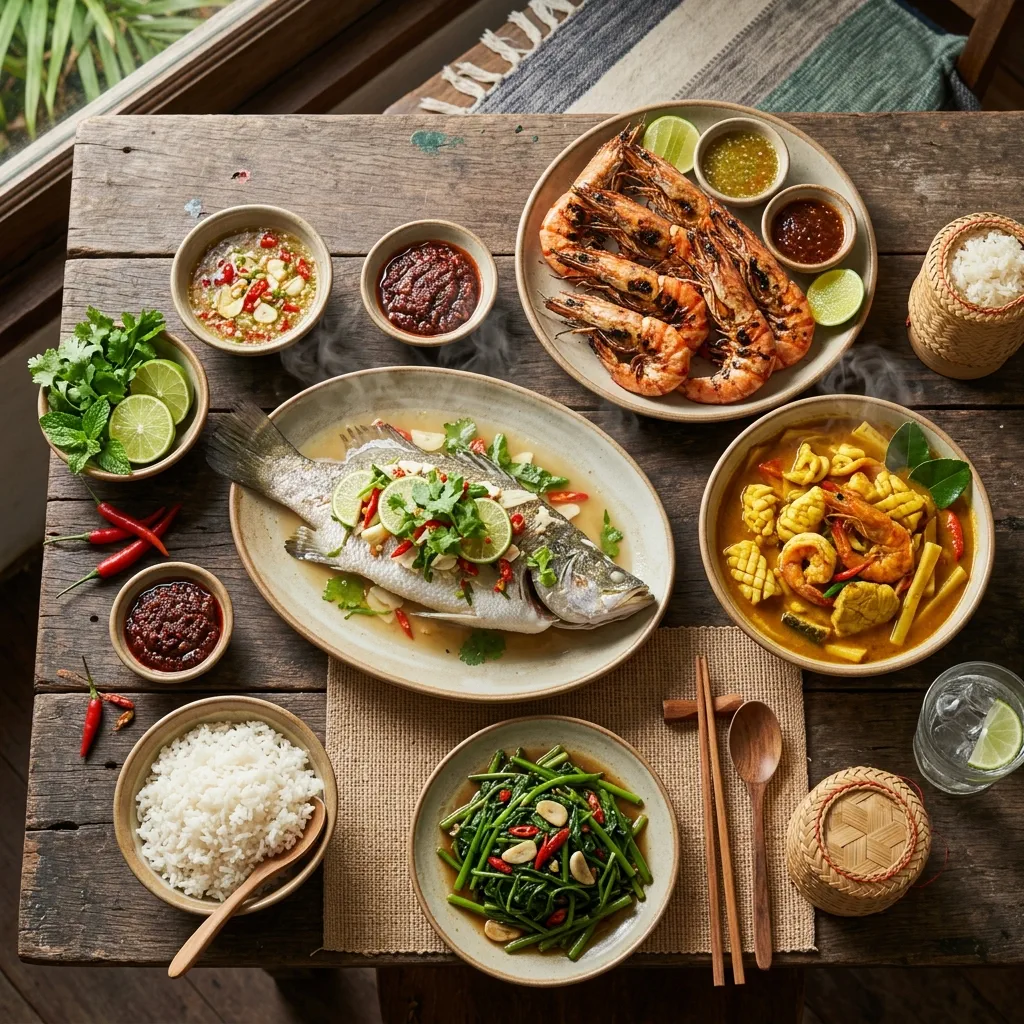
Massaman curry: A mild, nutty curry with potatoes and tender meat, influenced by Persian and Malay cooking.
Gaeng som: A sour, spicy southern curry, often made with fish. Not for the faint-hearted.
Tom yum goong: Hot and sour prawn soup fragrant with lemongrass and lime leaf.
Khao mok gai: Spiced yellow rice with chicken, a Thai Muslim speciality similar to biryani.
Fresh grilled seafood: Choose your fish, prawns or squid, and it's cooked in front of you.
Som tam: Green papaya salad, crunchy and zingy. Ask for "mai pet" if you'd like it mild.
Roti: Thin, crispy flatbread, often served with banana and condensed milk as a sweet treat.
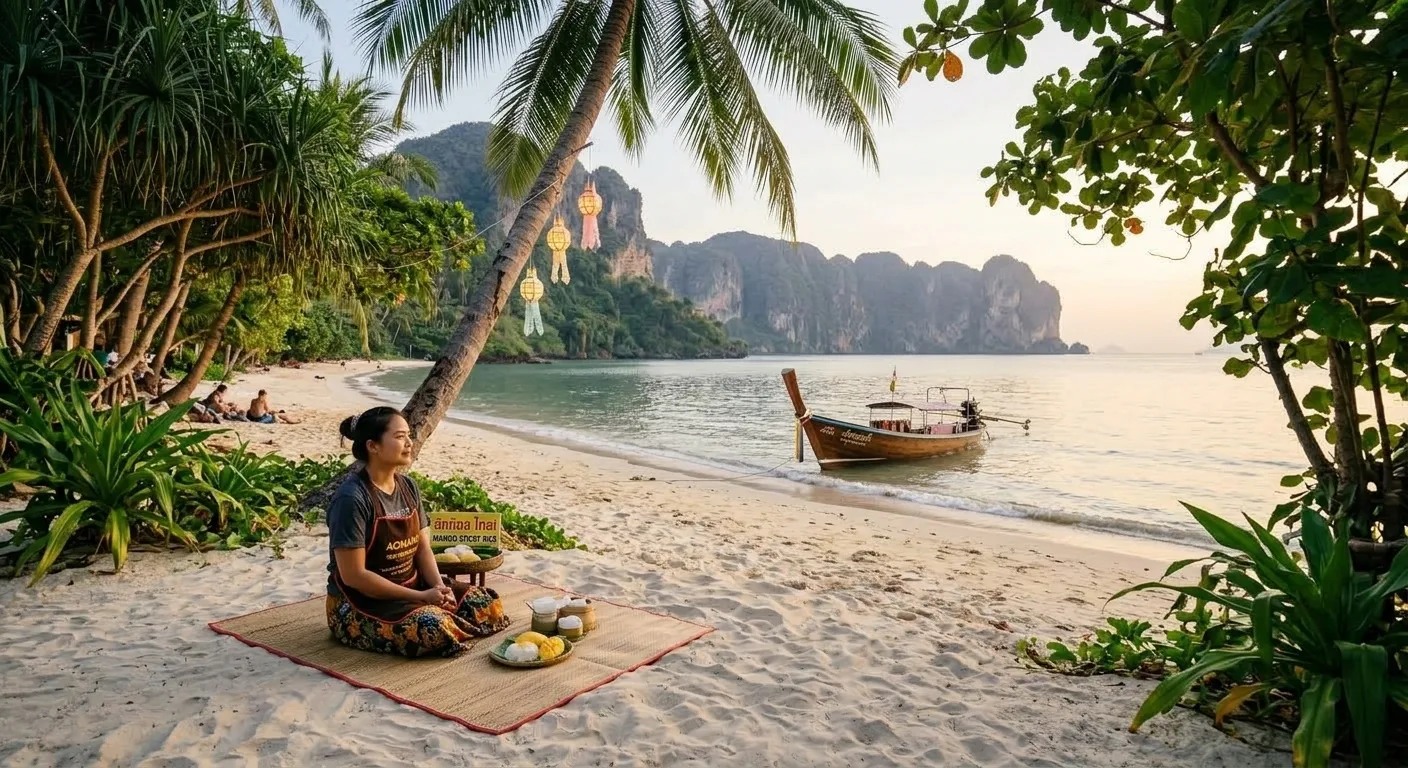
Mango sticky rice: Sweet sticky rice, fresh mango and coconut cream. Pure bliss in the hot season.
Where to Eat
Seafood restaurants along Nopparat Thara: A short ride from central Ao Nang, these spots serve fresh catches with sea views. Krua Thara is a long-standing favourite with locals and visitors.
Street food stalls and night markets: The best value, and often the most authentic flavours.
Beachfront restaurants: Pricier but perfect for a sunset dinner.
Food safety tip: Pick busy stalls with a high turnover of food, and drink bottled or filtered water. Many hotels and cafés offer free refills to cut plastic waste.
Seafood restaurants
Where to Stay in Ao Nang
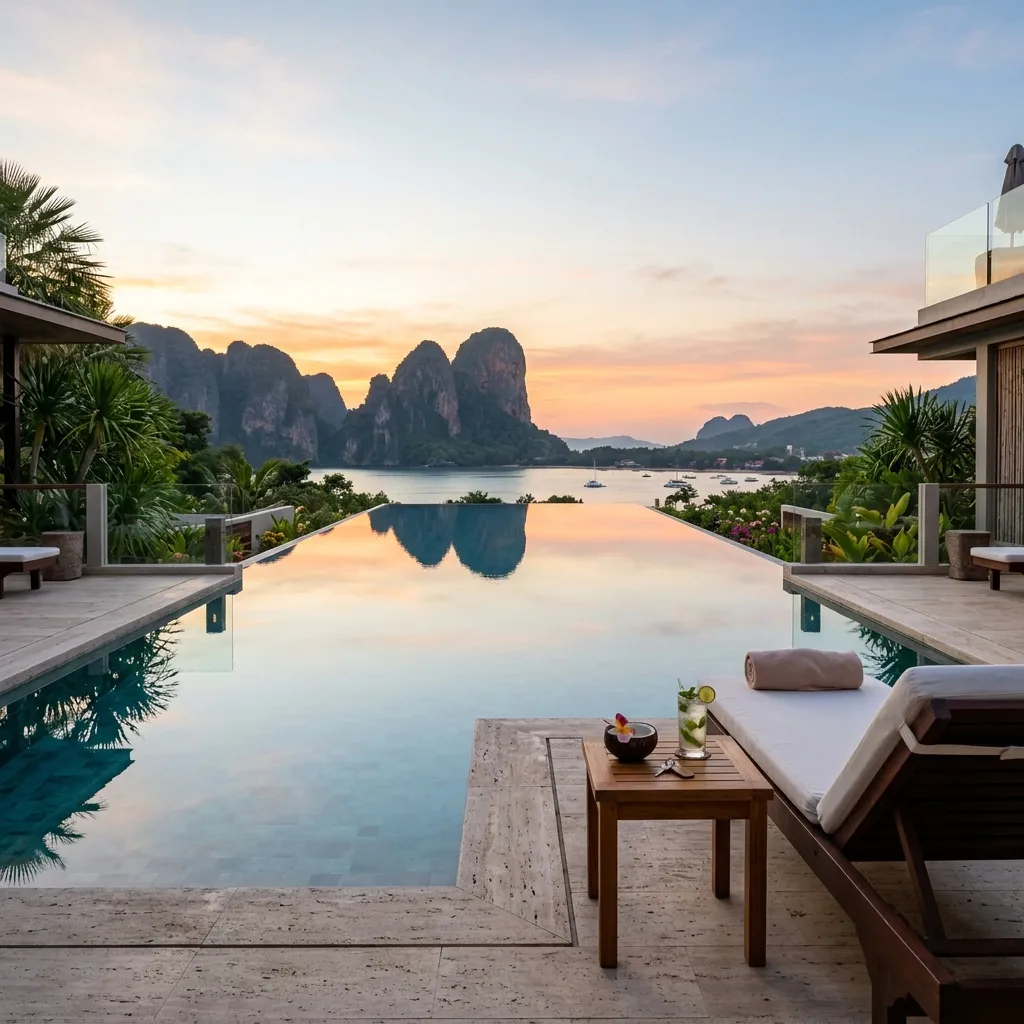
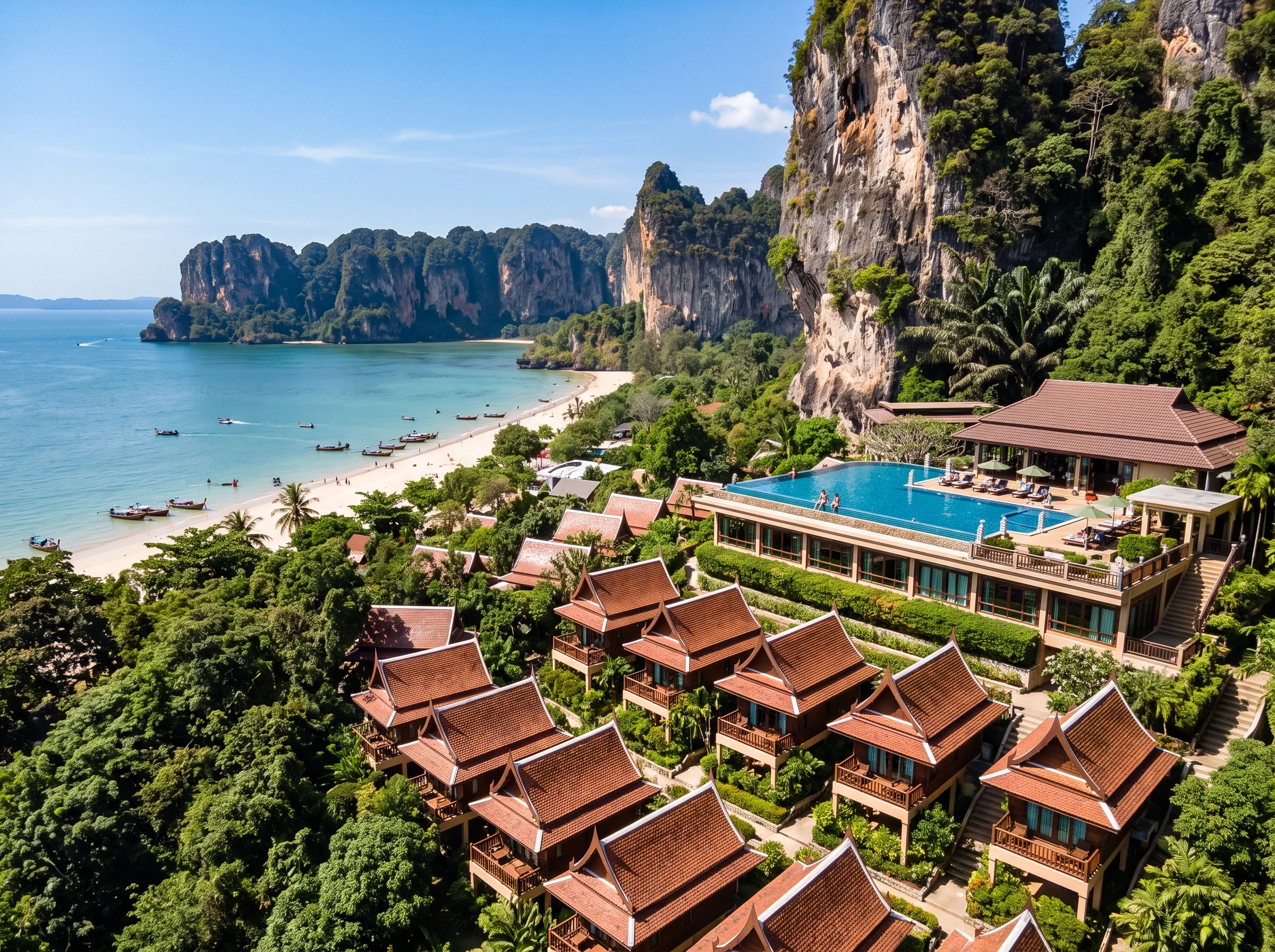
Ao Nang offers something for every traveller, from backpacker hostels to luxury cliffside resorts.
Accommodation by Budget
Budget
What You'll Find
Best For
Budget
Hostels, guesthouses and simple bungalows
Solo travellers and backpackers
Mid-range
Boutique hotels and resorts with pools
Couples and families
Luxury
Beachfront resorts, private villas, spa hotels
Honeymooners and special occasions
Which Area Is Best?
Central Ao Nang: Walkable, with restaurants, shops and tour desks on your doorstep. Great for first-timers.
Nopparat Thara: Quieter, with a long beach and easy pier access for island trips.
Klong Muang and Tubkaek: Peaceful and upmarket, perfect for relaxation, though you'll need transport into town.
Railay: Reachable only by boat, which gives it a secluded, island-like feel.
Eco-Friendly Stays
More hotels around Krabi are embracing sustainable practices. When choosing an eco-friendly stay, look for:
Refillable water stations instead of single-use plastic bottles
Solar power or energy-saving measures
Locally sourced food and local staff
Support for community or conservation projects
For a more immersive experience, consider a community homestay on Koh Klang, an island near Krabi Town. You'll stay with local families, learn about traditional fishing and batik-making, and see a side of Krabi few tourists discover.
Railay Phutawan Resort
Nearby Attractions Worth the Trip
Ao Nang's location means some of Thailand's most famous sights are close by.
Railay Beach
Just 10 to 15 minutes by longtail boat, Railay feels like a different world. There are no roads to the mainland, so it's car-free and calm. Highlights include:
Phra Nang Cave Beach: Powdery sand, clear water and dramatic cliffs.
Railay Viewpoint and Lagoon: A steep, muddy scramble with ropes, rewarded by sweeping views. Wear proper shoes and only attempt it if you're confident.
Rock climbing: The heart of Krabi's climbing scene.
Getting there: Longtail boats leave from Ao Nang Beach once enough passengers gather. Prices rise after dark, so check the last boat time before you go.
The Phi Phi Islands
Made famous by the film The Beach, the Phi Phi Islands are a must for many visitors. Ferries from Nopparat Thara Pier take around 1.5 to 2 hours, while speedboat tours are faster.
Maya Bay: Reopened after a long closure to let the reef recover. Swimming is now restricted to protect the area, but the views are still spectacular.
Koh Phi Phi Don: The main island, with restaurants, bars and accommodation if you'd like to stay overnight.
Pileh Lagoon: Emerald water hemmed in by cliffs.
Inland Gems
Tiger Cave Temple (Wat Tham Suea): Climb 1,260 steps to a golden Buddha and 360-degree views. Go early to beat the heat and bring water.
Emerald Pool and Hot Springs: A natural forest pool with glowing green water, plus a hot spring waterfall nearby. Visit early morning for the clearest colour.
Tiger Cave Temple (Wat Tham Suea)
Best Photography Spots in and Around Ao Nang
Bring a charged camera and a spare battery. These spots capture the essence of Krabi.
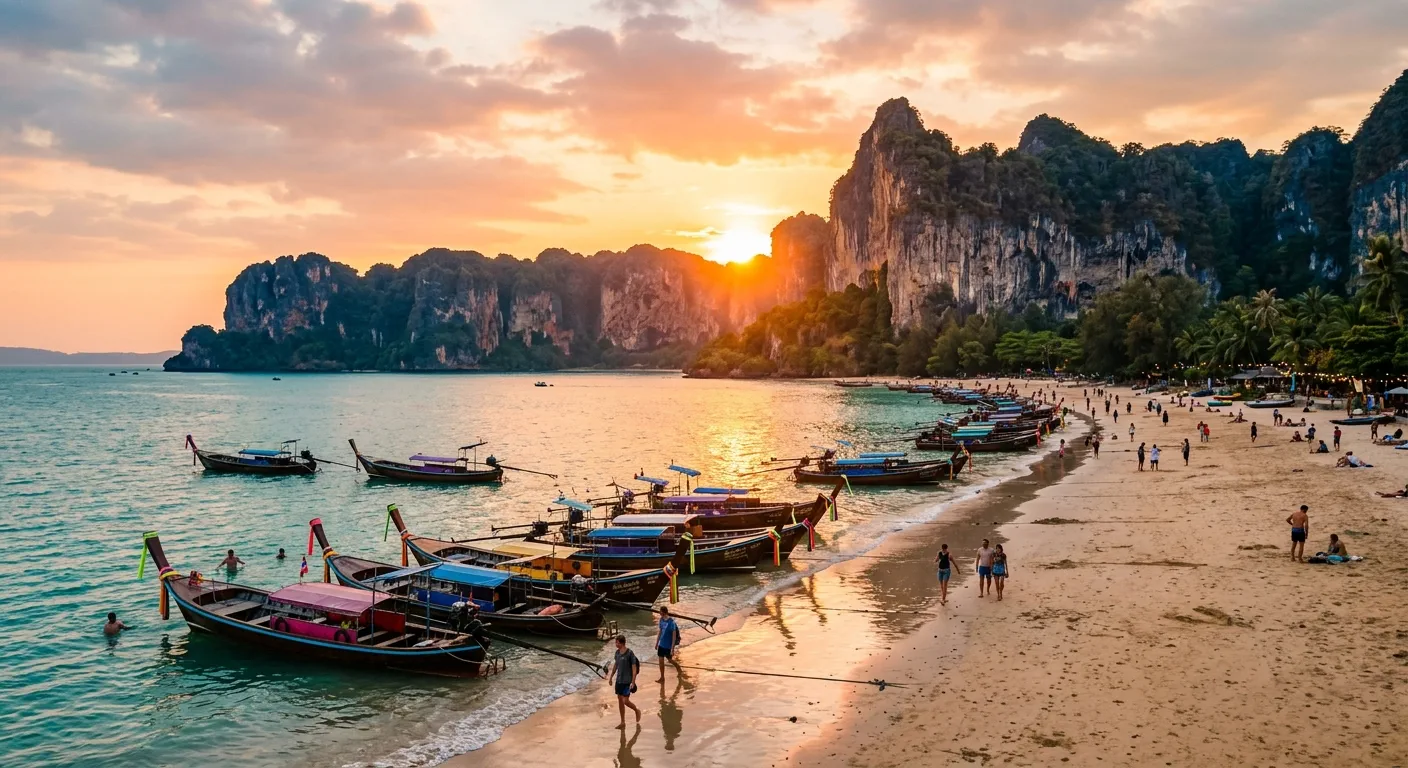
Ao Nang Beach at sunset: Silhouetted longtail boats against an orange sky.
Phra Nang Cave Beach: Towering cliffs meeting turquoise water.
Koh Tup sandbar at low tide: The surreal sight of people "walking on water".
Hong Islands lagoon: Emerald water inside a ring of cliffs.
Tiger Cave Temple summit: Misty mountains and patchwork countryside below.
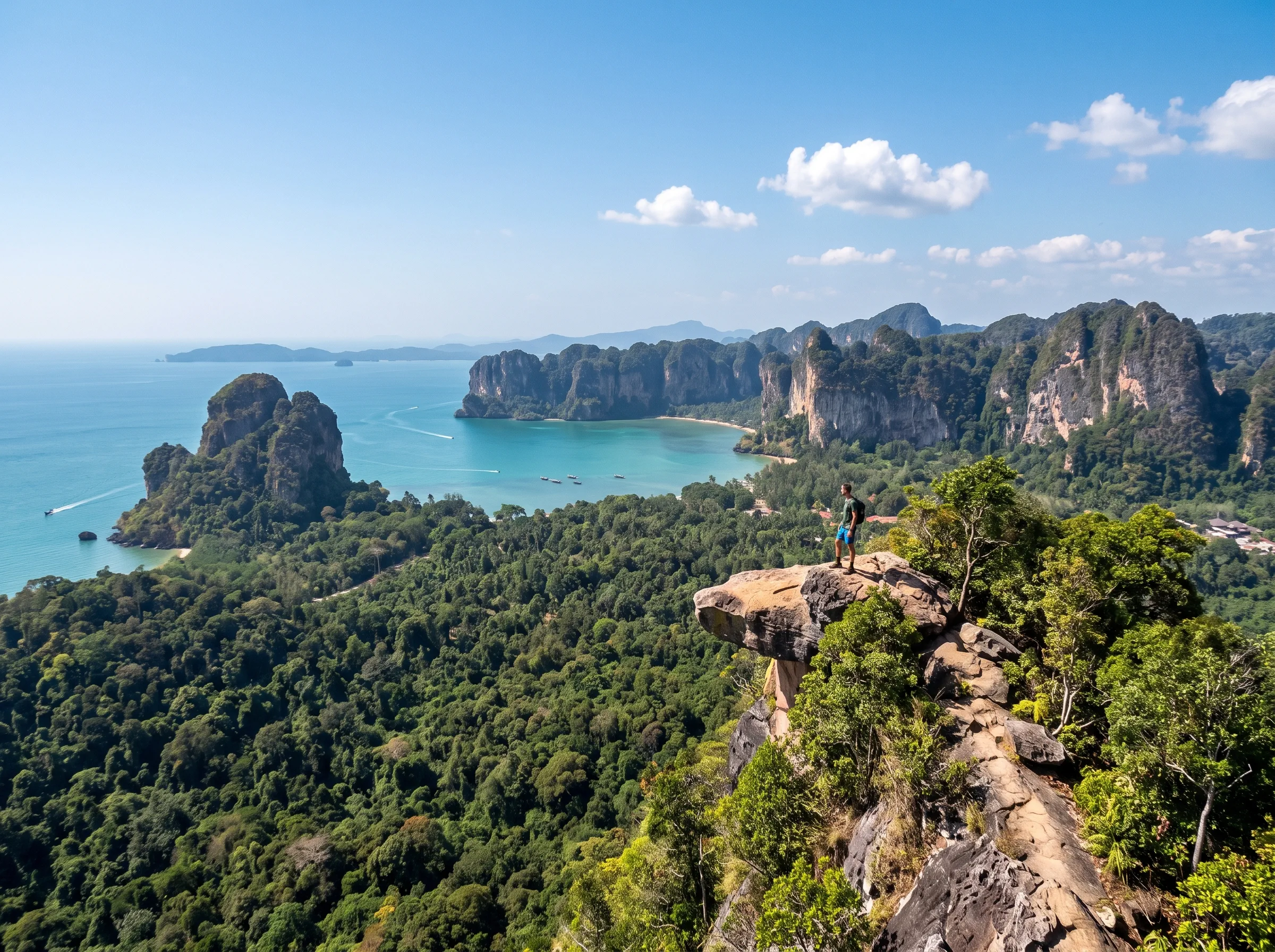
Dragon Crest (Hang Nak Hill): A rocky outcrop overlooking the coast, popular for dramatic photos.
Photography etiquette: Always ask before photographing people, especially monks and local families. Drones may need registration in Thailand, so check current rules before you fly.
Ao Nang Beach at sunset
Local Customs and Etiquette
A little cultural knowledge goes a long way. Thai people are famously warm and welcoming, and showing respect makes your experience even richer.
The Essentials
The wai: A greeting with palms pressed together and a slight bow. Return a wai if someone offers one.
Dress modestly away from the beach: Swimwear is fine on the sand, but cover up in town, shops and restaurants.
Visiting temples: Cover your shoulders and knees, remove your shoes before entering buildings, and never point your feet at a Buddha image.
Heads and feet: The head is considered sacred and the feet the lowest part of the body. Don't touch anyone's head, and avoid pointing with your feet.
Respect the monarchy: The Thai royal family is deeply respected, and criticising it is against the law.
Keep calm: Raising your voice or losing your temper is seen as a loss of face. A smile solves most problems.
Respecting Local Faiths
Krabi has a large Muslim population, so dress modestly when visiting villages, and be considerate during Ramadan.
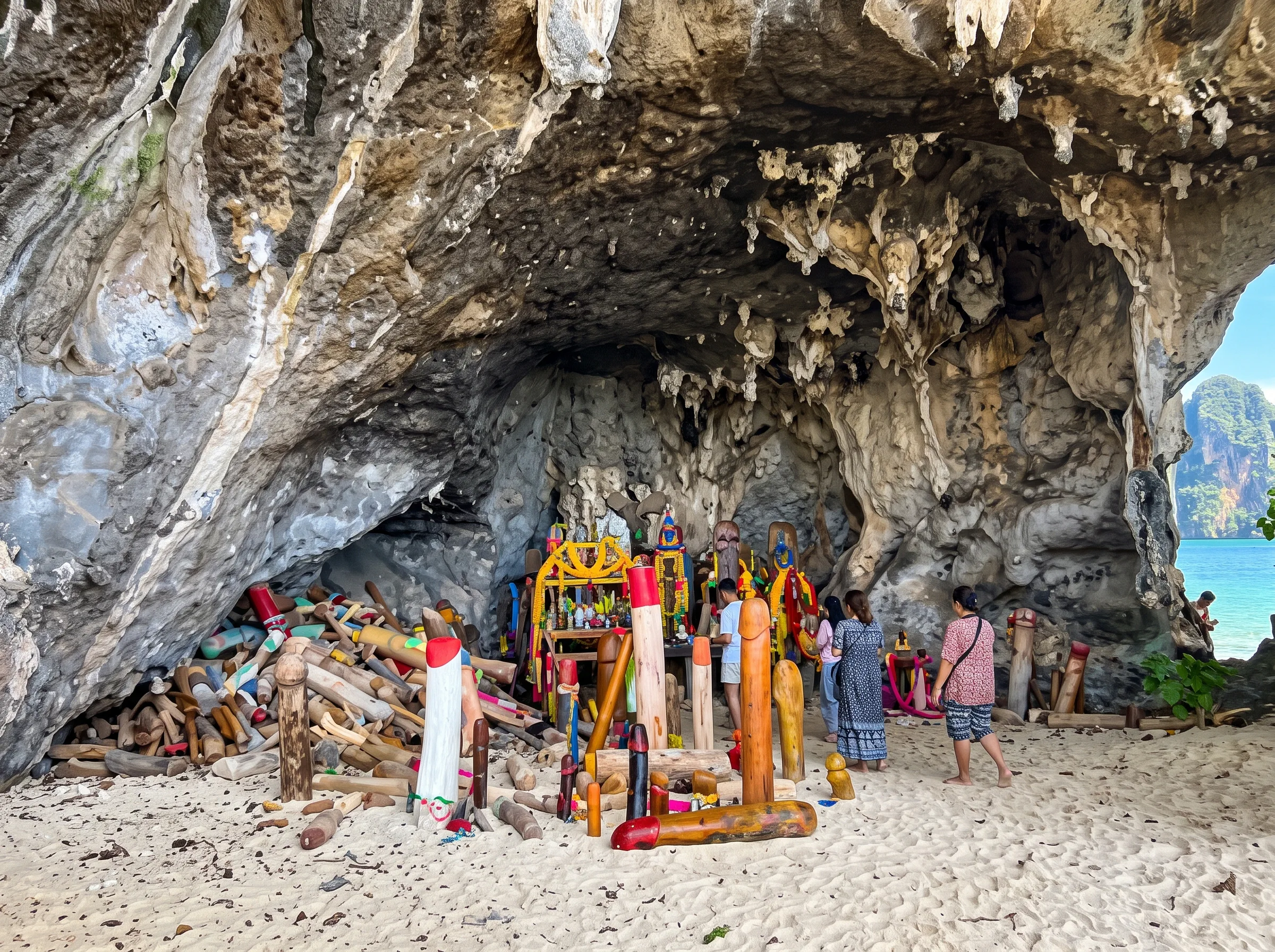
At the end of Phra Nang Cave Beach, you'll find the Princess Cave shrine, filled with carved wooden offerings. Local fishermen believe the spirit of a princess lives here and leave gifts for good luck and safe journeys at sea. Look and photograph respectfully, but don't touch or move the offerings.
Princess Cave shrine
Hidden Gems Around Ao Nang
Want to escape the crowds? Try these lesser-known spots.
Nopparat Thara Beach: A long, quiet stretch next door to Ao Nang. At low tide, you can walk out to small islets.
The Monkey Trail: A short path from the end of Ao Nang Beach to Pai Plong Beach. Expect monkeys, but keep food out of sight.
Koh Klang: A rural island community with rice fields, fishing villages and traditional crafts.
Klong Muang Beach: Calm, uncrowded and wonderful at sunset.
Khao Ngon Nak Trail (Dragon Crest): A challenging forest hike with a breathtaking reward at the top. Start early and bring plenty of water.
Khao Ngon Nak Trail Dragon Crest
Practical Travel Tips for Ao Nang
Here's how to travel seamlessly from arrival to departure.
Getting to Ao Nang
By air: Krabi International Airport has direct flights from Bangkok, Singapore, Kuala Lumpur and other regional hubs. From the airport, you can:
Take a shared minivan or airport bus (cheapest option)
Book a private taxi (fastest and most comfortable)
Use Grab, Thailand's popular ride-hailing app
By ferry: Boats connect Ao Nang with Phuket, Koh Phi Phi and Koh Lanta, mainly during the dry season.
By bus: Overnight buses run from Bangkok to Krabi Town, then it's a short songthaew or taxi ride to the beach.
Getting Around
Songthaews: Shared pickup trucks with bench seats, running between Ao Nang, Nopparat Thara and Krabi Town. Cheap and fun.
Longtail boats: The main way to reach Railay and nearby beaches.
Grab and taxis: Handy for evenings and longer trips.
Scooters: Widely available to rent, but only ride if you're experienced, hold a valid licence with a motorcycle endorsement and an International Driving Permit, and always wear a helmet. Many travel insurance policies won't cover you otherwise.
Daily Budget Guide
These are rough estimates per person, excluding flights. Prices can change, especially in peak season.
Travel Style
Daily Budget (THB)
What It Covers
Budget
1,200–2,000
Hostel, street food, songthaews, one budget tour every few days
Mid-range
3,000–6,000
Hotel with pool, mix of restaurants and street food, regular tours
Luxury
8,000+
Resort stays, private boat trips, fine dining, spa treatments
Money tips:
Carry cash for markets, longtail boats and small restaurants.
ATMs are everywhere but charge a fee for foreign cards, so withdraw larger amounts less often.
Set aside extra for national park fees on island tours.
Staying Safe
Sea safety: Respect red flags, especially in the monsoon season, when rip currents can be strong.
Sun protection: The tropical sun is intense. Use high-SPF reef-safe sunscreen, wear a hat and drink plenty of water.
Monkeys: Don't feed them or carry food openly. They can bite.
Travel insurance: Make sure it covers medical care, water sports and any activities like climbing or diving.
Lightweight clothes, plus something to cover shoulders and knees
Water shoes for rocky beaches and boat landings
Dry bag for boat trips
Reusable water bottle
Waterproof phone case
Small torch for evening walks and cave visits
Hidden Beach
Your Ao Nang Adventure Awaits
Ao Nang Beach brings together the best of southern Thailand: dramatic scenery, island adventures, flavour-packed food and warm local culture, all from one easy base. Visit between November and April for the calmest seas, mix headline sights with hidden gems, and travel respectfully to get the most from every day.
Start by choosing your travel dates and booking your accommodation. Then plan one island tour and one inland adventure, and leave the rest of your days free to explore Thailand your way.
"Ao Nang Beach is too often written off as overly commercial, but wheretogointhailand.com argues it deserves far more credit. Just 35 minutes from Krabi International Airport, this lively stretch of the Andaman coast pairs towering limestone cliffs and protected marine parks with world-class rock climbing, island hopping to Poda and Chicken Island, and sea kayaking through mangroves and hidden caves. Add fresh grilled seafood, fragrant southern Thai curries and quiet coves beyond the main strip, and Ao Nang proves itself a genuine destination in its own right, not simply a gateway to Railay or Phi Phi."
— wheretogointhailand.com
Frequently Asked Questions About Ao Nang Beach
How many days should I spend in Ao Nang?
Most travellers find three to five days enough to enjoy the beach, take at least one island-hopping tour, and explore nearby Railay Beach without feeling rushed.
Is Ao Nang Beach good for families?
Yes, Ao Nang's calm waters, wide range of accommodation, and easy access to gentle boat tours make it a popular choice for families travelling with children.
Do I need to book island tours in advance?
During peak season (December to February), booking a day or two ahead is wise, though many tours can still be arranged on the beach with local operators.
Is Ao Nang expensive to visit?
Ao Nang suits a wide range of budgets, with backpacker guesthouses, mid-range hotels, and luxury resorts all available, alongside affordable street food and local transport options.
Can I visit Railay Beach from Ao Nang as a day trip?
Yes, Railay Beach is only accessible by boat and sits a short ride from Ao Nang's main pier, making it an easy and popular day trip.
Gallery
Reader Feedback (6)
Jon Gibbons
Etiam pretium, magna eget feugiat finibus, tellus massa pellentesque nisi, non malesuada nulla nunc vel ligula. Sed finibus enim eu nulla tempus, vitae tincidunt dolor semper. Praesent fringilla, metus at convallis sagittis.
Michael Carter
Vestibulum ante ipsum primis in faucibus orci luctus et ultrices posuere cubilia curae; Donec vel erat in nulla efficitur tempor non ut nisl. Integer venenatis eros ut dui viverra fermentum.
Sophie Wilson
Nam ut turpis hendrerit, varius nunc vel, elementum dui. Morbi vulputate dolor sit amet scelerisque egestas. Vestibulum eleifend nunc ut bibendum fermentum.
Contact
Necessitatibus eius consequatur ex aliquid fuga eum quidem sint consectetur velit























Reader Feedback (6)
Jon Gibbons
Etiam pretium, magna eget feugiat finibus, tellus massa pellentesque nisi, non malesuada nulla nunc vel ligula. Sed finibus enim eu nulla tempus, vitae tincidunt dolor semper. Praesent fringilla, metus at convallis sagittis.
Michael Carter
Vestibulum ante ipsum primis in faucibus orci luctus et ultrices posuere cubilia curae; Donec vel erat in nulla efficitur tempor non ut nisl. Integer venenatis eros ut dui viverra fermentum.
Sophie Wilson
Nam ut turpis hendrerit, varius nunc vel, elementum dui. Morbi vulputate dolor sit amet scelerisque egestas. Vestibulum eleifend nunc ut bibendum fermentum.