Ao Thalane Mangroves: Krabi's Wild Kayaking Secret
Ao Thalane Mangroves is a tidal mangrove system near Krabi Town, Thailand, best explored by kayak through narrow limestone-lined channels. Part of the Krabi Estuary Ramsar wetland, it offers half-day to full-day kayaking tours, rich birdlife, and a quieter alternative to Krabi's busier attractions. Beginners are welcome, and tides shape the experience, so timing matters.
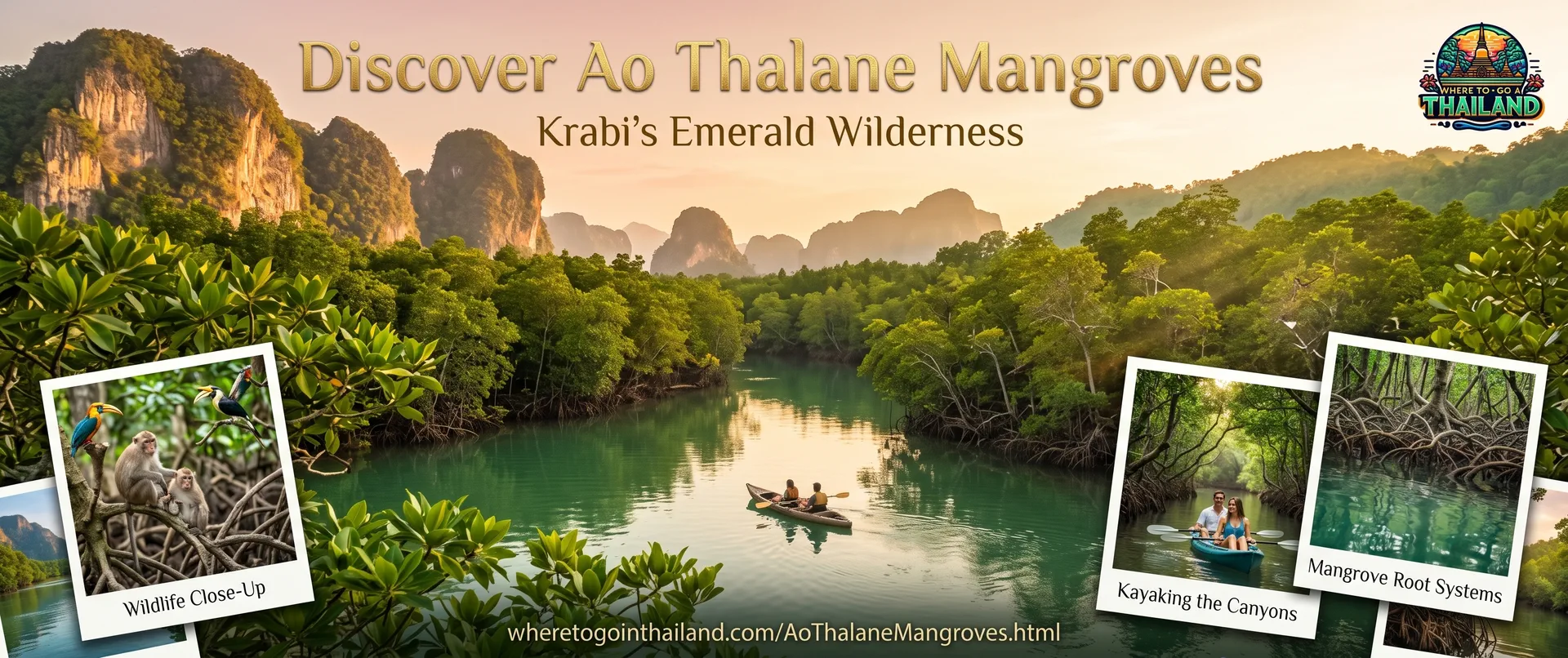
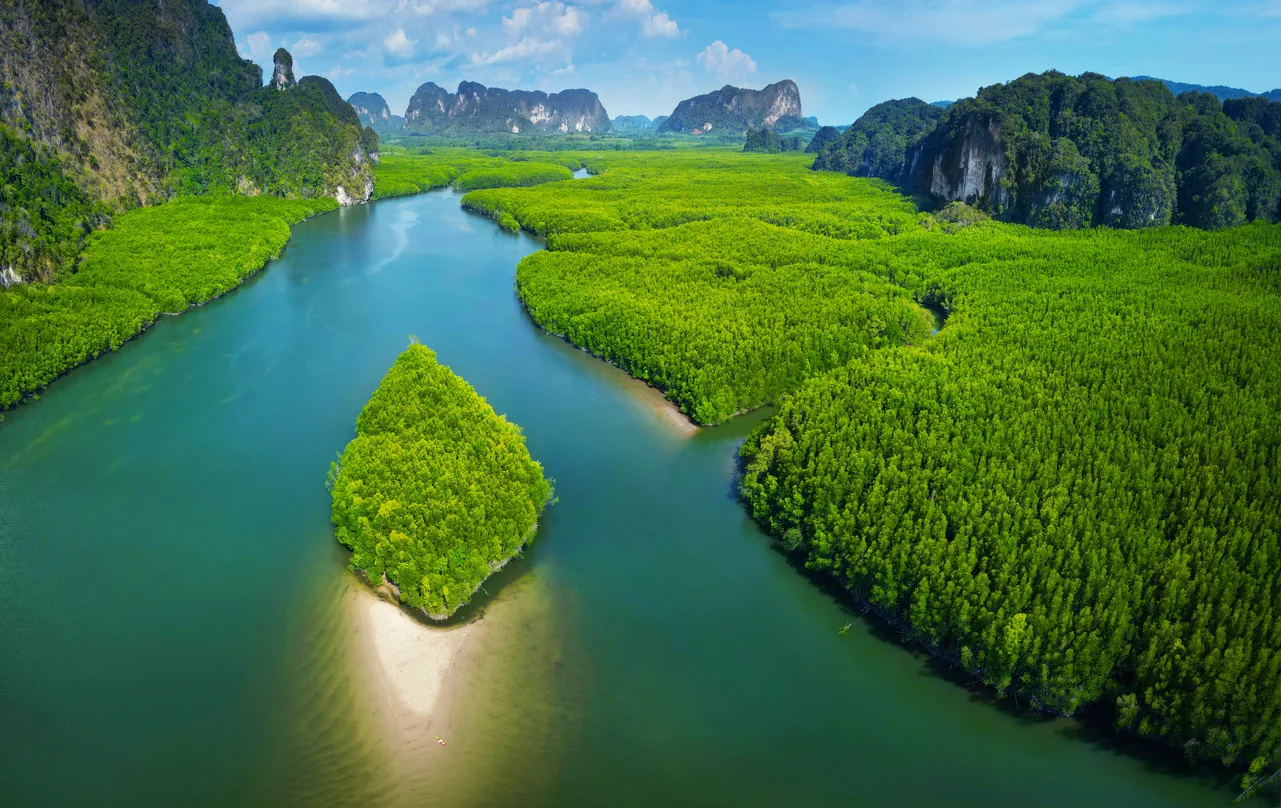
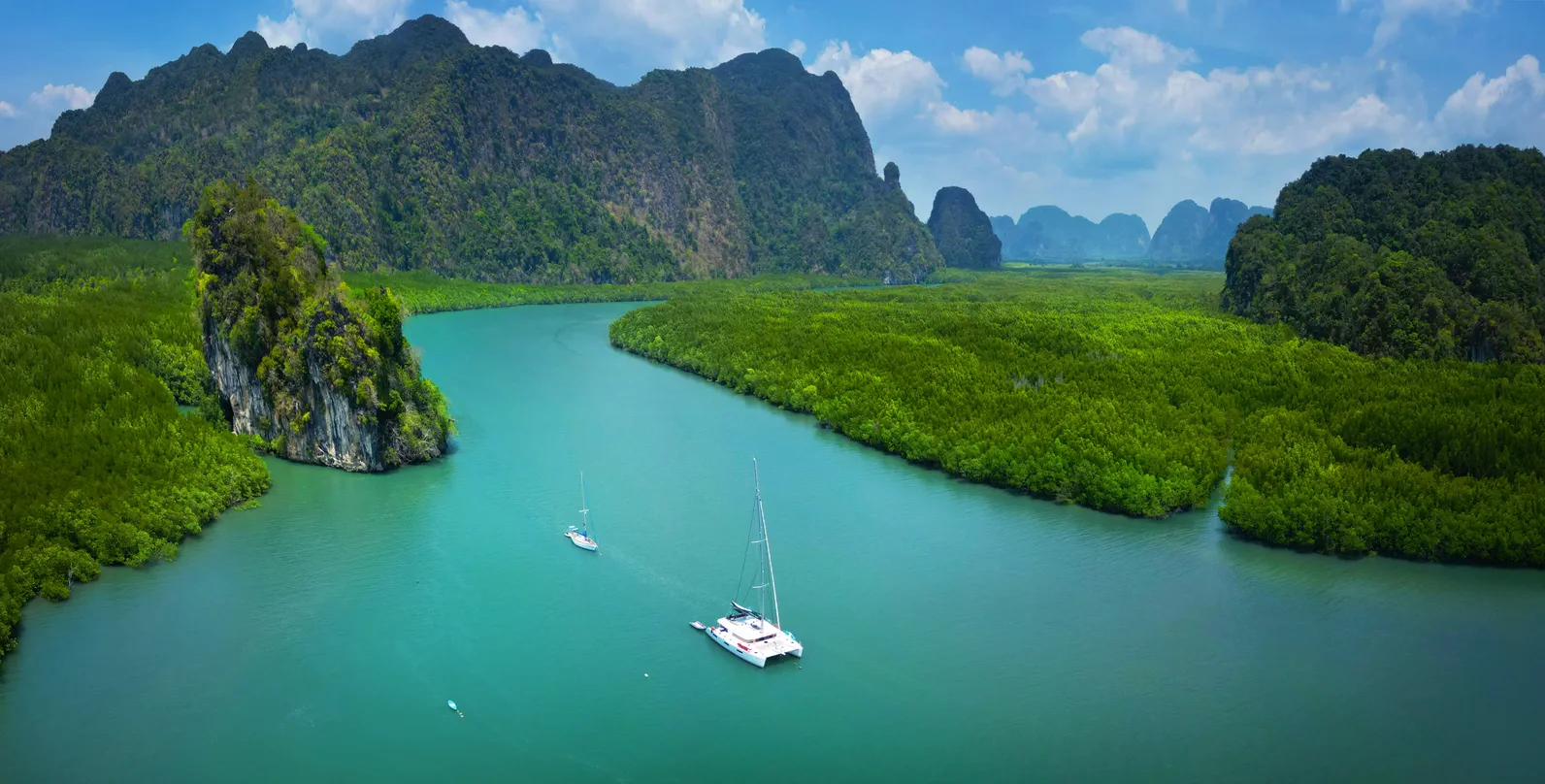
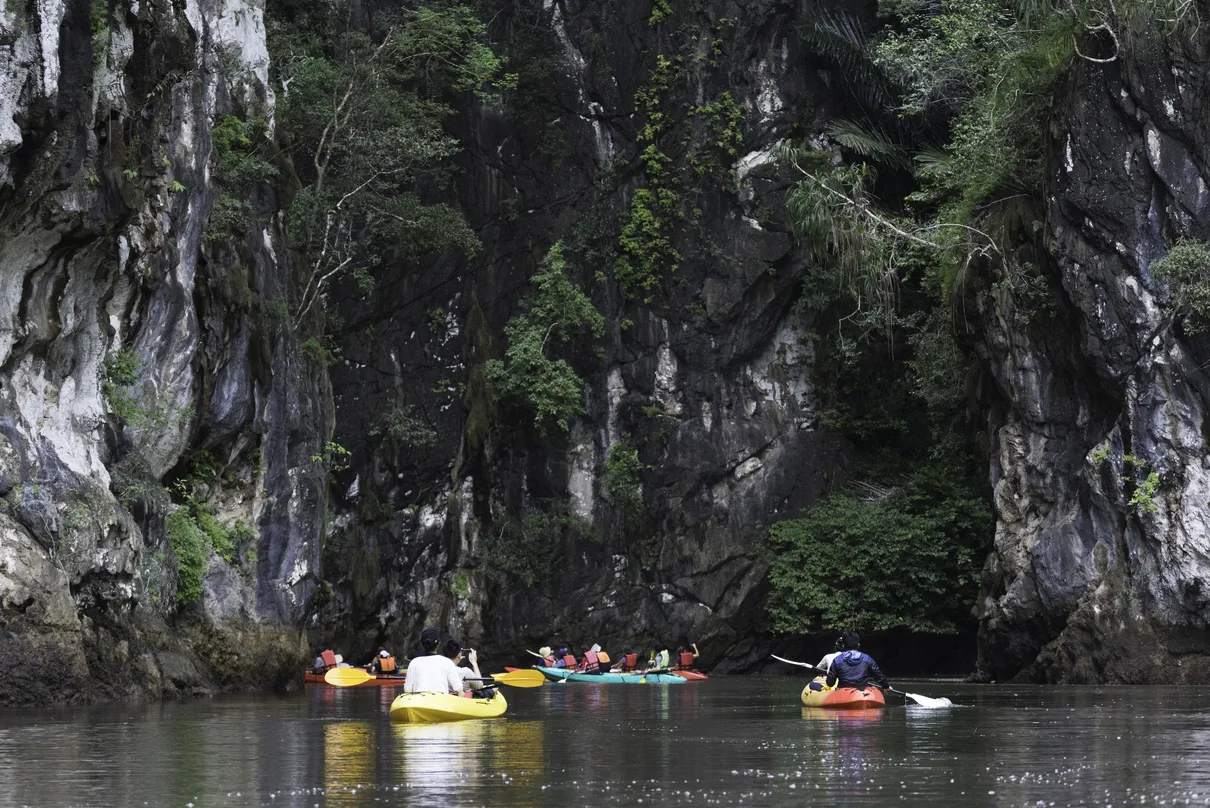
Picture gliding in near silence through emerald tidal channels, limestone cliffs rising on either side, with nothing but birdsong breaking the hush. That's a typical morning at Ao Thalane Mangroves, one of Krabi Thailand's most captivating, and still surprisingly underrated, natural wonders.
Ao Thalane sits within the wider Krabi Estuary, a Ramsar-listed wetland of international importance designated in 2001. That status alone hints at the ecological richness waiting here, long before you even dip a paddle in the water. Mangrove kayaking through this landscape delivers something rarer than a postcard view: a genuine sense of discovery, just a short drive from Krabi Town.
This guide covers everything you need to plan a visit: where to find Ao Thalane and when to go, the ecosystem and wildlife that make it special, what a kayaking tour actually involves, how conservation efforts protect this fragile wetland, nearby attractions worth pairing with your trip, and the practical details that turn a good idea into a booked adventure.
Ao Thalane Mangroves at a glance:
Location: Khao Thong Subdistrict, a short drive from Krabi Town
Type: Ramsar-listed tidal mangrove wetland, best explored by kayak
Best for: Nature lovers, wildlife enthusiasts, and those seeking a quieter side of Krabi
Tour options: Half-day (4–5 hours, beginner-friendly) or full-day with Hong Island snorkelling
Highlights: Dramatic limestone-lined channels, kingfishers, macaques, mudskippers, and one of Thailand's richest coastal ecosystems
Best time to visit: Dry season (November to April); tide timing matters
Tips: Book ahead, confirm tide times with your operator, and pack sun protection, insect repellent, and a sense of wonder
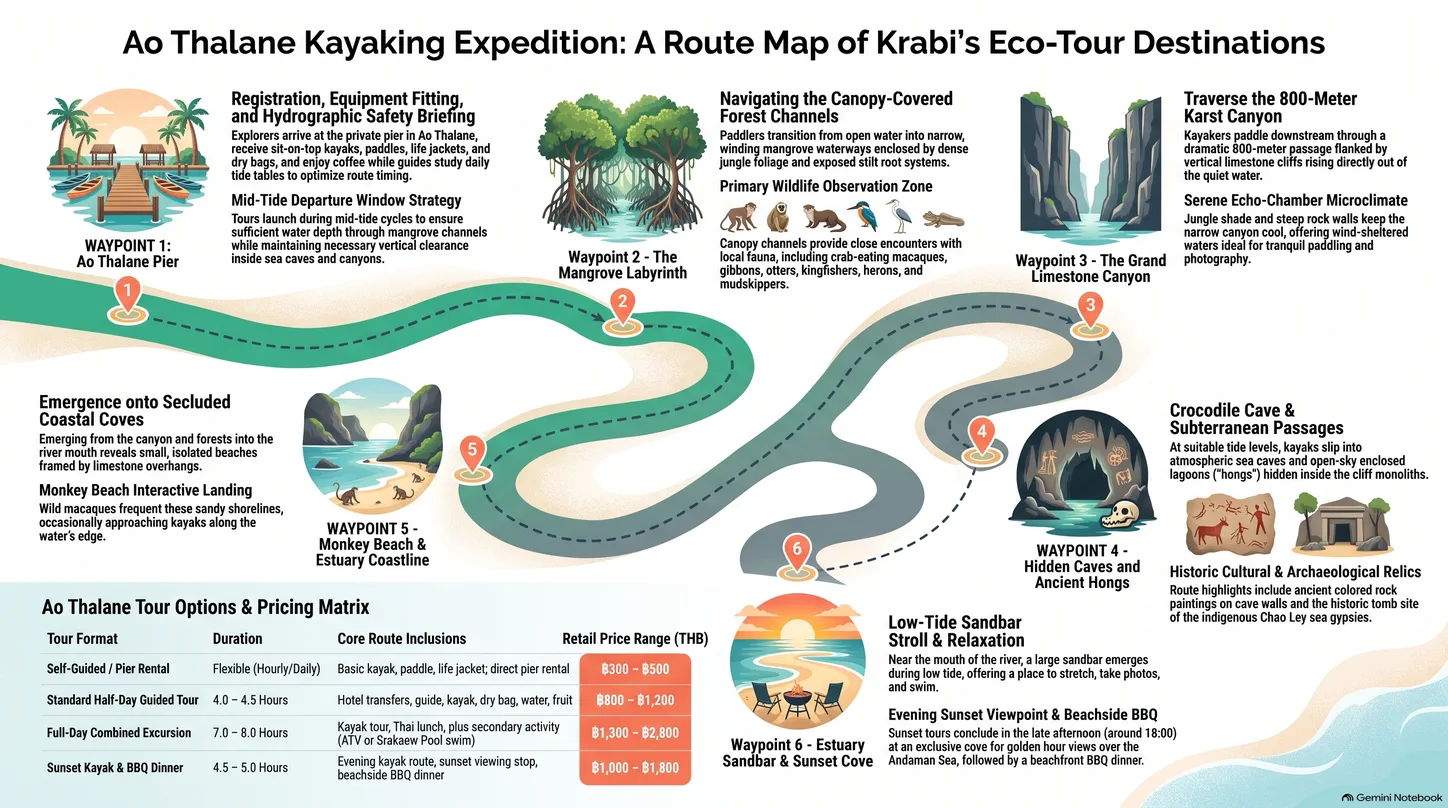
Finding Your Perfect Krabi Kayak Tour
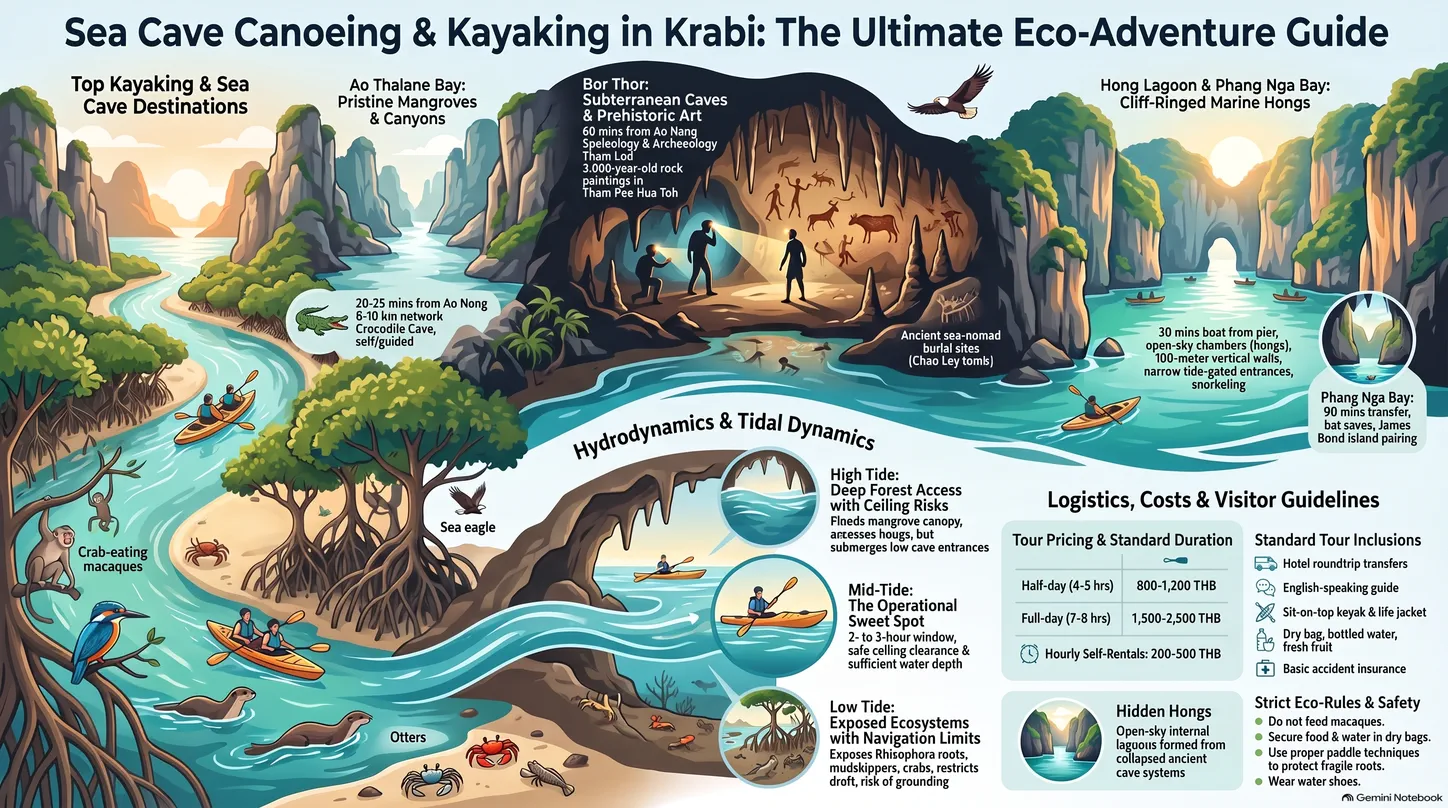
Decoding the Ao Thalane Menu: Finding Your Perfect Krabi Kayak Tour" serves as a complete buyer's and planner's guide for tourists evaluating the various kayaking packages available at Ao Thalane, Krabi. It breaks down the primary tour formats, pricing tiers, combination itineraries, and key tide-based logistics so travelers can pick the excursion that best fits their schedule, fitness, and budget
Where is Ao Thalane and when should you visit?
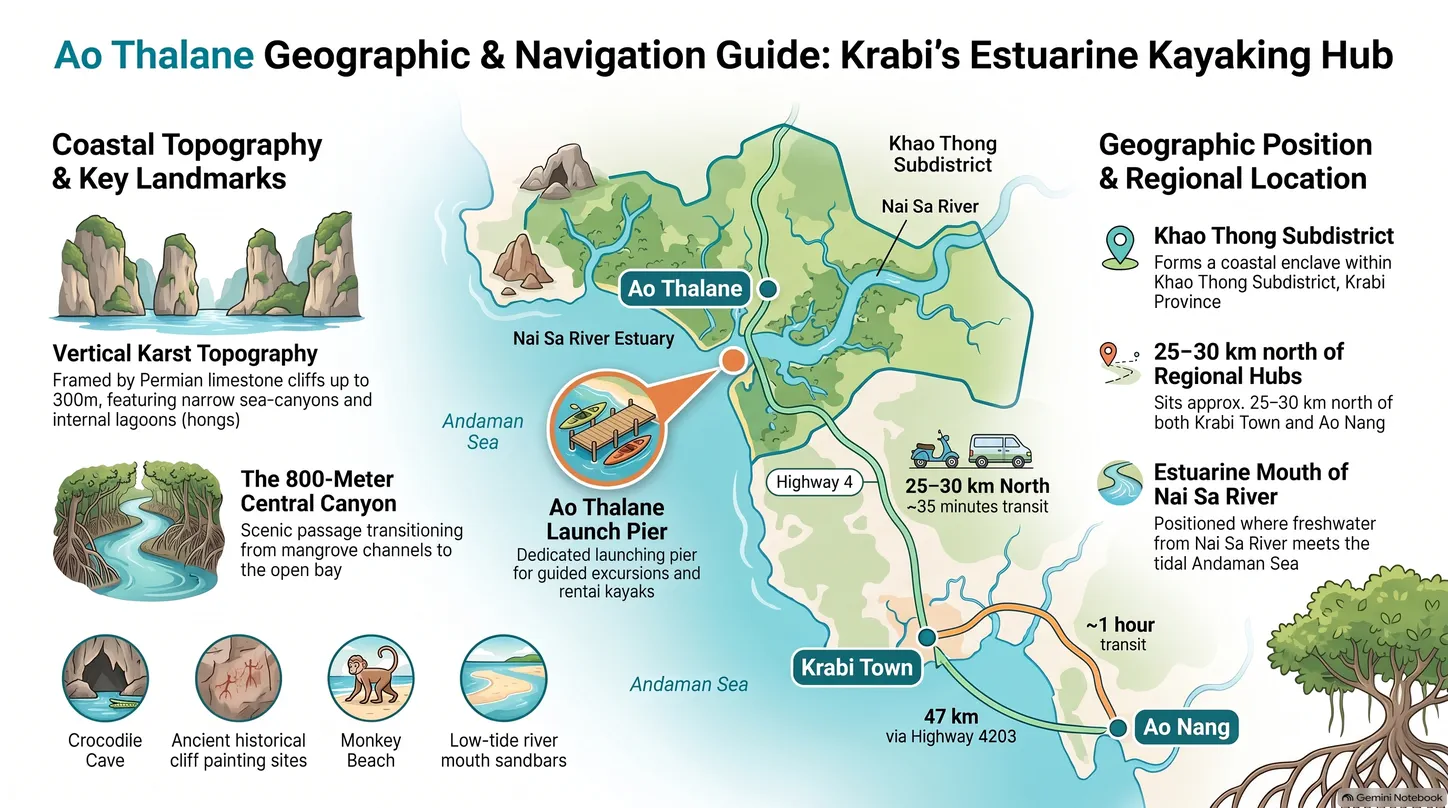
Ao Thalane sits in Khao Thong Subdistrict, Mueang Krabi District, close enough to Krabi Town for an easy morning transfer, yet far enough to feel like an entirely different world. The landscape blends tidal channels, dense mangrove forest, and the dramatic limestone karst cliffs that Krabi is famous for. Exact drive times vary depending on your pickup location, so confirm current timing with your tour operator before booking.
Tides shape everything here. As the water rises and falls, mudflats emerge and submerge, creating shifting feeding grounds for the crabs, fish, and birds that call this estuary home. Visiting at the right tide isn't just a scheduling detail, it genuinely changes what you'll see and how the kayaking feels. Krabi's dry season, roughly November to April, is traditionally the most popular stretch for travellers, though it's worth checking current seasonal conditions closer to your travel dates.
If you're mapping out your Krabi itinerary, Ao Thalane sits conveniently near Ao Nang and Krabi Town, making it easy to slot into a wider loop of the region's highlights.
Beyond the Paddle: Why Ao Thalane Is Redefining What Responsible Adventure Tourism Looks Like
What if the quietest places left on Earth are also the most fragile? At the WhereToGoInThailand editorial desk, we've paddled through dozens of Krabi's waterways, but nothing prepared us for the hush of Ao Thalane — a Ramsar-listed mangrove wetland where limestone cliffs rise like silent sentinels and every stroke of the paddle feels like a small act of trust between traveller and ecosystem. That experience is what convinced us this destination deserves more than a travel listicle. It deserves a serious conversation about how adventure tourism can grow without destroying the very wonder that draws travellers in.
Ao Thalane sits at the centre of a tension playing out across Southeast Asia's most beautiful coastlines: the pull between opening extraordinary places to more visitors and protecting the ecosystems that make them extraordinary in the first place. Having spent a full day kayaking these tidal channels, and having dug into the research behind this wetland's ecological significance, we believe Ao Thalane offers a genuine blueprint for how destinations can balance discovery with conservation. Here's what we learned, and why we think every traveller planning a Krabi itinerary should pay attention.
The scale of what's at stake
It's easy to romanticise a mangrove forest from a kayak seat. It's harder to grasp just how much is riding on getting its management right. Ao Thalane isn't an isolated beauty spot — it's part of the wider Krabi Estuary, a Ramsar Site designated in 2001 for its international ecological importance.
The numbers tell a story most visitors never see beneath the surface:
The estuary's mangroves span roughly 10,200 hectares, framed by around 1,200 hectares of intertidal sand and mudflats, according to the Key Biodiversity Areas factsheet for Na Muang Krabi.
Research from Asian Itinerary on the Krabi Bay and Estuary puts the total Ramsar site at approximately 21,300 hectares, containing more than 10,000 hectares of mangrove and supporting around 73% of all Thai mangrove tree species.
The same research recorded 280 fish species using the estuary, with 232 found specifically within the mangrove forest — and roughly 60% of those were juveniles, meaning this wetland effectively functions as a nursery for marine life far beyond Krabi's shoreline.
Birdlife is just as striking: 221 bird species were recorded across the estuary, including 23 migrant shorebird species, among them the near-threatened Mangrove Pitta and Brown-winged Kingfisher.
Those figures aren't trivia. They're the argument for why the way we kayak here matters. A single careless tour operator, a few hundred metres of damaged root system, or a poorly timed nesting-season visit can ripple through a food web that stretches well beyond Ao Thalane's borders.
The core challenge: growth versus guardianship
Here's our honest take, shaped by what we saw on the water and what the data confirms: Ao Thalane's biggest risk isn't a lack of visitor interest. It's the opposite. As word spreads about this "wild kayaking secret," the temptation will be to scale tour volume faster than the ecosystem can absorb it.
This tension shows up in several concrete ways:
Fragile habitats meet rising footfall. Mangrove root systems and nesting sites for species like the Mangrove Pitta are not designed to withstand repeated disturbance. Every kayak that strays from an established channel, every voice raised too close to a nesting bank, adds incremental pressure. The research behind this wetland already flags real threats — urban wastewater discharge, illegal encroachment, and expanding shrimp aquaculture — which means tourism pressure is compounding challenges that already exist, not introducing a new one from a blank slate.
Tides dictate everything, and that's not a minor logistics issue. Unlike a trail you can walk any time of day, Ao Thalane's accessibility rises and falls with the water. Visit at the wrong tide and channels that should reveal hidden lagoons become impassable mudflats — or worse, a guide pushes through anyway, scraping against root systems that take decades to recover. Responsible operators build itineraries around tide charts, not around convenient pickup times. That's a meaningful signal of quality, not a scheduling footnote.
Economic opportunity can't come at the cost of authenticity. The communities around Khao Thong Subdistrict have a genuine stake in Ao Thalane's future. Tourism revenue matters here. But there's a fine line between a local guide sharing real knowledge of the mangrove's ecology and a mass-market operation that strips away everything distinctive about the experience in pursuit of volume. We'd argue the destinations that get this right are the ones that keep decision-making — and profit — close to the communities who've always understood this landscape.
Most travellers simply don't know what they're paddling through. This might be the most fixable challenge of all. Few visitors arrive understanding that they're entering a Ramsar-listed wetland, that the fish darting beneath their kayak are juveniles of species supporting entire coastal food chains, or that the bird overhead might be one of only a handful of near-threatened individuals left in the region. Education, delivered well, turns a passive tourist into an active participant in conservation.
What we saw done right
We're not interested in vague optimism — we want to point to what actually works. On our visit, the half-day format (roughly four to five hours, including hotel transfer) struck the right balance: enough time to properly explore the narrow limestone-lined channels without rushing wildlife encounters or overextending less experienced paddlers. Good operators we encountered shared a few consistent habits worth calling out:
Sticking rigidly to established channels, even when a shortcut through denser mangrove looked tempting.
Briefing guests before launch on no-touch, no-feed wildlife policies, particularly around the macaques that often gather along the banks.
Running smaller group sizes, which meant less noise, less disturbance, and genuinely better wildlife sightings.
Confirming tide times the morning of departure, rather than locking in a fixed schedule regardless of conditions.
None of this diminished the adventure. If anything, it heightened it. There's something quietly thrilling about paddling with a guide who clearly understands this environment isn't a backdrop — it's a living system they're responsible for protecting.
Our position: responsible tourism is the premium experience, not a compromise
Plenty of sustainability conversations in travel default to guilt or restriction — do less, see less, accept a diminished experience in the name of conservation. We think that framing is wrong, and Ao Thalane proves it.
The operators who prioritise tide-aware scheduling, smaller groups, and trained naturalist guides aren't offering a lesser version of the Ao Thalane experience. They're offering the better one. You see more wildlife because you're not scaring it off. You understand more of what you're looking at because your guide has the knowledge and the time to share it. You leave with a story that goes deeper than "we kayaked through some mangroves" — you leave understanding why this particular stretch of water matters to an entire coastline's ecological health.
For travellers building a Krabi itinerary, that distinction should shape how you choose an operator every bit as much as price or pickup time. Ask whether they check tide charts before confirming bookings. Ask about group sizes. Ask what their wildlife-distance policy looks like in practice, not just in a brochure. The answers will tell you everything about the kind of day you're about to have.
Why this matters beyond one mangrove forest
Ao Thalane is a small case study with a large lesson. Southeast Asia's coastlines are full of similarly spectacular, similarly fragile ecosystems — and the pattern of discovery, popularity, and degradation has played out before, elsewhere, when growth outpaced stewardship. Ao Thalane still has the chance to write a different outcome, and the dry season months from roughly November to April, when conditions are typically calmest for exploring, offer a natural window to experience it at its best.
We believe the travellers reading this have real influence here. Every booking made with a conservation-minded operator is a small vote for the kind of tourism that keeps places like Ao Thalane wild for the next generation of paddlers. Every traveller who asks the right questions before boarding a kayak nudges the entire local industry toward better practice.
Discover sustainable kayaking at Ao Thalane today
Ao Thalane doesn't need more visitors who simply pass through. It needs travellers willing to paddle thoughtfully, ask the right questions of their guides, and treat this Ramsar-listed wetland with the respect its extraordinary biodiversity deserves. That's the adventure worth having — one where the thrill of gliding through hidden limestone channels sits alongside the quiet satisfaction of knowing you've left the ecosystem exactly as wild as you found it.
If you're planning your Krabi itinerary, make Ao Thalane the highlight, not the afterthought. Check tide times, choose an operator who treats conservation as core to the experience rather than an add-on, and discover sustainable kayaking at Ao Thalane today — because the mangroves are waiting, and how you arrive matters just as much as the fact that you came.
Where to go in Thailand
Writer
October 16, 2026• 3 Comments
Why is Ao Thalane's mangrove ecosystem so important?
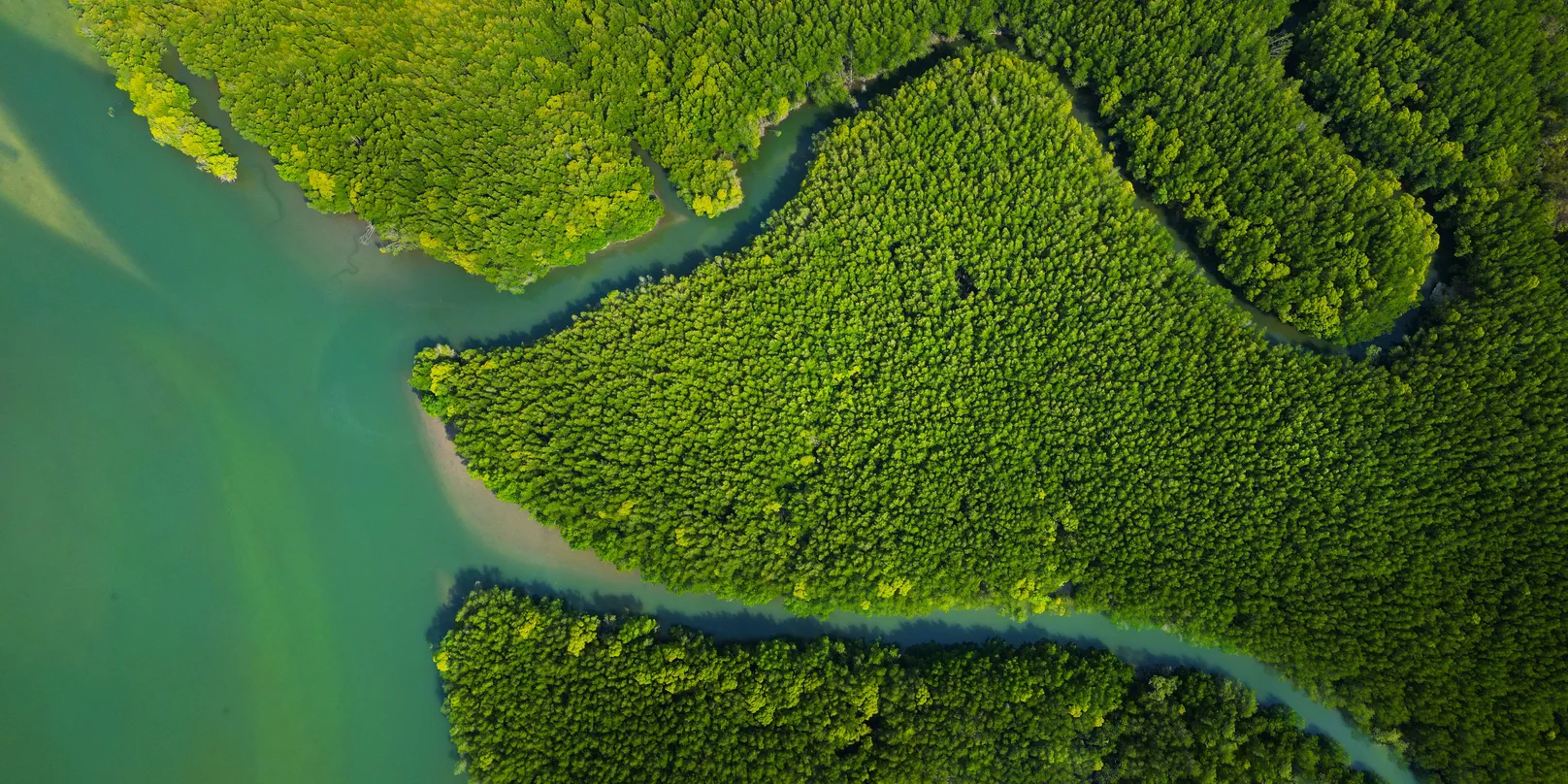
Mangrove forests are among the most productive ecosystems on the planet. They buffer coastlines from erosion, act as nurseries for marine life, and store carbon at rates that outpace many land-based forests. Ao Thalane's mangroves do all of this while forming part of something even bigger: the Krabi Estuary Ramsar Site.
According to the Key Biodiversity Areas factsheet for Na Muang Krabi (2012 assessment), the estuary's mangroves cover roughly 10,200 hectares, alongside around 1,200 hectares of intertidal sand and mudflats at the river mouth, all framed by limestone karst outcrops. The Asian Itinerary research on the Krabi Bay and Estuary adds further scale: the Ramsar site spans approximately 21,300 hectares, contains over 10,000 hectares of mangrove, and supports around 73% of all Thai mangrove tree species. That's an extraordinary concentration of biodiversity packed into one estuary.
For fish populations, the numbers are just as striking. The same research notes that 280 fish species use the estuary overall, with 232 species found specifically within the mangrove forests, and roughly 60% of those recorded as juveniles. In other words, Ao Thalane's mangroves function as a vast underwater nursery, quietly supporting marine food chains far beyond Krabi's shoreline.
This is the "untouched wilderness" feeling that makes Ao Thalane so special: a working ecosystem, not a manicured attraction, where every paddle stroke moves you through genuinely wild terrain.
Ao Thalane Mangroves
What wildlife can you spot while kayaking at Ao Thalane?
Wildlife sightings vary by visit, time of day, and tide, but the estuary's track record is impressive. Birdwatchers take note: the Asian Itinerary research recorded 221 bird species across the Krabi Estuary, including 23 migrant shorebird species, a figure consistent with the commonly cited "over 200 species" benchmark for the site.
Two resident species stand out as near-threatened according to the Key Biodiversity Areas assessment: the Mangrove Pitta (Pitta megarhyncha) and the Brown-winged Kingfisher (Halcyon amauroptera). Local tour operators report that macaques and kingfishers are seen on most kayaking trips, though no sighting can ever be guaranteed in the wild.
Beyond birds, keep your eyes on the water and mudflats:
Mudskippers – these curious amphibious fish skim across exposed mud at low tide, flipping between land and water with surprising agility.
Fiddler crabs – small but ecologically mighty, these crabs help maintain healthy sediment throughout the mangrove floor.
Long-tailed macaques – often spotted along the banks. Keep a respectful distance and never feed them; close encounters can disrupt natural foraging behaviour and pose risks to both wildlife and visitors.
One species deserves a special, honest mention: the Masked Finfoot (Heliopais personata), a Critically Endangered bird and regular non-breeding visitor to the wider Krabi Estuary, per the Key Biodiversity Areas factsheet. It's extraordinarily rare, and spotting one shouldn't be treated as a promised experience. Instead, think of it as one more reason to support the conservation efforts protecting this wetland for the species that depend on it.
Ao Thalane Mangroves
What does a mangrove kayaking tour at Ao Thalane actually involve?
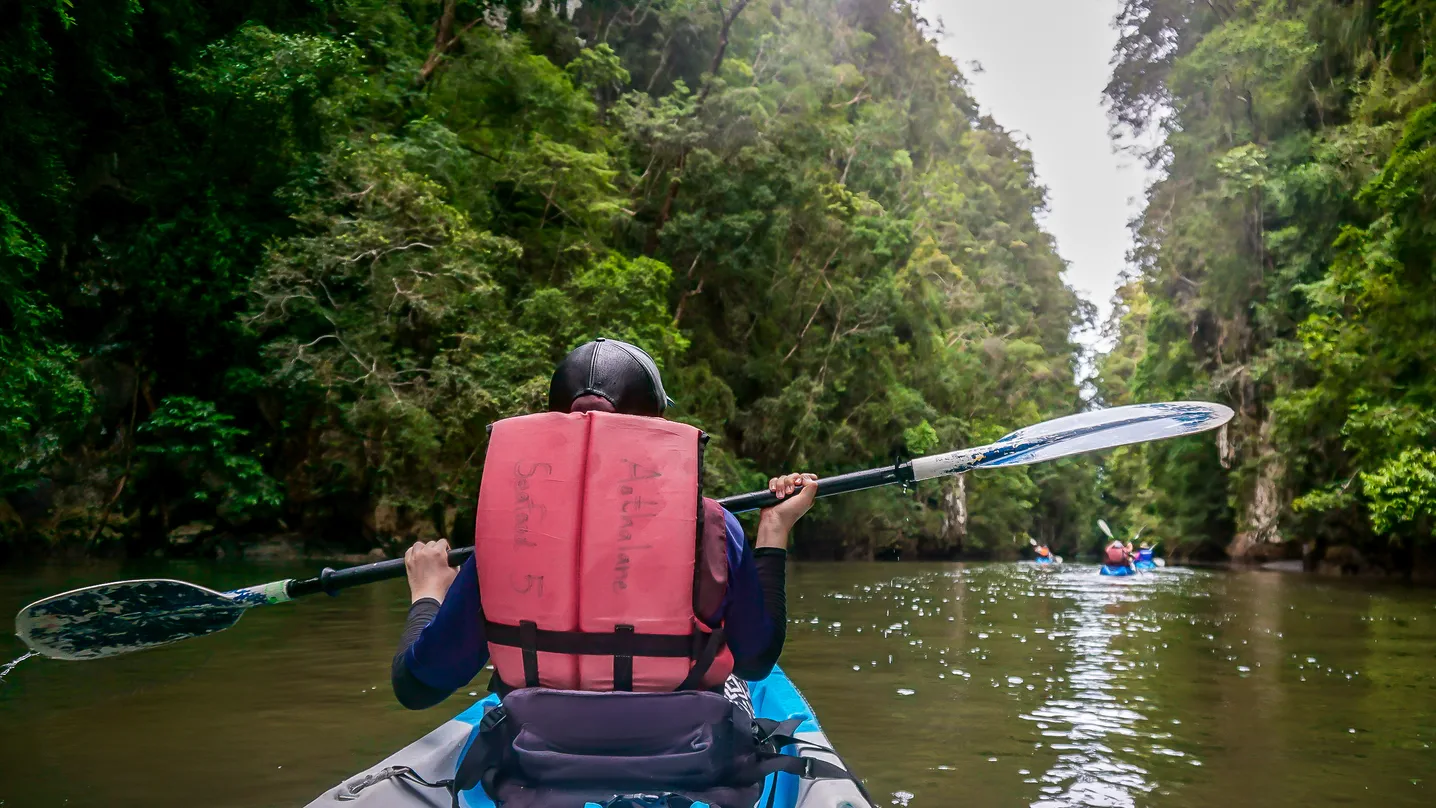
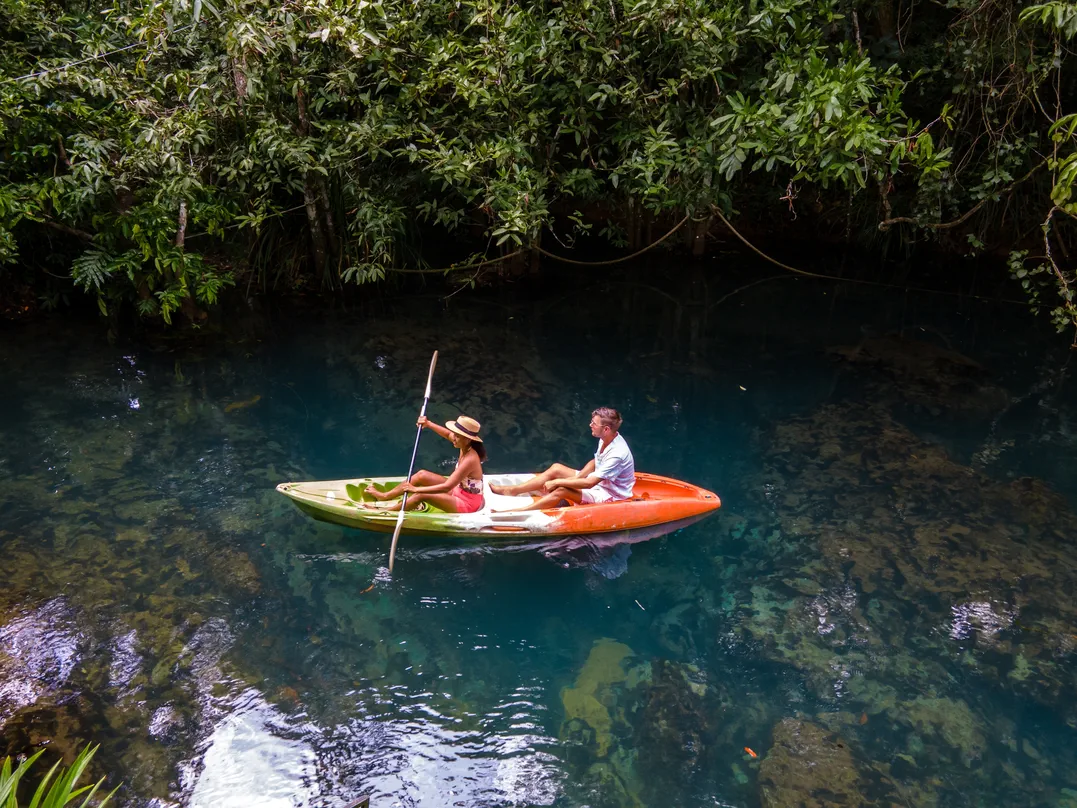
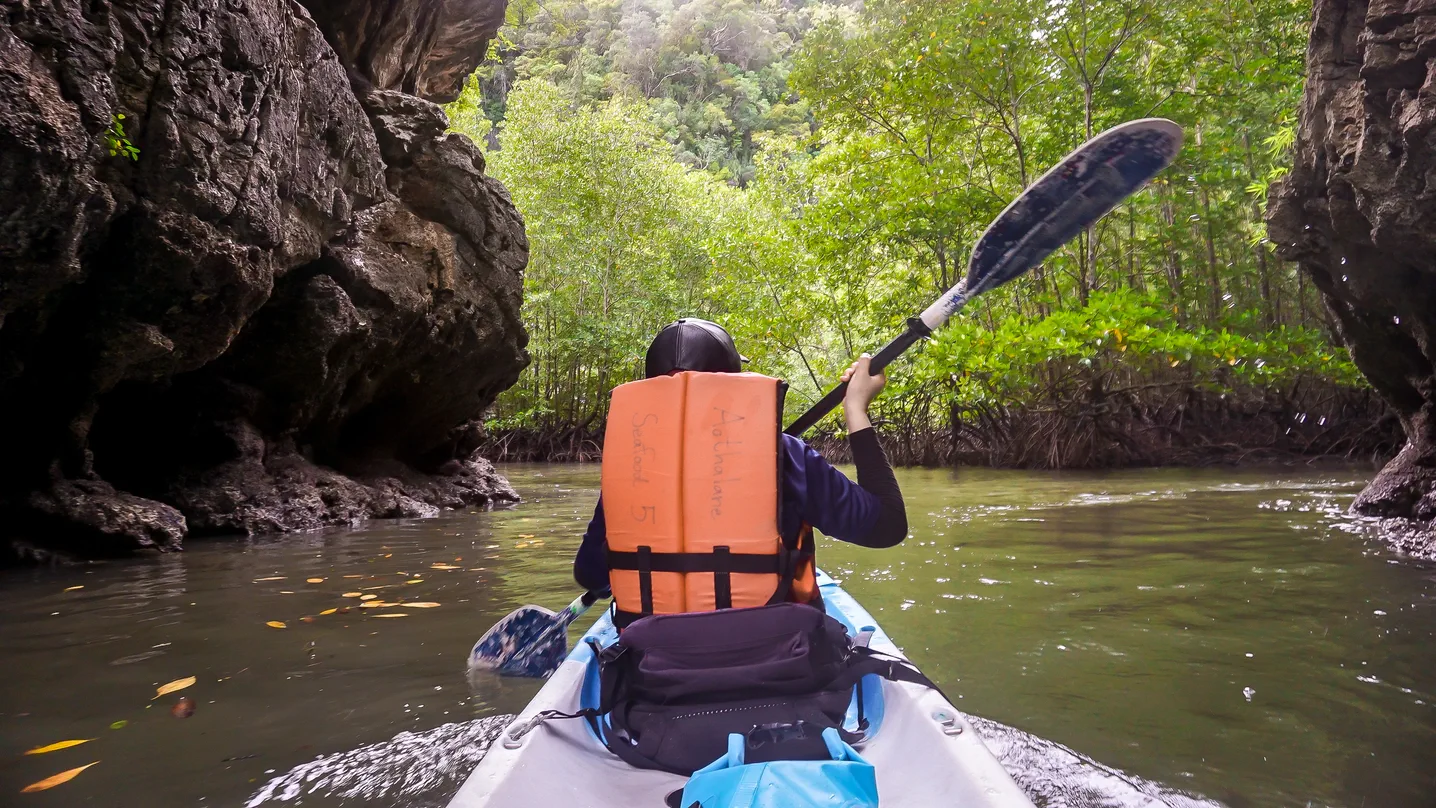
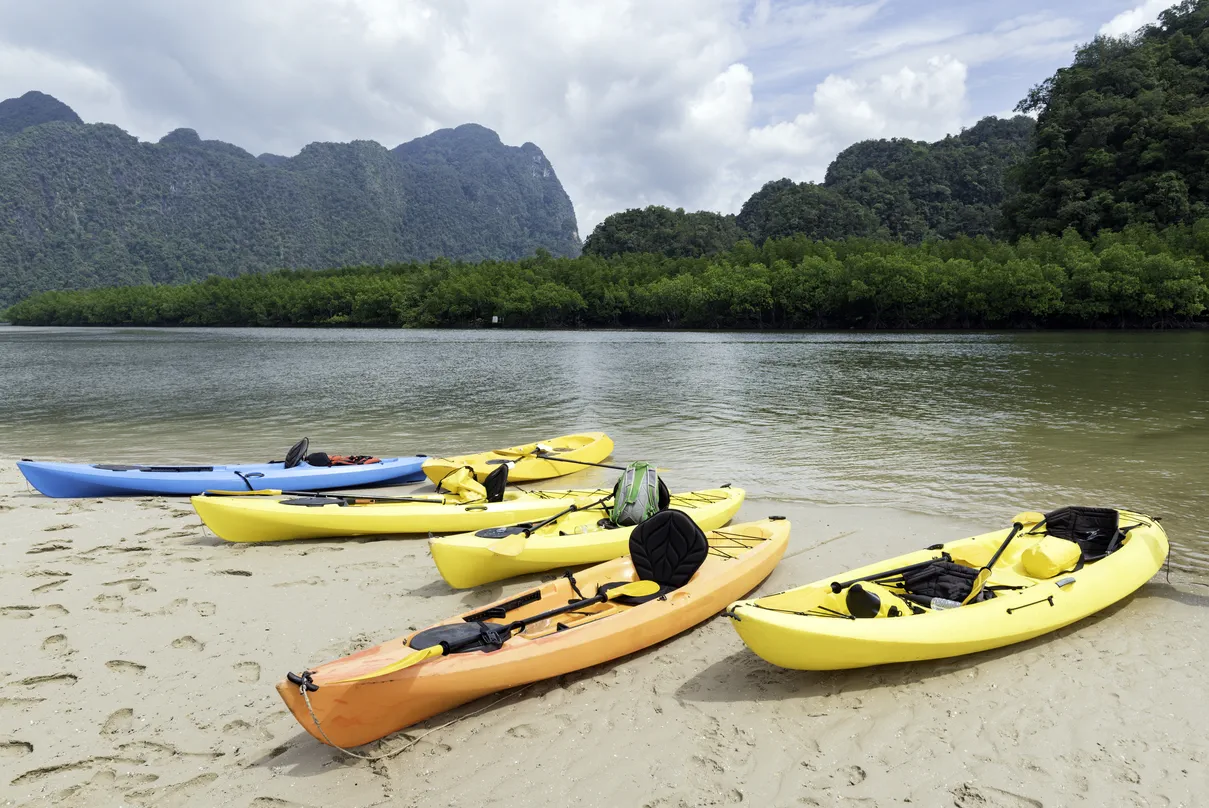
This is where Ao Thalane truly earns its reputation. Mangrove kayaking here means threading narrow canyon-like channels, ducking beneath overhanging rock, and emerging into hidden lagoons that feel untouched by time. The water stays calm and cool beneath the canopy, and the quiet is almost otherworldly, until a kingfisher breaks the stillness overhead.
Most operators offer a few tour formats:
Half-day tours (roughly 4–5 hours), the most common option for first-time visitors.
Full-day tours, allowing more time to explore deeper channels.
Full-day tours combined with Hong Island snorkelling, for travellers who want both mangrove paddling and open-water swimming in one trip.
Sunset tours with barbecue, pairing the kayaking experience with golden-hour views and a meal on the water.
As an example, one operator's half-day itinerary (Koh Tour Krabi, as of October 2026, cited here as an example only, not an endorsement) runs around five hours with hotel pickup between 08:00 and 09:00, paddling across the bay into the mangrove forest, then continuing into sea kayaking past karst rock formations before returning to the pier around noon. Inclusions typically cover hotel transfer, a guide, kayak and life jacket, waterproof bags, and refreshments, with lunch sometimes offered as an add-on. Pricing varies by operator and season, so treat any figures you see as a starting point and confirm current rates directly before booking. Many operators also offer free cancellation up to 24 hours before departure, though policies differ, so check the fine print.
Choose a full-day tour with Hong Island if you want open-water snorkelling alongside the mangrove experience. Choose the half-day option if you're short on time or travelling with younger children, since the shorter format keeps the pace gentle without sacrificing the highlights.
Packing smart makes a real difference. Bring water-friendly clothing, sunscreen, a hat, non-slip shoes, insect repellent, and a change of clothes for the ride home. One important note for inclusive trip planning: these tours generally aren't suited for wheelchair users, pregnant travellers, or anyone with serious medical or back conditions, given the physical nature of getting in and out of a kayak.
Ao Thalane Mangroves
How are Ao Thalane's mangroves being protected?
A wetland this rich doesn't stay pristine by accident. Ramsar protections help safeguard the broader Krabi Estuary, but on-the-ground conservation depends heavily on how visitors and operators behave day to day.
Sustainable tourism practices matter enormously here: sticking to established kayaking routes, never littering, and minimising disturbance to wildlife all help preserve the fragile balance between tourism and habitat health. Choose operators who prioritise eco-friendly practices, such as smaller group sizes, trained naturalist guides, and strict no-feeding policies for wildlife encounters.
It's worth remembering that the same research highlighting Ao Thalane's biodiversity also flags real threats: urban wastewater discharge, illegal encroachment, and the expansion of shrimp aquaculture all place pressure on this ecosystem. Choosing a responsible operator isn't just a nice-to-have, it's a direct way of supporting the wetland's long-term survival. Travellers who kayak thoughtfully become part of the story that keeps Ao Thalane wild for the next visitor.
The Hidden Matrix explores how the complex, subterranean and underwater root networks of Ao Thalane's mangrove forests sustain Krabi’s coastal ecosystem. The video breaks down the biological, physical, and ecological roles played by these intricate root systems, highlighting why they are essential to both wildlife and coastal protection.
What else can you do at Ao Thalane besides kayaking?
While kayaking is the main event, Ao Thalane rewards travellers who slow down. Photographers will find golden-hour light bouncing beautifully off the limestone cliffs and calm channel waters, making early morning or late afternoon visits especially rewarding.
Early risers may also catch strong birdwatching opportunities, scanning the canopy for kingfishers and other estuary residents before the day's heat sets in. Guided nature walks are sometimes available locally, though most confirmed Ao Thalane experiences centre on kayak tours, so check current offerings with operators if a walking tour is a priority for you.
Either way, Ao Thalane invites a kind of stillness that's increasingly rare on a packed travel itinerary. Give yourself permission to pause, breathe, and simply take in the quiet.
Ao Thalane Mangroves
How does Ao Thalane fit into a wider Krabi itinerary?
Ao Thalane pairs naturally with Krabi's other standout attractions. Consider combining your mangrove kayaking day with a visit to Hong Island, the Tiger Cave Temple, the Emerald Pool and Hot Springs, or the Ao Nang Elephant Sanctuary. Travellers with extra time sometimes extend their trip with a day excursion to Phi Phi and Maya Bay.
Krabi's local food scene deserves its own spotlight too. Fresh seafood and classic Thai coastal dishes make a satisfying way to round out a day spent on the water, and exploring the nearby Khao Thong community offers a glimpse into local coastal life, worth researching further through current local guides before your visit.
Ao Thalane Mangroves
Planning your trip: practical tips for Ao Thalane
A few simple steps make all the difference between a smooth day out and a stressful one:
Book in advance, especially during Krabi's busier dry season months.
Check tide times and weather conditions with your operator, since both affect route options and visibility.
Confirm current pricing and inclusions directly with your chosen operator, as rates and packages shift over time.
Pack light but smart: swimwear, sun protection, insect repellent, and a dry bag for electronics.
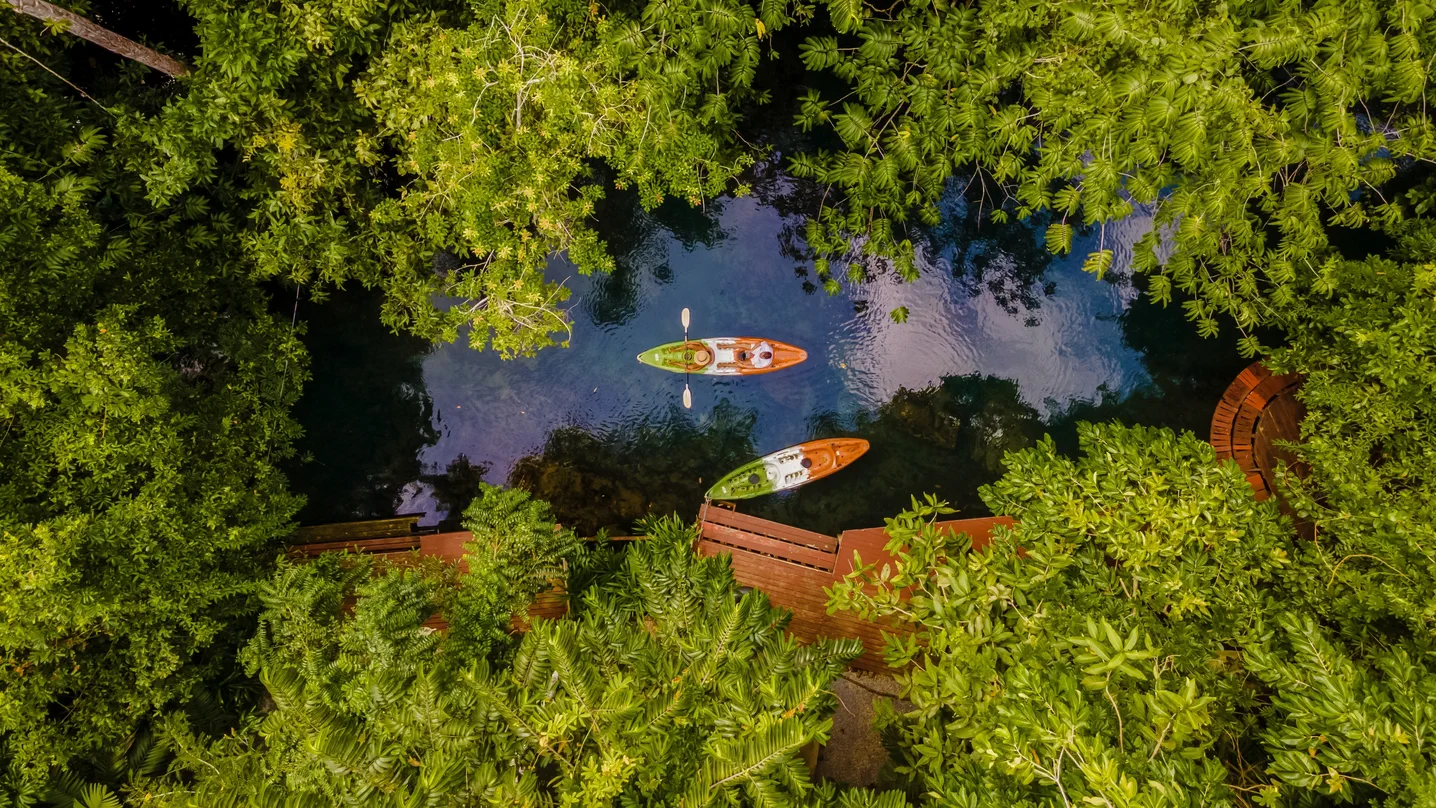
For accommodation, travellers have plenty of options near Ao Thalane and Krabi Town, ranging from budget guesthouses to upscale resorts. Some unique overwater stays exist in the region for travellers wanting to extend their connection to the mangroves beyond a single day, though this is offered purely as an example of what's available, not a specific endorsement, so compare current listings before booking. For broader trip planning, pair this guide with general Krabi travel safety resources and transportation information to round out your itinerary.
Ao Thalane Mangroves
Why Ao Thalane deserves a spot on every Krabi itinerary
Krabi has no shortage of postcard-worthy attractions, but Ao Thalane offers something different: a rare blend of adventure, biodiversity, and genuine quiet that's still relatively undiscovered compared to the region's bigger-name sights. Paddling through these ancient mangrove channels feels like slipping into a hidden world most visitors never find.
If you're building a Krabi Thailand itinerary and want an experience that balances thrill with tranquillity, this is the one to prioritise, not an optional add-on, but a highlight in its own right.
Your Ao Thalane adventure starts with a single paddle stroke
Ao Thalane Mangroves brings together everything that makes Krabi special: a thriving, protected ecosystem, wildlife encounters that reward patience, and a kayaking experience unlike anything else on Thailand's Andaman coast. Visiting responsibly, choosing eco-conscious operators, respecting wildlife distance, and leaving no trace, helps keep this wetland thriving for the travellers who come after you.
Start planning your Krabi mangrove kayaking tour today, check tide times, compare operators, and pack your sense of curiosity. Ao Thalane is waiting, quietly, just beyond the mangrove line.
Ao Thalane Mangroves
Frequently Asked Questions
Is Ao Thalane kayaking suitable for beginners?
Yes. Operators typically describe the water as shallow and calm, with no prior kayaking experience required. Guides handle navigation through the trickier channels, making it accessible for most fitness levels.
How long does an Ao Thalane kayaking tour take?
Half-day tours generally run around 4–5 hours, including hotel transfers. Full-day options, including those combined with Hong Island snorkelling, take considerably longer. Confirm exact timing with your chosen operator.
What wildlife might I see while kayaking at Ao Thalane?
Commonly reported sightings include long-tailed macaques, mudskippers, fiddler crabs, and resident bird species like the Mangrove Pitta and Brown-winged Kingfisher. The Critically Endangered Masked Finfoot visits the wider estuary but is extremely rare and never guaranteed.
What's the best time of year to visit Ao Thalane?
Krabi's dry season, roughly November through April, is traditionally the most popular window, though it's worth confirming current seasonal patterns closer to your travel dates. Tide timing on the day of your visit matters just as much as the season.
Who should skip the Ao Thalane kayaking tour?
These tours generally aren't recommended for wheelchair users, pregnant travellers, or anyone with serious medical or back conditions, given the physical demands of kayak entry and exit.
How much does an Ao Thalane kayaking tour cost?
Pricing varies by operator, tour length, and inclusions such as lunch. Treat any published figures as a guide only, and confirm current rates directly with your chosen tour operator before booking.
Gallery
Reader Feedback (6)
Jon Gibbons
Etiam pretium, magna eget feugiat finibus, tellus massa pellentesque nisi, non malesuada nulla nunc vel ligula. Sed finibus enim eu nulla tempus, vitae tincidunt dolor semper. Praesent fringilla, metus at convallis sagittis.
Michael Carter
Vestibulum ante ipsum primis in faucibus orci luctus et ultrices posuere cubilia curae; Donec vel erat in nulla efficitur tempor non ut nisl. Integer venenatis eros ut dui viverra fermentum.
Sophie Wilson
Nam ut turpis hendrerit, varius nunc vel, elementum dui. Morbi vulputate dolor sit amet scelerisque egestas. Vestibulum eleifend nunc ut bibendum fermentum.
Contact
Necessitatibus eius consequatur ex aliquid fuga eum quidem sint consectetur velit






















Reader Feedback (6)
Jon Gibbons
Etiam pretium, magna eget feugiat finibus, tellus massa pellentesque nisi, non malesuada nulla nunc vel ligula. Sed finibus enim eu nulla tempus, vitae tincidunt dolor semper. Praesent fringilla, metus at convallis sagittis.
Michael Carter
Vestibulum ante ipsum primis in faucibus orci luctus et ultrices posuere cubilia curae; Donec vel erat in nulla efficitur tempor non ut nisl. Integer venenatis eros ut dui viverra fermentum.
Sophie Wilson
Nam ut turpis hendrerit, varius nunc vel, elementum dui. Morbi vulputate dolor sit amet scelerisque egestas. Vestibulum eleifend nunc ut bibendum fermentum.