Rock-Climbing-Railay-Beach

Rock-Climbing-Railay-Beach
KRABI

Railay Beach Climbing: Thailand's Ultimate Sport Climbing Escape

Railay Beach climbing offers over 700 bolted sport routes across limestone karsts in Krabi, Thailand, suiting everyone from first-time climbers to seasoned multi-pitch adventurers. Accessible only by longtail boat, the peninsula combines beginner-friendly walls like One-Two-Three Wall with legendary routes like Humanality, making it one of the world's most spectacular climbing destinations.

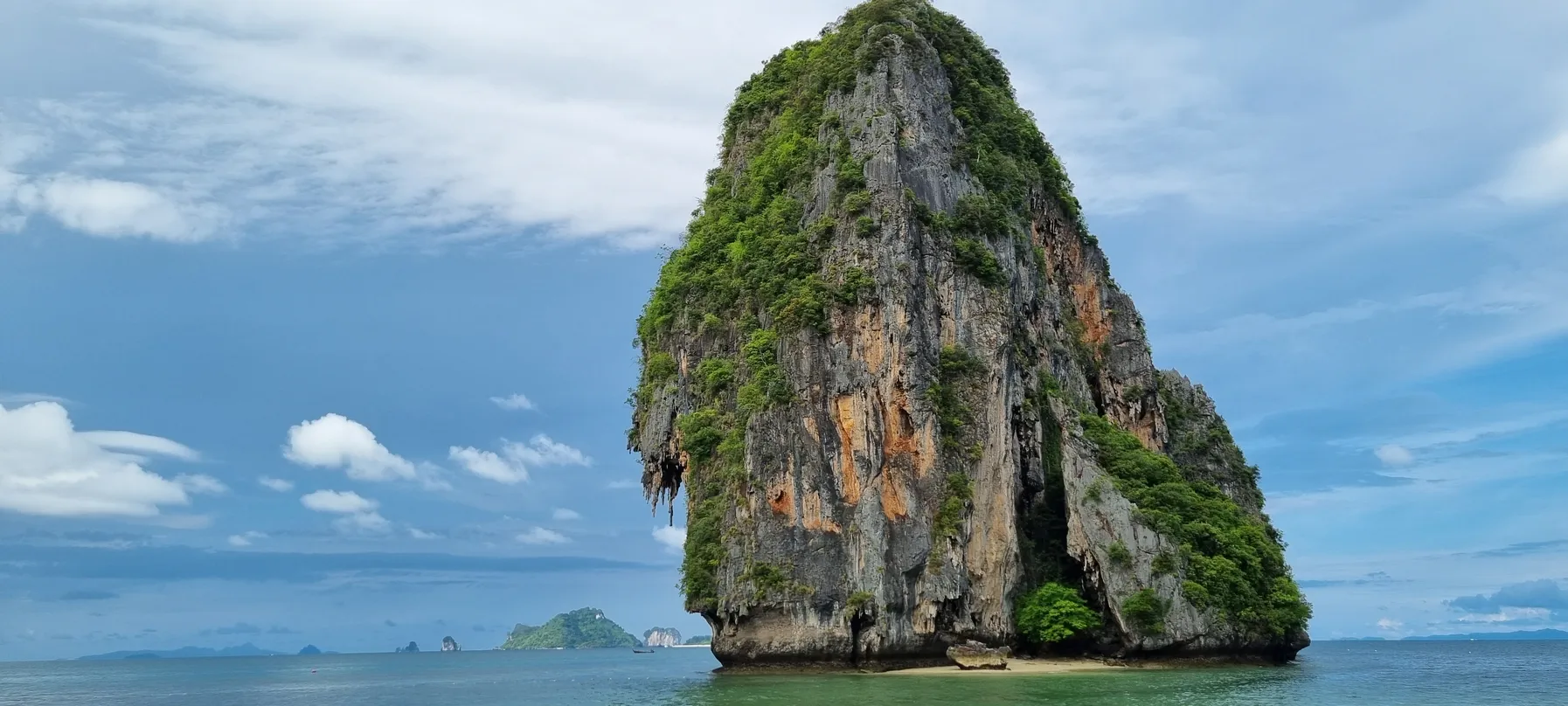
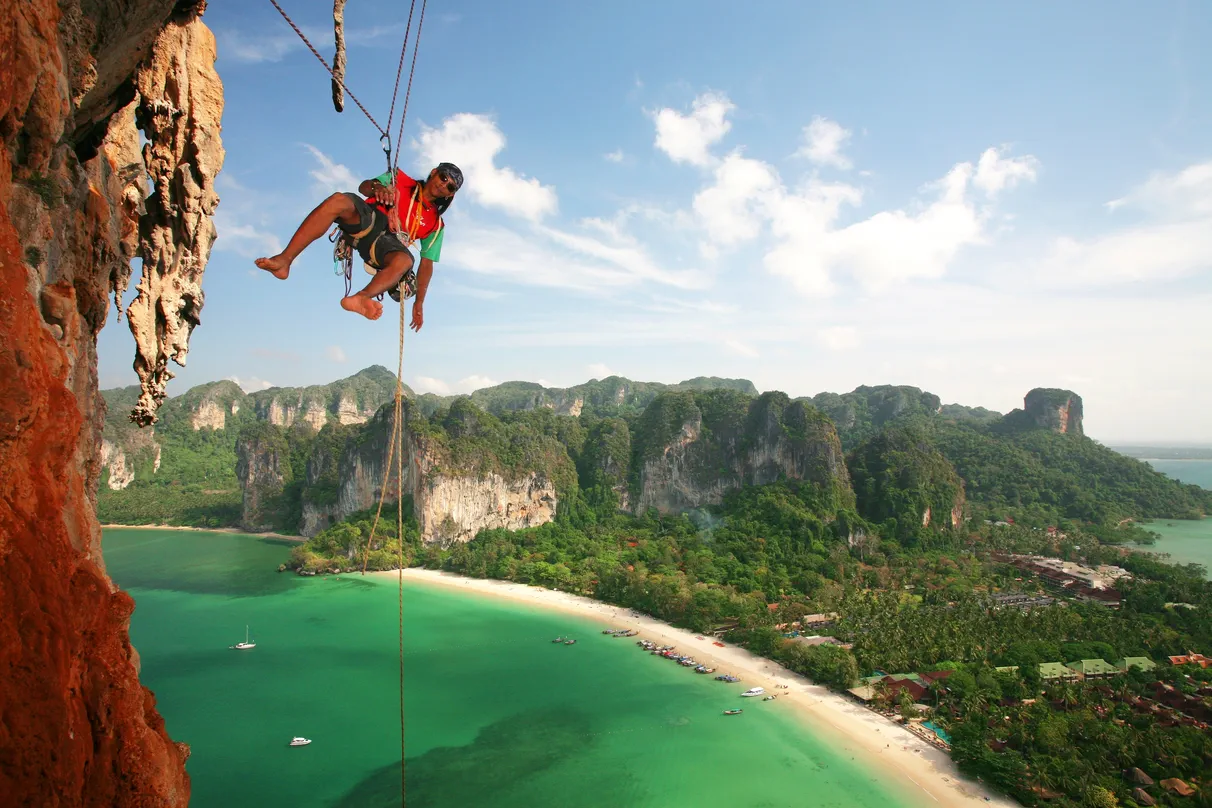
Towering limestone karsts rise straight out of the turquoise Andaman Sea, longtail boats bob against the shoreline, and climbers dangle from stalactites hundreds of feet above the water. This is Railay Beach — and it might just be the most dramatic place on Earth to clip into a quickdraw.

Railay Beach climbing has earned a reputation among travellers and climbers alike as one of Southeast Asia's must-do adventures. Tucked into Krabi province, Thailand, this peninsula is reachable only by boat, which gives it a wonderfully secluded, cut-off-from-the-world feel the moment you step off the longtail onto its sand.

Whether you're holding a quickdraw for the very first time or chasing your next multi-pitch mission, this Krabi climbing guide covers everything you need: how to get there, the 700-plus bolted routes waiting for climbers of every level, the gear to pack, safety considerations, the best schools, where to stay, and how to climb responsibly so Railay stays spectacular for years to come.

Railay Beach Rock Climbing at a glance:

  • Location: Sits on the Krabi coast of southern Thailand, accessible only by longtail boat from Ao Nang — a 15-minute crossing that sets the tone for the adventure ahead.
  • Routes: Over 700 bolted sport routes across dramatic limestone, catering to all skill levels from complete beginners to seasoned multi-pitch climbers.
  • Best time to visit: October to March for the driest conditions; December to March for the smallest crowds.
  • Essential gear: 60–70m rope, around 12 quickdraws, a helmet, and a large water bottle — tap water isn't drinkable on the peninsula.
  • Safety: A helmet is non-negotiable given coastal bolt corrosion and some unusually high first bolts on certain routes. Climbing-specific travel insurance is strongly recommended.
  • Courses: Beginners are well served by established climbing schools, with half-day courses starting from around 1,400 baht.

Why Railay Beach Is Krabi's Climbing Crown Jewel

Picture a peninsula with no roads, no cars, and no way in except by sea. Sheer limestone cliffs plunge into the Andaman Sea, cutting Railay off from the mainland and giving it an atmosphere unlike anywhere else in Thailand - wheretogointhailand.com.

Climbers have been drawn here since bolting began in the late 1980s and 90s and the scene has only grown since. Today, Railay Beach climbing spans more than 700 mostly bolted sport routes, ranging from gentle introductions to brutal, chalk-stained test pieces. Few places on the planet pack this much vertical variety into such a small stretch of coastline, which is exactly why this Krabi climbing guide exists — to help you make sense of it all before you arrive.Rock-Climbing-Railay-Beach

Getting to Railay Beach: Transport, Timing and Tips

Reaching Railay is part of the adventure. Most travellers fly into Krabi International Airport, then take a roughly 40-minute transfer to Ao Nang, which costs around AUD 15 by Grab (We Are Explorers, 14 July 2025).

Rock-Climbing-Railay-Beach

From Ao Nang, a longtail boat carries you across to Railay in about 15 minutes. Fares are typically quoted between 100 and 200 baht depending on the source (We Are Explorers; Travel Dudes), so it's worth confirming the price with your boatman before you board. ByrdieOnTheRocks also recommends allowing at least 3.5 hours for the return journey to Krabi Airport, since boat schedules and traffic can eat into your buffer faster than expected.

For the wider logistics of getting around Thailand — navigating airports, booking accommodation, and planning onward travel — WhereToGoInThailand.com is a useful general resource to bookmark alongside this guide.

When it comes to timing your trip, sources differ slightly. Travel Dudes points to October through March as the driest window, while We Are Explorers narrows the sweet spot to December through March for the smallest crowds. If you're chasing bone-dry rock and don't mind busier crags, aim for the earlier end of that range. If you'd rather have routes to yourself and don't mind the occasional shower, the shoulder months — and even the cheaper rainy season — can work in your favour.

Railay Beach: Thailand's World-Class Rock Climbing Paradise

Team - wheretogointhailand.com says:

Picture this: limestone cliffs soaring straight out of turquoise water, longtail boats bobbing against a backdrop of jungle-clad karsts, and climbers dangling from routes with the Andaman Sea glittering beneath their feet. This isn't a scene from an adventure film — it's an ordinary afternoon at Railay Beach, Krabi.

Accessible only by boat and cut off from mainland roads by towering cliffs, Railay has earned its reputation as one of the best rock climbing destinations on the planet. Whether you're clipping into your very first bolt or chasing a notoriously tricky grade, Railay delivers an experience that blends adrenaline, natural beauty, and genuine Thai hospitality in equal measure. Here's everything you need to know before you go.

Rock-Climbing-Railay-Beach

Climbing for All Levels

One of the most appealing things about Railay is that it doesn't gatekeep the experience. Complete beginners and seasoned lead climbers share the same cliffs, often on the very same wall.


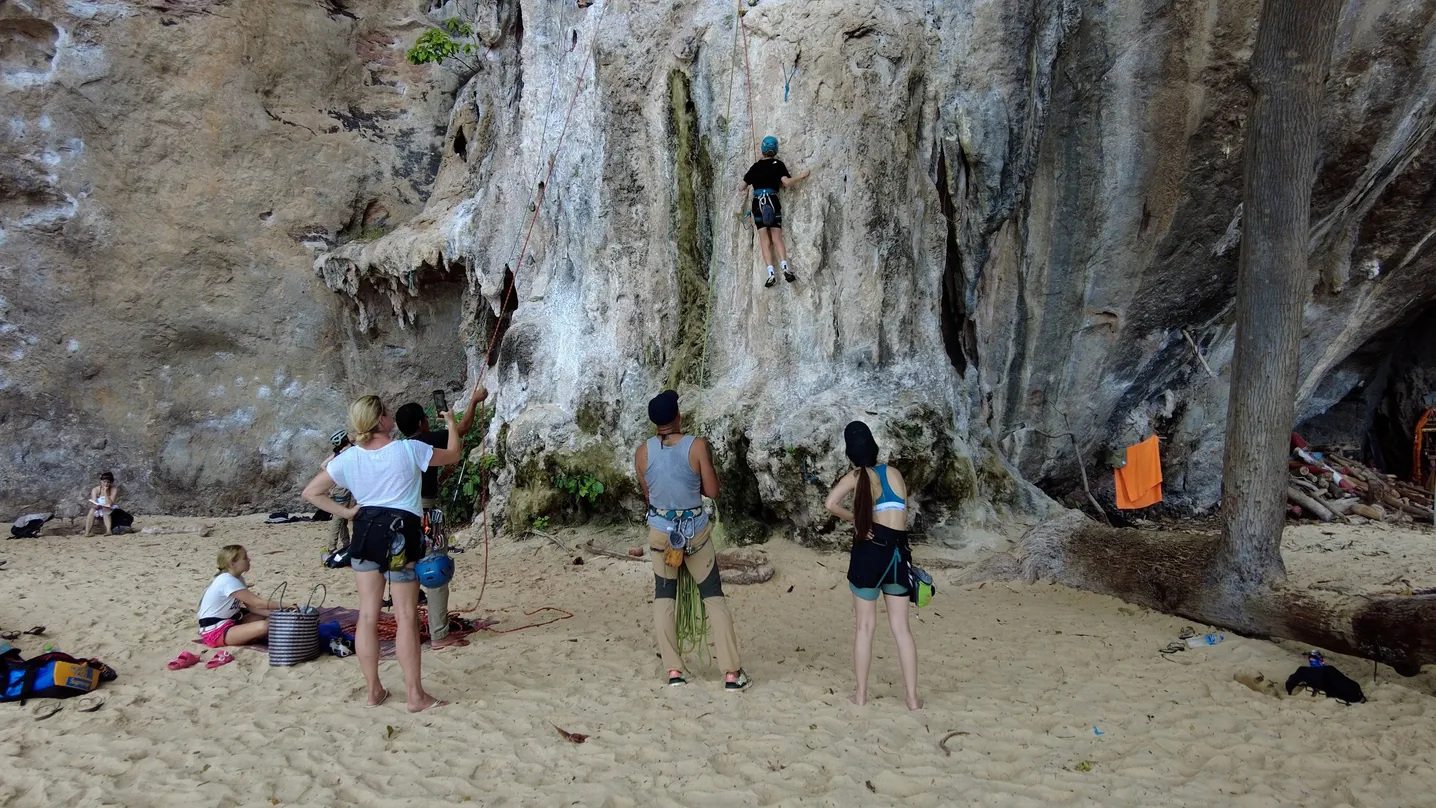
New to climbing? You're in excellent hands. Established schools such as King Climbers and Krabi Rock Climbing have been operating here for decades, and their instructors specialise in guiding total novices up their first routes. Expect a safety briefing, top-rope setups on beginner-friendly routes, and genuinely patient coaching — no prior experience required. Most first-timers come away stunned at how far they progress in a single session.

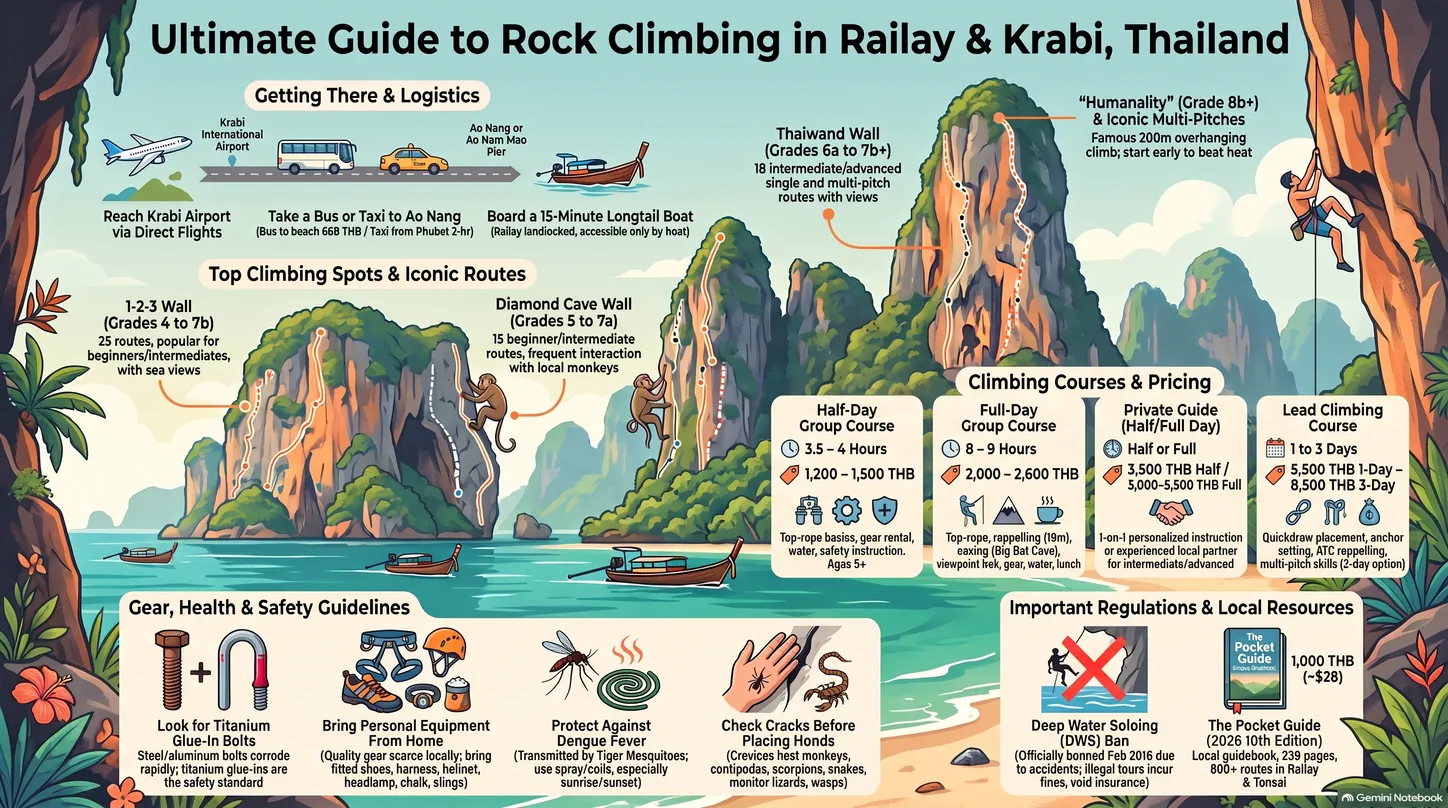
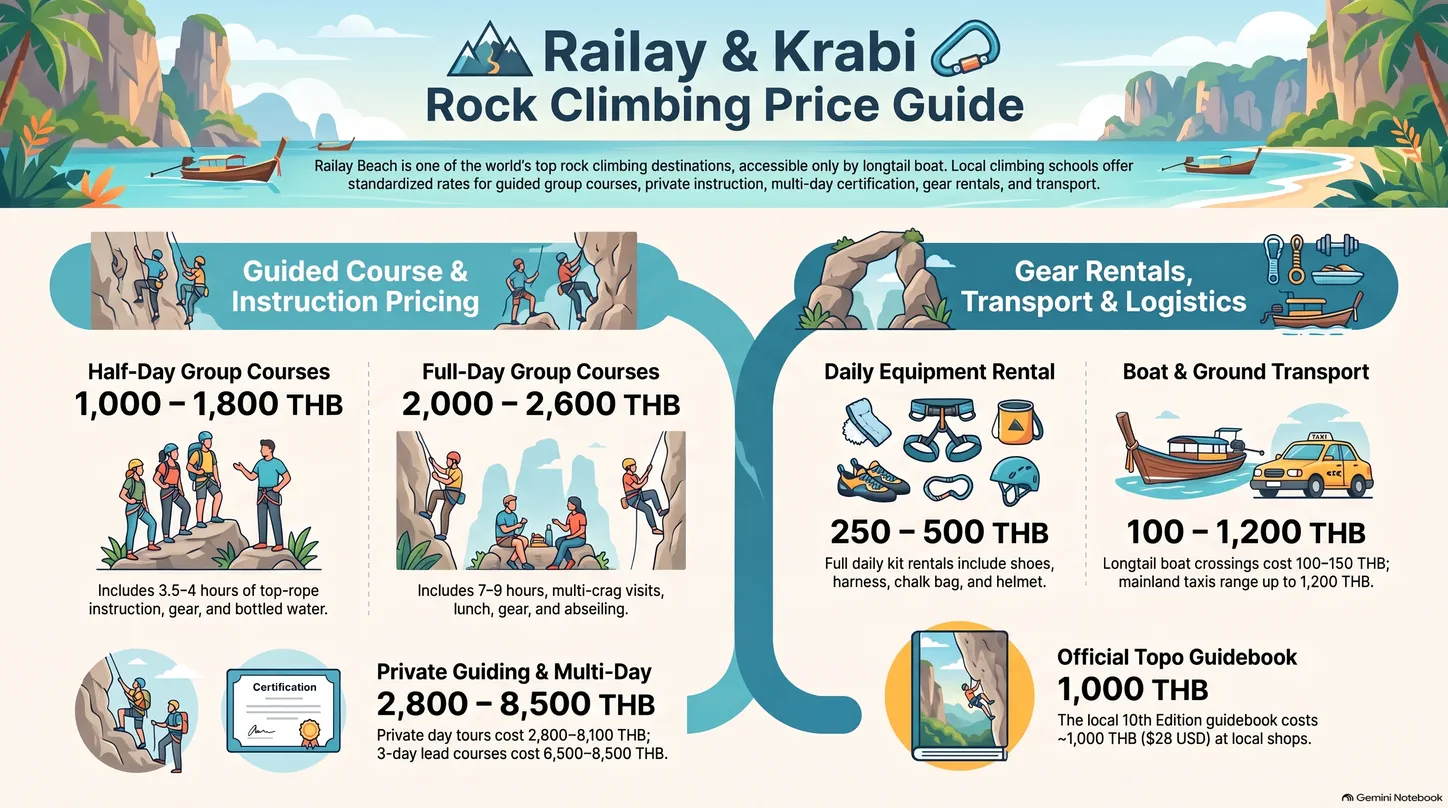
  • Half-day introductory course: from around 1,400 baht
  • Full-day group course: around 1,800 baht
  • Full-day private instruction: around 4,500 baht

Experienced climbers, meanwhile, will find plenty to sink their chalk-covered hands into. Railay's limestone offers routes ranging from relaxed 5a warm-ups to brutal 8a+ test pieces, many of them bolted to a high standard. Lead climbers can rent gear independently or team up with a local guide to access less-travelled routes and multi-pitch lines that reward a head for heights with some of the best sea views in Southeast Asia.

Key Climbing Areas

Railay's climbing is spread across several distinct zones, each with its own character.

Phra Nang Cave Beach
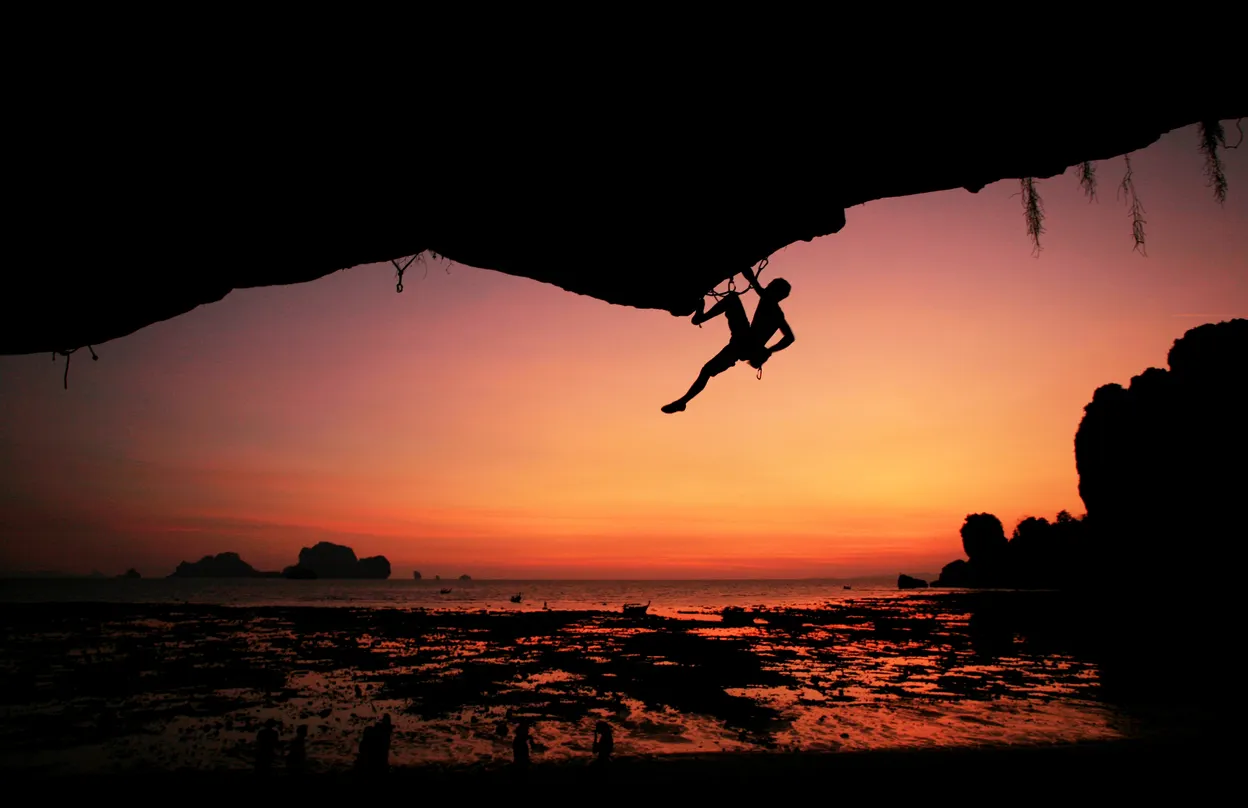
Home to some of the most photographed routes in Thailand, this area combines striking overhangs with a postcard beach right at the base of the cliff. It's ideal for climbers wanting a mix of technical movement and jaw-dropping scenery — just don't be surprised if sunbathers pause to watch your ascent.

One-Two-Three Wall (East Railay)
As the name suggests, this is actually three connected walls offering a huge range of routes, from gentle introductions to demanding overhangs. Its position on the East Railay side means it often catches welcome afternoon shade, making it a popular choice when the midday sun becomes relentless elsewhere.

Diamond Cave Wall
Tucked near the atmospheric Diamond Cave, this area is known for technical, pocketed limestone that rewards precise footwork. It's a slightly quieter alternative to the busier beachfront walls, appealing to climbers who prefer to focus without an audience.

Climbers based in neighbouring Tonsai — Railay's scruffier, more bohemian cousin, reachable by a short beach walk or longtail hop — will also find excellent access to many of these same walls, along with a laid-back community of long-term climbing travellers.

Best Time to Go

Timing your trip well makes a genuine difference to the Railay climbing experience.

November to February is widely considered peak season. Temperatures are more forgiving, rainfall is minimal, and the rock stays dry — ideal conditions for tackling harder routes. The trade-off is crowds: popular walls like Phra Nang can feel busy during these months, so arriving early is wise.

March to May brings intense heat, and climbing is best tackled in the early morning or late afternoon to avoid the worst of the midday sun.

June to October marks the rainy season. Showers can be sudden and routes slippery, but this period also means thinner crowds and quieter beaches, which some climbers genuinely prefer despite the unpredictable weather.

Practical Tips

A little preparation goes a long way in Railay.

  • Gear rental: You don't need to lug equipment from home. Local climbing schools rent shoes, harnesses, and ropes at affordable rates, and most gear is well maintained.
  • Hire a local guide: Even confident climbers benefit from a guide's knowledge of route conditions, bolt quality, and lesser-known lines. Local guides also speak from years of experience navigating Railay's unique tidal and weather patterns.
  • Safety first: Always check bolts before committing to a route, as coastal limestone can weather over time. Climb with a buddy, stay hydrated in the heat, and respect your limits — the grades here can feel tougher than elsewhere due to the heat and humidity.
  • Timing around tides: Some approaches, particularly near Phra Nang, are tide-dependent. Check tide times before setting out to avoid getting stranded or soaked.
  • Footwear for approaches: Trails to areas like Diamond Cave can be uneven and slippery, so sturdy sandals or approach shoes are worth packing.

The Verdict

Few places in the world let you combine genuine adventure sport with the relaxed charm of a tropical beach holiday quite like Railay. You can spend your morning clawing your way up an overhanging limestone wall and your afternoon floating in the warm waters below it — all without ever needing a car, a road, or a rigid itinerary.

Whether you're taking your first tentative steps onto a top-rope with King Climbers or chasing a personal best on a Diamond Cave test piece, Railay delivers an experience that's as accessible as it is unforgettable. It's not just a must-do activity in Thailand — it's one of the most compelling reasons to visit Krabi at all.

Ready to start planning your Railay Beach adventure? Head to wheretogointhailand.com for more in-depth guides, itineraries, and insider tips to help you make the most of your Thailand trip.

Writer
Where to go in Thailand
Writer
October 16, 2026 • 3 Comments

Inside Railay and Tonsai: Understanding the Climbing Areas

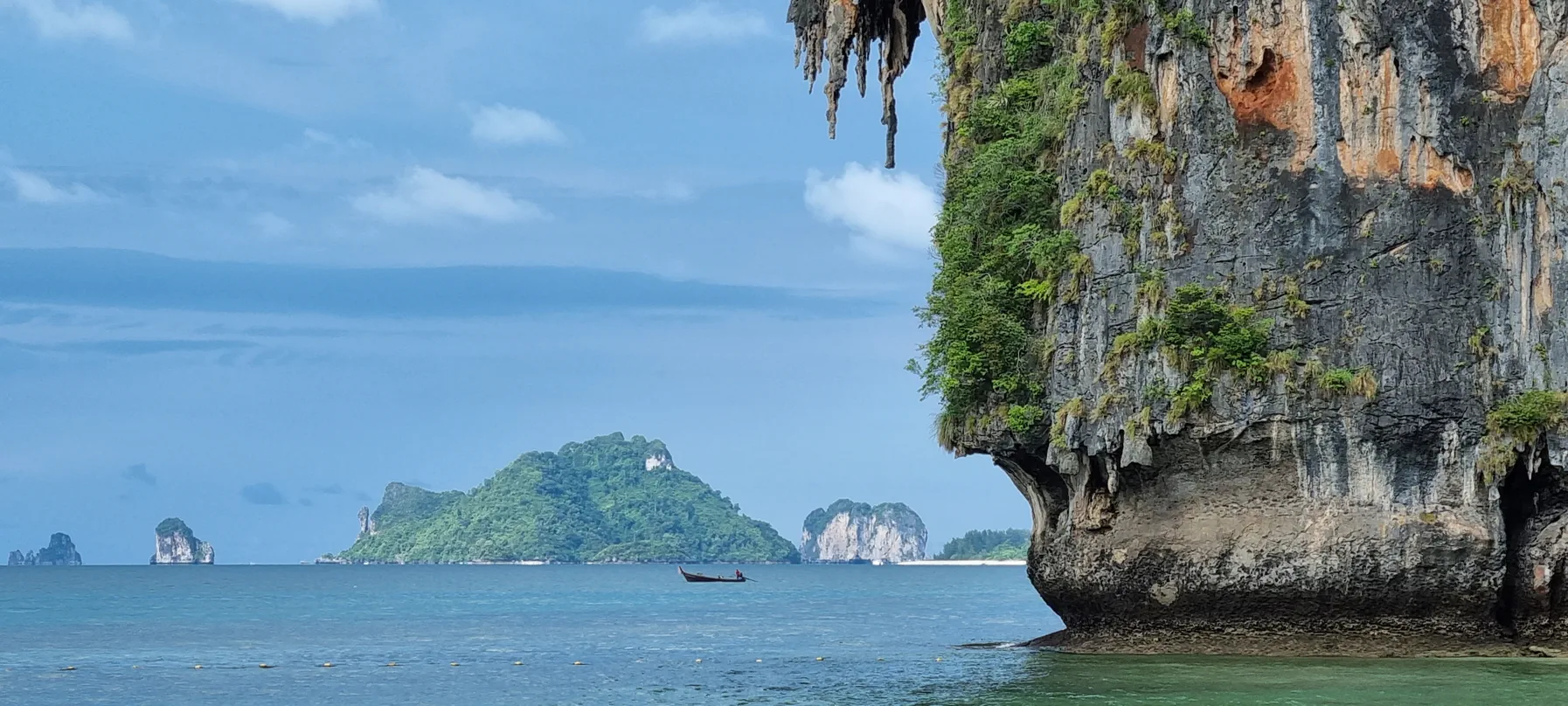
Railay isn't one single destination — it's really a cluster of connected beaches, each with its own personality. Tonsai is the climbers' heartland: budget-friendly, scruffy around the edges, and proudly "dirtbag" in spirit. Railay East and West lean more resort-style, while Phra Nang is the most polished stretch of sand on the peninsula.

The good news is that Tonsai and Railay are walkable from one another, so many routes technically billed as "Railay climbing" actually sit within Tonsai's boundaries.
Rock-Climbing-Railay-Beach

Where Beginners Should Start Climbing

New to Thailand sport climbing? One-Two-Three Wall in East Railay is the obvious starting point — it's shaded, sits right next to the beach, and is a firm favourite with climbing schools. wheretogointhailand.com recommends arriving before 9am, both to beat the heat and to snag a spot before the crowds roll in.

Solid beginner routes to look out for include Take it Easy, Tamada, King Cobra, Giggerig, and Ling Noi, before progressing onto Selee, Samiboy, and Massage Secrets as your confidence builds. Diamond Cave Wall is another great warm-up spot, though expect it to get busy between 9am and 4pm during peak season.

One safety note worth remembering: sun-exposed walls like Fire, Cobra, and Eagle get brutally hot in the middle of the day. Stick to mornings or late afternoons on these walls, pack more water than you think you'll need, and always, always wear a helmet.
Rock-Climbing-Railay-Beach

Levelling Up: Thailand Sport Climbing for Intermediate and Advanced Climbers

Once you're comfortable on the beginner walls, Railay rewards you with routes that build steadily in difficulty. Intermediate climbers should look at Groove Tube (6a) on Fire Wall, Hello Christine, Valentine, Mai Pen Rai (6a+) at The Defile, and No Good Deed Goes Unpunished (6b+).

For advanced climbers, the roll call reads like a greatest-hits list: Beauty and the Beast (6c), famous for its gymnastic stalactite jump; The Keep, home to the celebrated line Babo Does Thailand (6c); Straight Outta Tonsai (7a); Burnt Offerings (7a+); and Orange Juice (7b+).

Choose a single-pitch day if you want maximum routes, minimal commitment, and the flexibility to hop between walls as the sun moves. Choose a multi-pitch day if you're after a full-day adventure with a real sense of exposure and achievement.

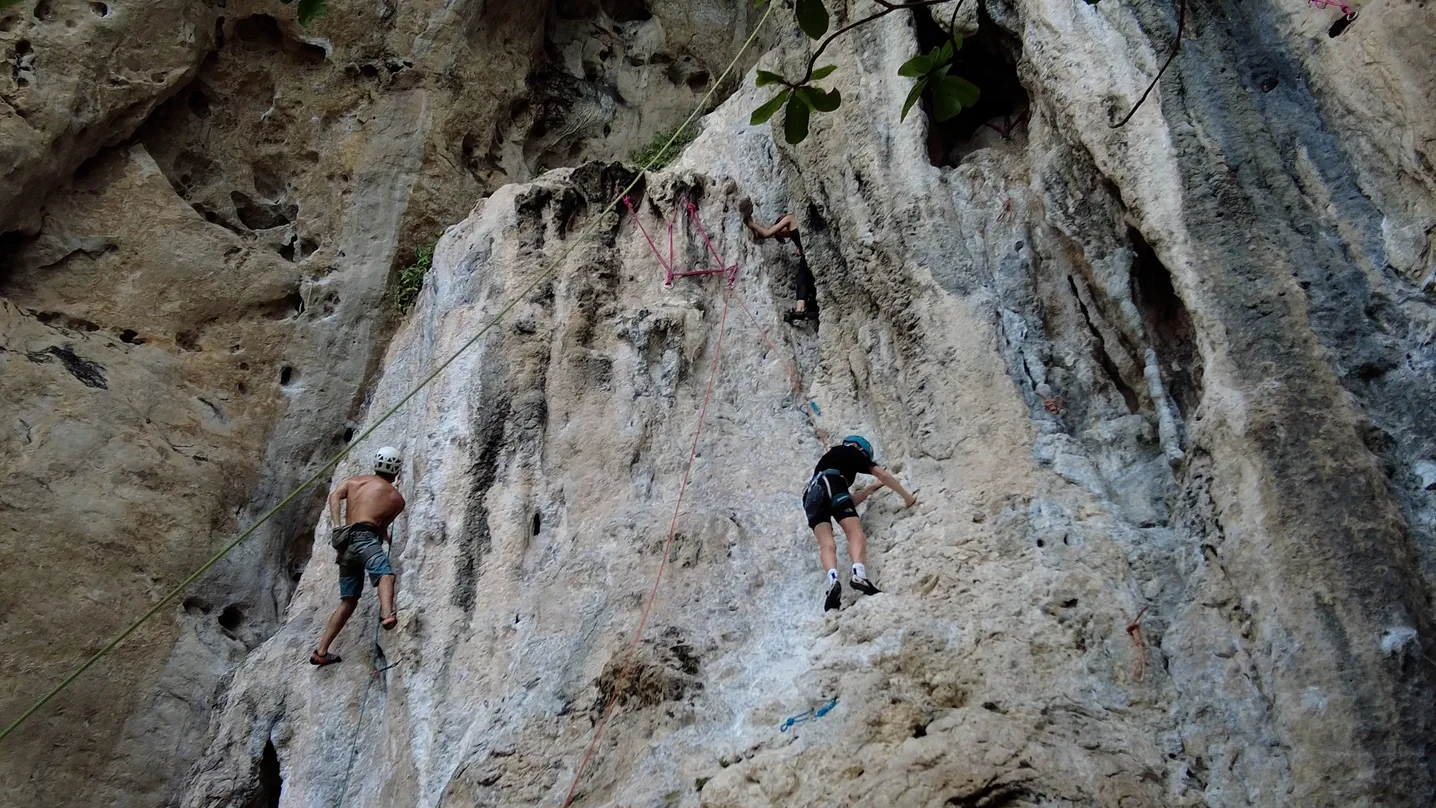
Speaking of multi-pitch, the Thaiwand cliff deserves its own mention. Humanality (6b+, five pitches) is the signature climb here, finishing with a legendary rappel that drops climbers straight onto the roof of Freedom Bar (We Are Explorers) — cold drink included. Few multi-pitch climbing experiences in Thailand, or anywhere else, end quite so memorably.
Rock-Climbing-Railay-Beach

Packing List: Gear You'll Need

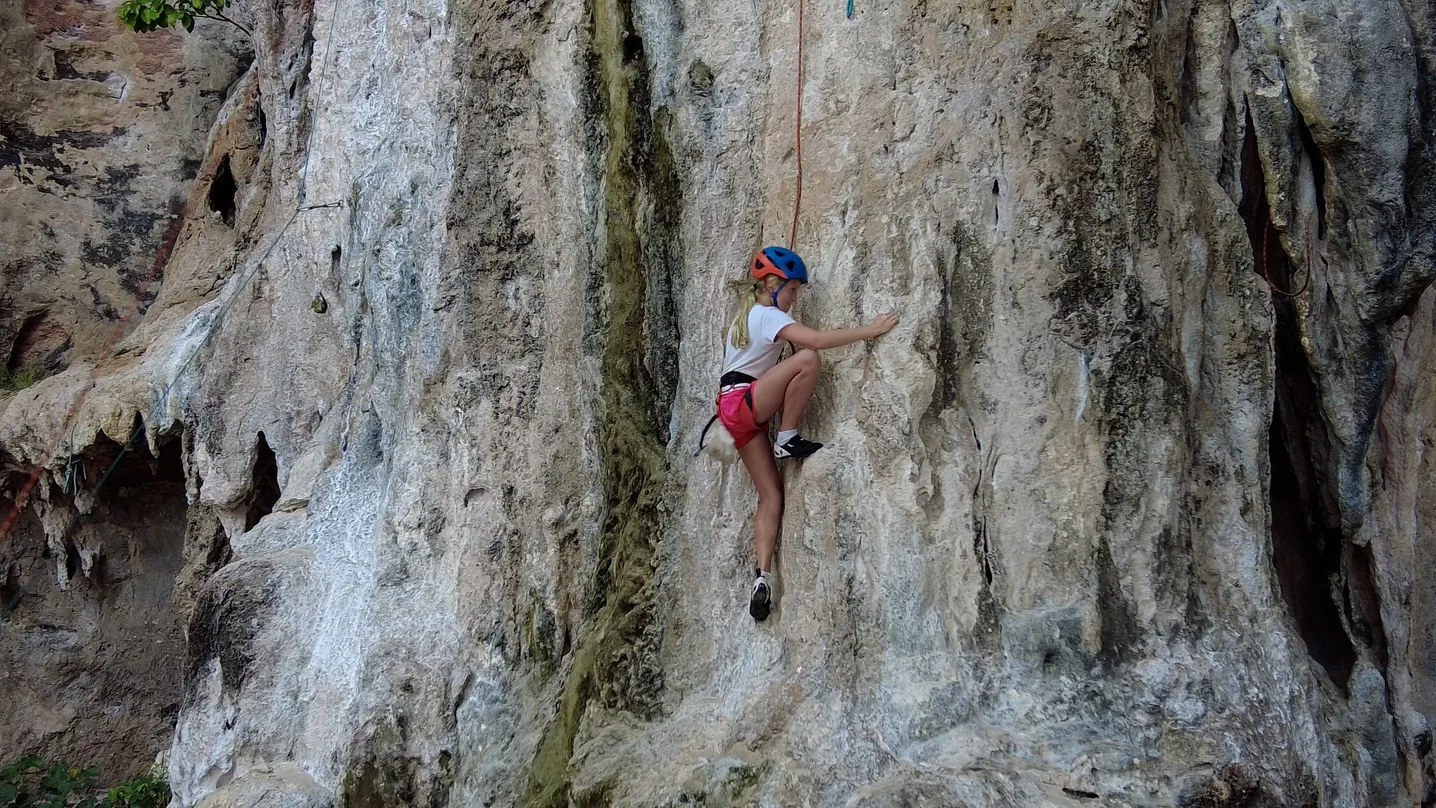
Your core kit for Railay Beach climbing should include a 60m rope (70m if you're planning longer routes), around 12 quickdraws, a helmet, and a headlamp for cave approaches like Escher World.

Beyond the essentials, pack a first aid kit, mosquito coils, a sun hoodie, a Tonsai mat to keep your gear off the dirt, and a large water bottle — Railay's tap water isn't drinkable, so refills matter.

If you're travelling in the rainy season, Travel Dudes recommends adding ponchos, waterproof bags, spare socks, and ziplock bags to protect your electronics. Rental gear is widely available on the peninsula, but shop listings change often, so check current operators once you've arrived rather than relying on names from an old blog post.
Rock-Climbing-Railay-Beach

Climbing Safely at Railay Beach

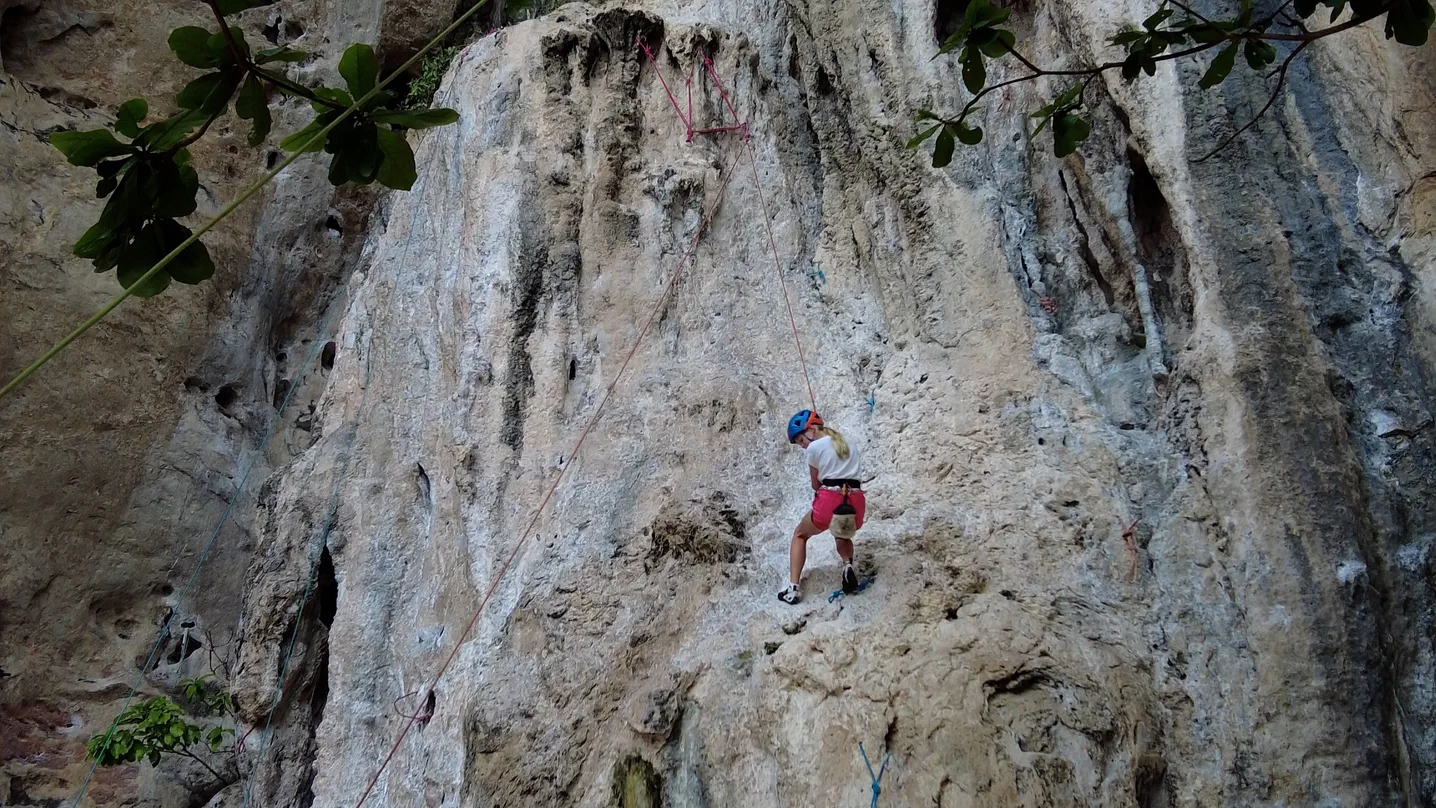
Railay's coastal climate isn't just beautiful — it's also corrosive. Salt air accelerates bolt wear, so check TheCrag or a recent guidebook before leading unfamiliar routes. The ThaiTanium re-bolting project has replaced many ageing anchors across the peninsula, but it's always worth confirming a route's bolt condition before committing.

Other safety considerations include tide-dependent approaches (some walls are only accessible at low tide), heat and dehydration risk, and persistent mosquitoes. ByrdieOnTheRocks also flags that some routes have unusually high first bolts, so factor that into your risk assessment before leaving the ground.

Climbing-specific travel insurance is non-negotiable here, and if you're booking a multi-pitch or remote climb with a guide, confirm their emergency plan before you start.
Rock-Climbing-Railay-Beach

Learning to Climb: Top Schools and Guides in Railay

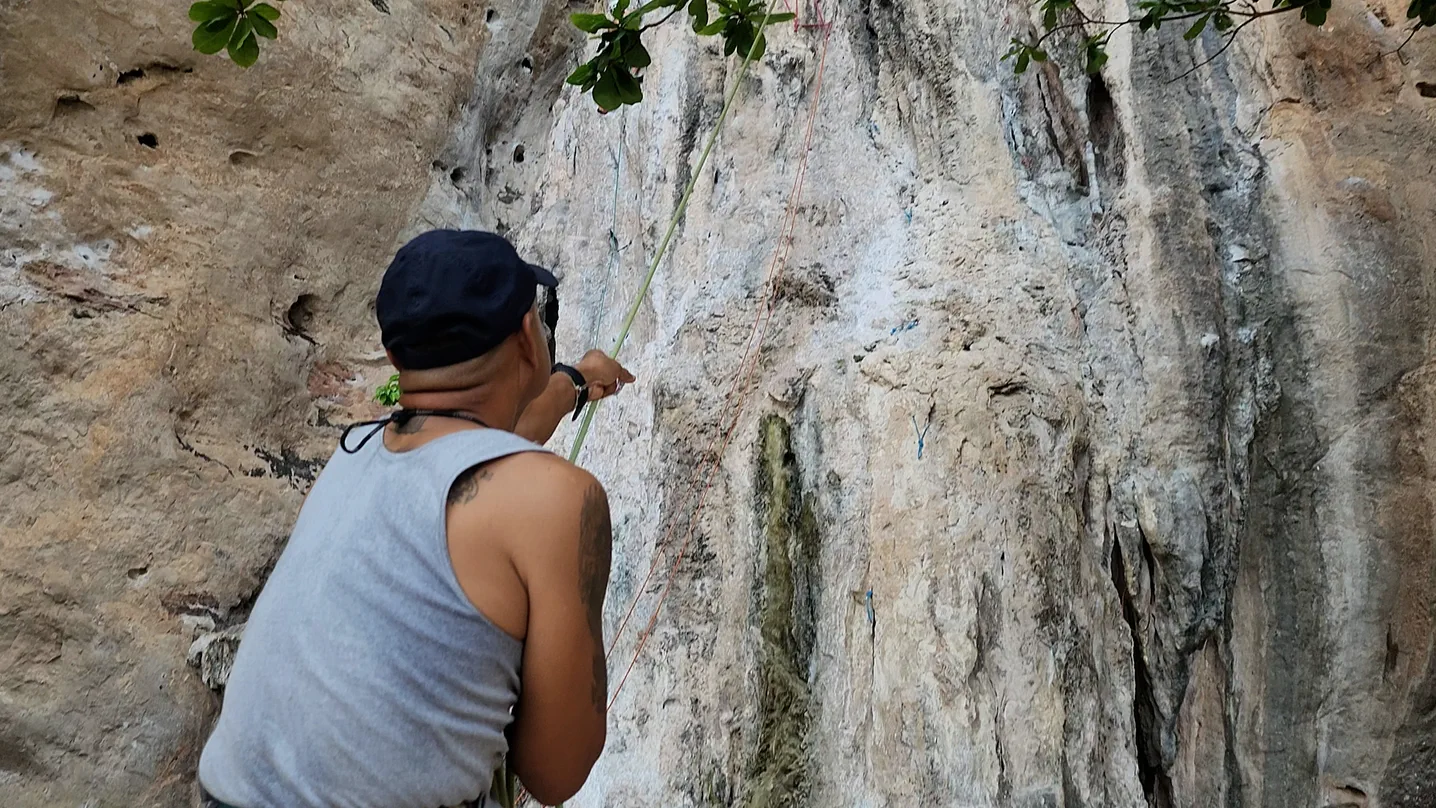
If you're wondering how to start climbing in Railay with zero experience, you're in good company — this is one of the most beginner-friendly climbing destinations in the world, provided you book with a reputable school.

King Climbers offers half-day courses from around 1,400 baht, while Krabi Rock Climbing has built a loyal following with nearly 900 Tripadvisor reviews. Pricing across the board tends to range from roughly 1,800 baht for a full-day group course to 4,500 baht for a private full-day session. One traveller reported paying around USD 55 for a full-day package that included lunch and a cave rappel, while Viator lists comparable experiences from around £32–39.

Choose a half-day course if you're short on time or simply want a taste of Thailand sport climbing. Choose a multi-day course if you want to progress from top-rope basics to leading your own routes by the end of the trip. Prices shift frequently, so always confirm current rates directly with operators before booking.
Rock-Climbing-Railay-Beach

Where to Stay and Eat Near the Crags

Budget-conscious climbers gravitate towards Tonsai, where hostels like Voyagers, Dormsin, and Pier 519 keep costs low, and Tonsai Bay Resort offers a step up at around USD 60–100 per night. Note that camping isn't legally permitted anywhere on the peninsula.

For a more polished stay, Railay's resort-style accommodation and varied dining scene — including spots like Café LÉ Inguz — cater to travellers who want comfort after a day on the rock.

However you choose to stay, don't miss Tonsai Bay Resort's weekly seafood barbecue, the social buzz of Freedom Bar and Time To Chill, and quick, satisfying meals at Mama's Chicken and Legacy. After a hard day of climbing, a 300–500 baht Thai massage might be the best money you spend all trip.

For broader planning around your Thailand itinerary — accommodation tips, transport logistics, and more — WhereToGoInThailand.com is a handy companion resource.

On rest days, sunrise at Phra Nang Beach, a visit to the Bat Cave, a yoga session, or an afternoon of snorkelling and kayaking will round out your Railay experience beautifully.
Rock-Climbing-Railay-Beach

Climbing Responsibly: Protecting Railay's Future

Railay's beauty depends on the people who visit treating it with care. Use rope mats to protect the rock, stay aware of tide times to avoid getting stranded, and pack out every piece of rubbish you bring in (We Are Explorers).

Choosing locally owned bungalows, family-run restaurants, and local guides keeps tourism dollars within the community, and tipping fairly for guiding services goes a long way (wheretogointhailand.com). Responsible climbing isn't just an ethical checkbox — it's what keeps this slice of paradise thriving for the climbers who'll follow in your footsteps.
Rock-Climbing-Railay-Beach

Is Railay Beach Worth the Trip?

Few destinations deliver quite this combination: beginner-friendly walls shaded from the midday sun, world-class multi-pitch adventure on the Thaiwand, and a tight-knit climbing community set against some of the most dramatic scenery in Southeast Asia. Railay Beach climbing isn't just a bucket-list tick — it's an experience that rewards climbers of every level, again and again.

Book your longtail boat, pack a helmet no matter how experienced you are, and build a few extra days into your itinerary. Railay has a habit of making climbers stay longer than planned.


Frequently Asked Questions

How much does a day of climbing at Railay Beach cost?

A full-day group course typically costs around 1,800 baht, while private full-day instruction runs closer to 4,500 baht. Half-day courses start from roughly 1,400 baht, though prices vary by operator and season.

When is the best time of year to climb at Railay Beach?

The driest conditions generally run from October to March, while December to March tends to bring the smallest crowds. Travellers chasing lower prices sometimes choose the shoulder or rainy season, accepting the trade-off of occasional showers.

Is Railay Beach suitable for complete beginners?

Yes. Thailand sport climbing for beginners is well catered for at Railay, with shaded, beach-adjacent walls like One-Two-Three Wall offering gentle routes and easy access to climbing schools. Most first-timers can be leading easy routes within a day or two of instruction.

What are the main risks climbers should know about?

Bolt corrosion from the coastal climate, tide-dependent approaches, heat and dehydration, and mosquitoes are the main considerations. Checking recent route conditions on TheCrag and wearing a helmet at all times significantly reduces risk.

Are there alternatives to Railay Beach for climbing in Thailand?

Nearby Ao Nang offers more than 100 additional routes and makes an easy day trip or alternative base if Railay feels too busy or you want to diversify your climbing days.

What gear should I bring, and can I rent equipment locally?

Pack a 60–70m rope, around 12 quickdraws, a helmet, and a headlamp as your core kit. Rental equipment is widely available on the peninsula, but availability changes frequently, so confirm with current operators once you've arrived.

Reader Feedback (6)

Profile

Jon Gibbons

Etiam pretium, magna eget feugiat finibus, tellus massa pellentesque nisi, non malesuada nulla nunc vel ligula. Sed finibus enim eu nulla tempus, vitae tincidunt dolor semper. Praesent fringilla, metus at convallis sagittis.

Profile

Michael Carter

Vestibulum ante ipsum primis in faucibus orci luctus et ultrices posuere cubilia curae; Donec vel erat in nulla efficitur tempor non ut nisl. Integer venenatis eros ut dui viverra fermentum.

Profile

Sophie Wilson

Nam ut turpis hendrerit, varius nunc vel, elementum dui. Morbi vulputate dolor sit amet scelerisque egestas. Vestibulum eleifend nunc ut bibendum fermentum.

Contact

Necessitatibus eius consequatur ex aliquid fuga eum quidem sint consectetur velit

Address

A108 Adam Street, New York, NY 535022

Call Us

+1 5589 55488 55

Email Us

info@example.com

Social Profiles

Share Your Thoughts

Your email address will not be published. Required fields are marked *

Loading
Your message has been sent. Thank you!