Over 25 Years in Thailand: Life, Work and Adventures Since 1999
Back in 1999, I stepped off a plane into the thick, warm air of Thailand with little idea that this country would become my home for the next quarter of a century—and counting. Twenty-five years later, I'm still here, still discovering new corners of this extraordinary country, and still utterly captivated by it.
This page is my story. It's the story of how a career in hotel and condominium development took me from the sun-drenched beaches of Phuket to the misty highlands near the Golden Triangle. It's about navigating Thailand's roads, rivers, and railways—often with my wife Ann beside me and our two boys, Junior and Justin, in tow. And it's about the temples, the beaches, the chaos, and the quiet moments that have made every single year here feel like a privilege.
If you're planning a trip to Thailand—whether it's your first or your fifteenth—I hope my experience can help you make the most of it. I don't claim to know everything about this country. But after 25 years of living, working, and travelling across it, I know quite a lot.
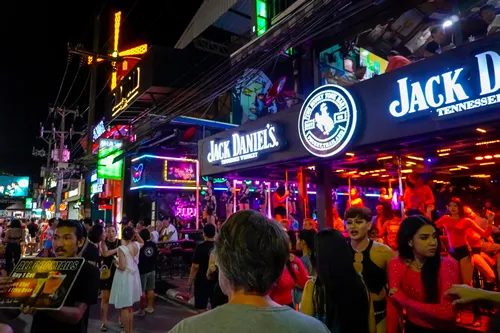
Bangla Road
Bangla Road: Where the night comes alive with endless thrills and unforgettable memories!
🗓️ Living in Thailand since 1999 — over 25 years as a resident, not a tourist
🏗️ Career in hotel & condominium construction — projects spanning the length of the country
🌴 Extended stays in Phuket and Pattaya — roughly six years in each
🏔️ Travelled from Phuket to Pai — south coast to the edge of the Golden Triangle
🚌 Experienced with all forms of Thai transport — planes, buses, boats, Grab, BTS, MRT, and a narrow boat into Burma
👨👩👦 Family perspective — exploring Thailand alongside his Thai wife Ann and their two sons, Junior and Justin
🍳 Practical, honest travel advice — including the best English Breakfasts across Thailand
🚫 No Thai food reviews — but plenty of insider knowledge on everything else
Work Life Balance: Shaping Thailand's Skyline
From Phuket to Pai: A Career Spent Across the Country
My time in Thailand has never been static. From the very beginning, my work in hotel and condominium construction took me all over the country—north, south, coast, and interior. I've overseen projects in bustling resort towns and quieter provincial areas alike, watching skylines change and communities grow around each development.
Two cities defined the longest chapters of my working life here: Phuket and Pattaya. I spent roughly six years in each, long enough to feel genuinely embedded in both places rather than just passing through. Phuket gave me a deep appreciation for island life—the rhythms of the Andaman coast, the personality of Patong, the quieter grace of Kata and Karon. Pattaya was a different kind of energy entirely. Louder, faster, endlessly surprising, and far more layered than its reputation suggests.
Living on-site in resort hotels for extended periods is a particular kind of existence. It blurs the line between work and lifestyle in ways that are sometimes challenging and often wonderful. Breakfast overlooking a pool. Evenings spent watching the sun drop into the sea. The constant movement of guests arriving from every corner of the world, each of them experiencing Thailand for the first time while I experienced it alongside them for the hundredth.
A Nomadic Life That Never Got Old
The nomadic nature of construction work meant that no two years looked the same. I've worked as far north as Pai, a small town nestled in the mountains near the Myanmar border and the edge of the Golden Triangle—a world away, culturally and geographically, from the southern resort towns where I spent most of my career. The north of Thailand is a reminder that this country contains multitudes. The landscapes, the architecture, the pace of daily life—all of it shifts dramatically as you move away from the coasts.
Throughout all of this, Ann has been my anchor and my guide. Growing up in Thailand, she brought a depth of local knowledge and cultural understanding that no guidebook could replicate. And as Junior and Justin came along and grew up, Thailand became their home too—shaped by the same mix of construction sites, resort pools, and weekend adventures that defined our family life.
Jon Gibbons
Writer
May 16, 2026• 3 Comments
Quisque velit nisi pretium ut lacinia in elementum id enim. Donec sollicitudin molestie malesuada. Curabitur non nulla sit amet nisl tempus convallis quis ac lectus.
Navigating Thailand's Public Transport Like a Local
Planes, Buses, Boats, and a Narrow Boat to Burma
One of the genuine advantages of living in Thailand for 25 years is that you stop being a tourist on public transport and start being a commuter. I've used almost every form of transport this country offers, and I've learned—often through trial and error—what works, what doesn't, and what to do when things go sideways.
Domestic flights are, in many cases, the most practical way to cover Thailand's considerable distances. AirAsia and Nok Air make routes like Bangkok to Phuket or Bangkok to Chiang Mai quick and affordable, particularly if you book ahead. For shorter or more flexible journeys, long-distance buses are a perfectly comfortable option, especially for overnight routes where you can sleep your way between cities.
Taxis and ride-hailing apps like Grab have transformed day-to-day getting around in the cities. Grab in particular has been a revelation—fixed prices, no negotiation, and a driver who actually knows where he's going. If you haven't downloaded it before arriving, do it now.
Boats are an entirely different kind of experience. Thailand's waterways open up parts of the country that roads simply can't reach. I've taken long-tail boats through mangroves, ferries between islands, and river boats up towards the Thai-Myanmar border. One of the most memorable journeys of my time here was a narrow boat trip into Burma—a route that felt genuinely remote and historically resonant in a way that few modern travel experiences manage.
Getting to Grips with Bangkok's BTS and MRT
I'll be honest: for years, I largely avoided Bangkok's rail networks. The city's taxis and tuk-tuks felt more familiar, and the maps looked complicated. That was a mistake I've since corrected.
The BTS Skytrain and MRT underground are now two of my most-used transport tools when I'm in Bangkok. They're clean, air-conditioned, punctual, and—crucially—they bypass the traffic that can make Bangkok road journeys a test of patience. The BTS connects key areas like Sukhumvit, Siam, and the riverside, while the MRT gives access to areas the Skytrain doesn't reach. Together, they cover a substantial portion of the city.
If you're visiting Bangkok and haven't used them before, my advice is simple: buy a Rabbit Card for the BTS and load it with credit. It removes the hassle of buying single tickets and works out slightly cheaper over multiple journeys. For the MRT, a stored-value card works the same way.
Tourist Attractions: What 25 Years of Exploring Looks Like
Visiting Thailand's Most Famous Sites as a Resident, Not a Tourist
There's something odd about being a long-term resident in one of the world's most visited countries. You end up seeing the famous landmarks repeatedly—sometimes with visiting family, sometimes with the boys when they were young, occasionally just because you happen to be passing. Over time, you develop genuine opinions rather than first impressions.
The Grand Palace in Bangkok is one of those places that genuinely earns its reputation. The scale and the detail are astonishing, and even after multiple visits, there's always something I notice for the first time. Go early. Dress appropriately (long trousers or a skirt that covers the knee—they enforce this). Expect crowds, but don't let them put you off.
Wat Pho, just a short walk from the Grand Palace, is equally impressive and often slightly less heaving with visitors. The Reclining Buddha alone is worth the entrance fee. The complex is also the traditional home of Thai massage, and the school on-site offers treatments that are among the most authentic you'll find in Bangkok.
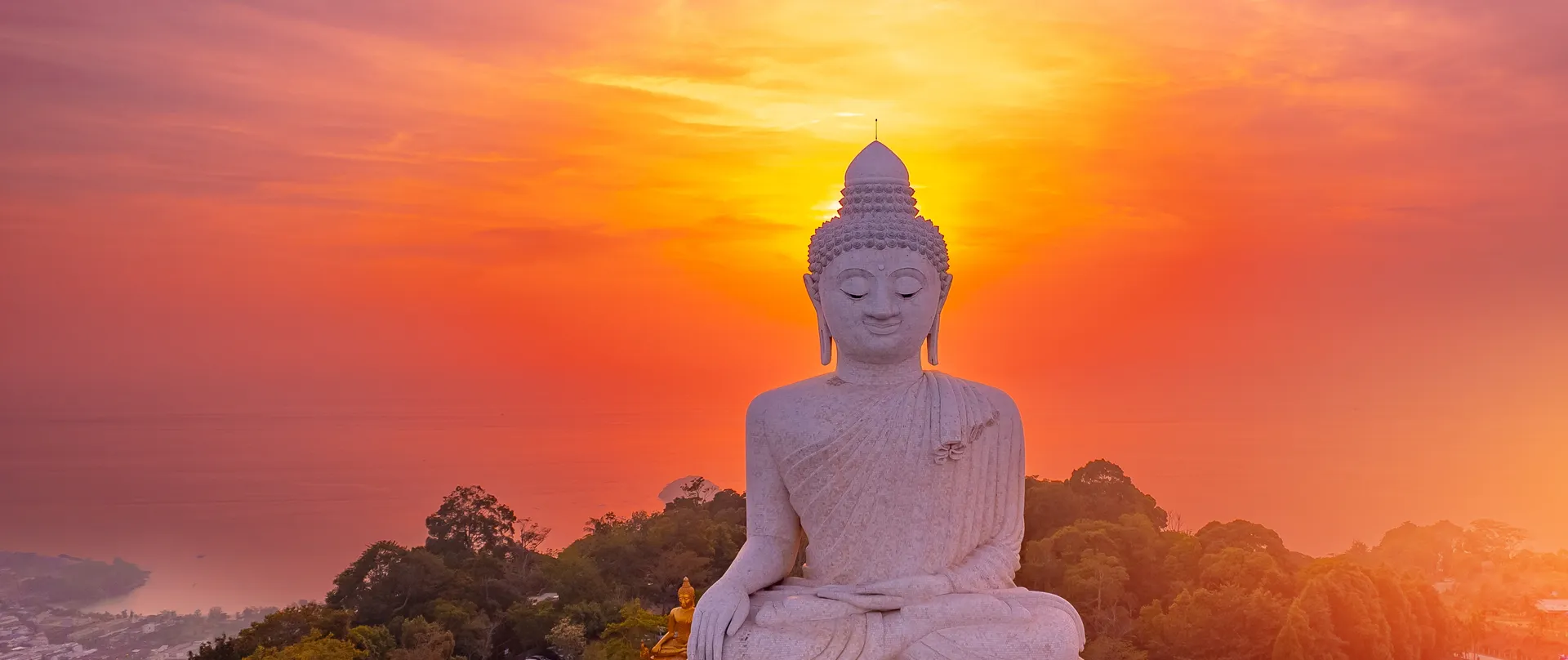
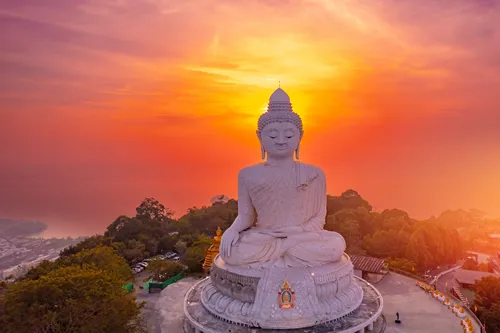
In Phuket, the Big Buddha on Nakkerd Hill is one of those landmarks that becomes part of your backdrop when you live there long enough. Up close, though, it's genuinely striking—a 45-metre white marble statue visible from most of the island. Ann and I have taken Junior and Justin up there more times than I can count. The view over Chalong Bay and the surrounding hills never gets old.
Pattaya: More Than Its Reputation
Having spent six years in Pattaya, I have a particular affection for a city that many visitors underestimate. Walking Street's nightlife is what most people picture when they hear the name, and yes, it's exactly as advertised. But Pattaya also has the Sanctuary of Truth—an extraordinary all-wood temple still under construction after decades—and Nong Nooch Tropical Botanical Garden, which is spectacular and well worth a half-day visit with children.
The Alcazar Cabaret show is one of the best entertainment experiences in the country, full stop. Ann and I have taken visiting friends and family there on numerous occasions, and it never fails to impress.
A Note on English Breakfasts Across Thailand
I made a decision early on not to write about Thai cuisine. There are better-qualified people to do that, and honestly, Ann's family cooking has set a standard I wouldn't want to judge restaurants against. What I can tell you about, with genuine authority, is where to find a proper English breakfast across Thailand.
This might sound trivial, but after 25 years, a good fry-up on a Sunday morning has been a genuine anchor of normality—and finding a reliable one in an unfamiliar part of the country is more of an art than you might think. As I build out the content on this site, I'll be sharing my recommendations region by region. Phuket, Pattaya, Chiang Mai, Bangkok—each has its contenders, and I have strong opinions about which deserve the title.
What 25 Years Really Teaches You About Thailand
A quarter century is long enough to move past the honeymoon phase, through the frustrating middle years where everything is slightly harder than it should be, and out the other side into something that feels a lot like genuine belonging.
Thailand has changed enormously since 1999. The infrastructure has improved dramatically. Bangkok's transport network, the quality of accommodation across the country, the accessibility of information for visitors—all of it is vastly better than it was when I arrived. And yet the things that made Thailand special in the first place are still here: the warmth of the people, the beauty of the landscapes, the sense that something genuinely unexpected is always just around the corner.
Ann, Junior, Justin, and I have built our lives here. This site is my attempt to share what we've learned—honestly, practically, and from the perspective of people who live in Thailand rather than visit it. Browse the destination guides, read the transport advice, and if you have a question I haven't answered, drop me a message. After 25 years, there's very little about this country I haven't seen, tried, or navigated my way through.
Frequently Asked Questions
What parts of Thailand has the author of wheretogointhailand.com lived in?
Jon has lived and worked across Thailand since 1999, with extended stays of approximately six years each in Phuket and Pattaya. His work in hotel and condominium construction has also taken him as far north as Pai, near the Golden Triangle, as well as many other locations across the country.
Is wheretogointhailand.com written by someone who actually lives in Thailand?
Yes. Jon has been a resident of Thailand since 1999—25 years at the time of writing. The site reflects his lived experience as a long-term expat rather than a visitor's perspective, alongside the local knowledge of his Thai wife, Ann.
Does wheretogointhailand.com cover Thai food and restaurants?
No. Thai cuisine is intentionally excluded from the site's content. However, Jon does share recommendations for English Breakfast locations across Thailand—a speciality he has been quietly researching for two and a half decades.
What transport advice does wheretogointhailand.com offer?
Jon covers domestic flights, long-distance buses, taxis, Grab, boats, and Bangkok's BTS Skytrain and MRT, drawing on 25 years of using these services as a resident rather than a tourist.
What tourist attractions does the site review?
The site covers major attractions across Thailand including the Grand Palace and Wat Pho in Bangkok, the Big Buddha and Bangla Road in Phuket, the Sanctuary of Truth and Nong Nooch Garden in Pattaya, and many others—reviewed from the perspective of someone who has visited them repeatedly over many years.
Collaborative tooling drives productivity in distributed teams
Reader Feedback (6)
Jon Gibbons
Etiam pretium, magna eget feugiat finibus, tellus massa pellentesque nisi, non malesuada nulla nunc vel ligula. Sed finibus enim eu nulla tempus, vitae tincidunt dolor semper. Praesent fringilla, metus at convallis sagittis.
Michael Carter
Vestibulum ante ipsum primis in faucibus orci luctus et ultrices posuere cubilia curae; Donec vel erat in nulla efficitur tempor non ut nisl. Integer venenatis eros ut dui viverra fermentum.
Sophie Wilson
Nam ut turpis hendrerit, varius nunc vel, elementum dui. Morbi vulputate dolor sit amet scelerisque egestas. Vestibulum eleifend nunc ut bibendum fermentum.
Contact
Necessitatibus eius consequatur ex aliquid fuga eum quidem sint consectetur velit






























Reader Feedback (6)
Jon Gibbons
Etiam pretium, magna eget feugiat finibus, tellus massa pellentesque nisi, non malesuada nulla nunc vel ligula. Sed finibus enim eu nulla tempus, vitae tincidunt dolor semper. Praesent fringilla, metus at convallis sagittis.
Michael Carter
Vestibulum ante ipsum primis in faucibus orci luctus et ultrices posuere cubilia curae; Donec vel erat in nulla efficitur tempor non ut nisl. Integer venenatis eros ut dui viverra fermentum.
Sophie Wilson
Nam ut turpis hendrerit, varius nunc vel, elementum dui. Morbi vulputate dolor sit amet scelerisque egestas. Vestibulum eleifend nunc ut bibendum fermentum.