Let Elephants Be Elephants: The Bukit Elephant Park Guide
Bukit Elephant Park is an ACES-accredited ethical elephant sanctuary in Chalong, Phuket, home to eight rescued elephants across 50 Rai of natural terrain. The park offers no riding, no forced bathing, and no performance tricks — just respectful, close-up elephant encounters across four tour packages, with free transport from most areas of Phuket.
Thailand and elephants are inseparable. The Asian elephant is the country's national symbol, a figure of reverence woven into Thai art, mythology, and history for thousands of years. Yet the reality facing many of these animals today is far removed from that sacred status. Approximately 75% of captive Asian elephants in Thailand work in the tourism industry — and a significant number endure abusive training practices just to make them compliant enough for visitors to ride or bathe with.
Travellers increasingly want to do the right thing. They Google "ethical elephant sanctuary Phuket," they read the reviews, they look for the certifications. But with hundreds of camps marketing themselves as sanctuaries across Thailand, it can be genuinely difficult to know which ones actually earn that title.
Bukit Elephant Park, tucked into the hills of Chalong in southern Phuket, is one of the rare venues that does. With more than two decades of mahout expertise, accreditation from the Asian Captive Elephant Standards (ACES) organisation, and a philosophy that can be summed up in five words — let elephants be elephants — it offers something increasingly hard to find in busy tourist destinations: an experience built entirely around the animal, not the audience.
This guide covers everything you need to know before you visit: why ethical elephant tourism matters, what makes Bukit Elephant Park different, which tour package suits you best, and how to book. Whether you're planning a family trip, a solo adventure, or a meaningful stop on a longer Thai itinerary, this is where the elephants win.
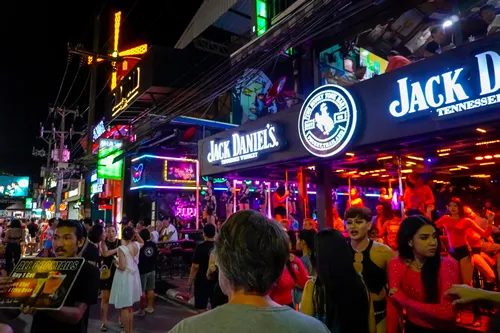
Bangla Road
Bangla Road: Where the night comes alive with endless thrills and unforgettable memories!
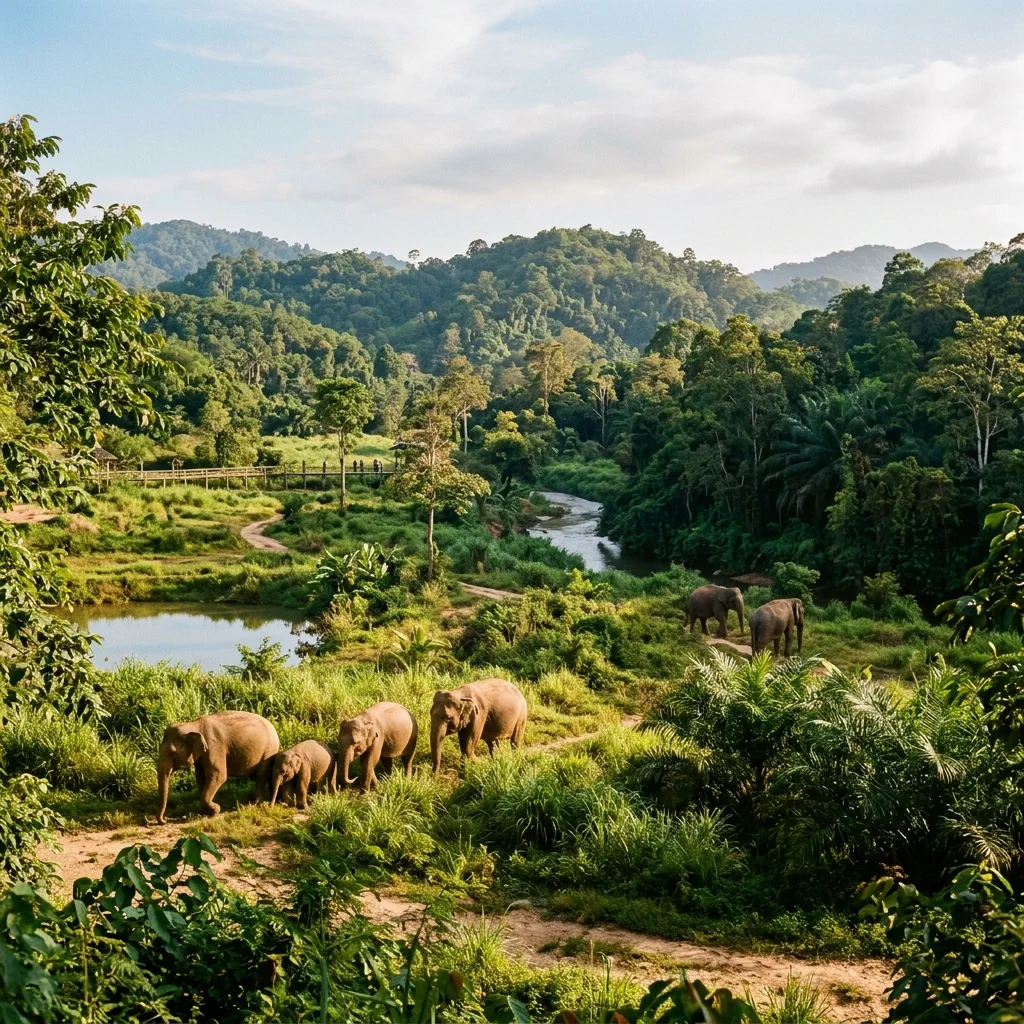
Nestled in the hills of Chalong in southern Phuket, Bukit Elephant Park is one of Thailand's most genuinely ethical elephant sanctuaries — and one of the very few to hold accreditation from the Asian Captive Elephant Standards (ACES) organisation. The park is home to eight rescued elephants, each with their own name, history, and dedicated mahout, roaming freely across 50 Rai (roughly 20 acres) of natural terrain. There is no riding here, no forced bathing, and no performing tricks — just close, respectful encounters built around the animals' wellbeing. Visitors can choose from four tour packages, ranging from a focused 10–15 minute feeding experience to the flagship 3.5-hour Elephant Nature tour complete with Thai cooking and cultural demonstrations. Free round-trip transport is included from most areas of Phuket, making a visit straightforward to plan. In short: this is what responsible elephant tourism looks like.
Why Does Elephant Riding Cause So Much Harm?
Before exploring what Bukit Elephant Park offers, it helps to understand why the conversation around elephant tourism matters so much in the first place.
The foundation of elephant riding and many "performing elephant" shows is a training process known as phajaan — colloquially called the "crush." Young elephants are separated from their mothers, confined in small spaces, and subjected to physical punishment over days or weeks until their spirit is broken enough for humans to control them. This is not a relic of the distant past. It remains widespread across Southeast Asia.
Even after training, the physical damage continues. An elephant's spine is not designed to bear human weight. The vertebrae point upward, and sustained pressure from riders — compounded by heavy wooden seats — can cause spinal deformities and chronic pain over a lifetime of use. Forced bathing adds another layer of harm: it disrupts natural herd bonding, causes repeated skin irritation when done multiple times a day, and — as Bukit Elephant Park's own guidance points out — exposes visitors to water contaminated with animal waste.
When choosing where to see elephants in Thailand, these are the red flags to watch for:
Elephant riding, in any form
Performing tricks or shows — painting, football, dancing
Tourist-led bathing in shared ponds
Bullhooks or chains used by mahouts
Breeding programmes designed to produce more working animals
Vague or evasive answers about how elephants were acquired
Overcrowded enclosures with little space to roam
Bukit Elephant Park ticks none of these boxes. That distinction matters enormously.
Jon Gibbons
Writer
May 16, 2026• 3 Comments
Quisque velit nisi pretium ut lacinia in elementum id enim. Donec sollicitudin molestie malesuada. Curabitur non nulla sit amet nisl tempus convallis quis ac lectus.
What Makes Bukit Elephant Park Different From Other Phuket Sanctuaries?
Located at 78/10 Tambon Chalong, Amphoe Mueang Phuket, Bukit Elephant Park sits on 50 Rai (approximately 20 acres) of natural terrain — enough space for its eight residents to forage, wander, and socialise on their own terms.
The park was built on over two decades of mahout expertise, with a founding commitment to rescuing elephants from logging operations, roadside begging circuits, and exploitative tourist camps. Rescuing a single elephant costs upwards of £22,000, and the park receives no government funding — every ticket purchased contributes directly to the ongoing care of these animals.
The "No Riding, No Bathing" policy is non-negotiable. It is not a marketing slogan. The park's position is grounded in both animal welfare science and visitor safety: bathing with elephants stresses the animals and exposes guests to contaminated water. So instead of offering those activities, Bukit Elephant Park has developed something far more rewarding — a genuine, observation-first experience that lets visitors see elephants acting exactly as elephants should.
The park holds accreditation from the Asian Captive Elephant Standards (ACES) organisation — an independent, evidence-based body established in 2019, according to research published by the National Institutes of Health, that audits elephant venues across Southeast Asia and certifies only those meeting rigorous welfare benchmarks. ACES accreditation is not automatic; it involves assessments, mystery visits, and ongoing audits. Bukit Elephant Park is among a select group of certified venues across the region.
The park also holds a TripAdvisor Travellers' Choice Award 2025 — external recognition that the visitor experience consistently meets the highest standards.
The eight elephants currently living at Bukit Elephant Park each have a name, a backstory, and a dedicated mahout:
Num Gaew, Chompoo, Num Sook, Num Chok, Num Chai, Asia, Malee, and Lum Phoon. Of these, Num Sook — affectionately known as "Grandma" — is the eldest at 78 years old and the matriarch of the group.
Who Are the Mahouts, and What Role Do They Play at Bukit Elephant Park?
Mahouts are professional elephant caretakers whose tradition stretches back thousands of years across Asian cultures. At many conventional elephant camps, the mahout's role is primarily about control — keeping an animal compliant for tourist interactions. At Bukit Elephant Park, the relationship looks entirely different.
Each elephant is paired with a dedicated mahout who stays with them for the long term, building a bond rooted in trust, familiarity, and consistent positive reinforcement. Visitor Westhc noted on TripAdvisor: "Each elephant had her own caretaker who stays with them for life." That continuity is not incidental — it's central to the park's philosophy.
Guides at Bukit Elephant Park are trained in humane handling. There are no pain-based tools, no raised voices, no dominance. The mahouts use vocal cues and body language that the elephants recognise and respond to naturally. Watching that dynamic in person — an enormous, free-roaming elephant responding gently to a quiet word from someone who has known her for years — is one of the most affecting things you'll see in Phuket.
What Actually Happens During a Visit to Bukit Elephant Park?
Tours run twice daily: a morning session from 09:00 to 12:30 and an afternoon session from 14:00 to 17:00. Maximum group size is 25, which keeps the experience intimate and the park calm. Free round-trip transport is available from most areas of Phuket, including Patong, Karon, Kata, Bang Tao, Rawai, Phuket Town, and Kamala. An additional charge applies from more northerly areas such as Mai Khao, Nai Yang, Nai Thon, and Layan Beach.
Here's what a typical visit involves:
On arrival, guests are welcomed with complimentary Thai coffee or iced tea, cold towels, and water — a small but genuinely warm touch that sets the tone for the whole experience.
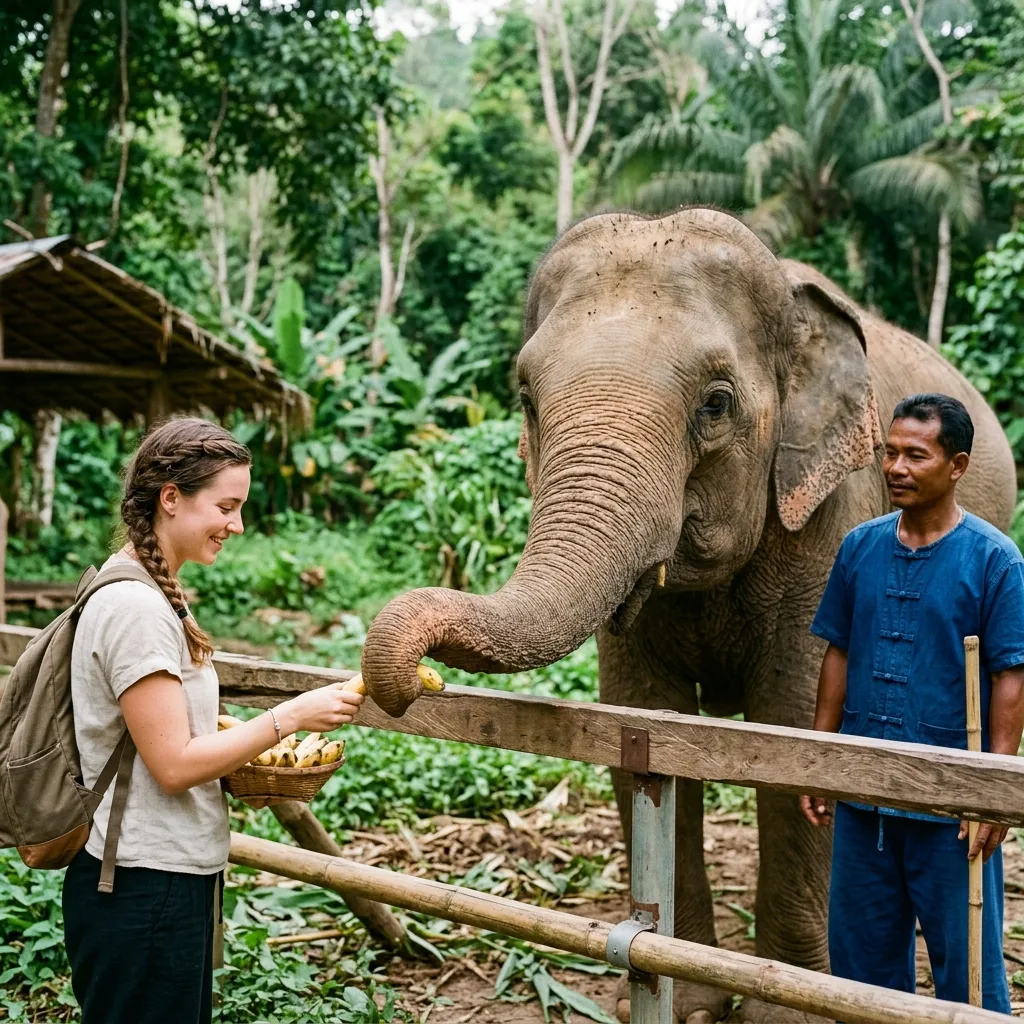
Elephant feeding comes next. Each guest receives a basket of bananas — or watermelon, depending on the season — and feeds the elephants at designated areas with safety fencing. Guides and mahouts are present throughout, ensuring both guests and elephants feel comfortable.
Observing natural behaviours is the heart of the visit. Walking through different sections of the 50 Rai sanctuary, guests watch elephants foraging, splashing in their own pools, and interacting with one another entirely on their own terms. No commands, no performances — just elephants living as elephants.
Learning each elephant's story adds emotional depth. Guides share the individual history of each resident: how they were found, what conditions they came from, and how long they've been at Bukit Elephant Park. Many of these stories are remarkable.
Rice ball preparation and feeding is a highlight for most visitors. Guests mix rice balls with the elephants' favourite fruits, then place them into designated feeding containers for the elephants to collect. It's tactile, joyful, and surprisingly moving.
Throughout the visit, a few clear rules apply: no touching beyond designated feeding moments, no drones, no flash photography, and no loud noises. All of these exist to keep the elephants calm — and they make a real difference.
Bukit Elephant Park
What Cultural Experiences Does Bukit Elephant Park Offer Beyond the Elephants?
Bukit Elephant Park does something that many wildlife sanctuaries neglect: it integrates genuine Thai cultural education into the experience. The result is a visit that offers far more than animal encounters alone.
Rubber Tapping Demonstration: Guests learn how latex is harvested from rubber trees and processed into rubber sheets — a hands-on window into one of Thailand's most important rural industries. This demonstration is consistently praised in visitor reviews.
Coconut Milk Making: A traditional demonstration showing how fresh coconut milk is extracted and prepared — a staple technique in Thai cooking that most visitors have never seen up close.
Thai Cooking Demonstration and Buffet Lunch: The full experience culminates in a cooking class using locally sourced ingredients, followed by a Thai buffet meal enjoyed outdoors while the elephants roam and play in the background. As local guide Adrian wrote on Google: "We strongly recommend your ticket include the Rubber Tree demonstration as well as the Thai Cooking Class... the whole experience is one that we will certainly never forget."
These cultural elements are not add-ons. They're woven into the rhythm of the visit, giving guests a richer understanding of the landscape, the people, and the traditions that surround this sanctuary.
Which Bukit Elephant Park Tour Package Is Right for You?
Bukit Elephant Park offers four distinct packages, catering to different schedules and interests.
Elephant Nature — The Full Experience
Seven activities: banana feeding, observing natural behaviours, learning elephant histories, photography, rubber tapping demonstration, coconut milk and cooking demonstration, and Thai buffet lunch. Duration: approximately 3.5 hours.
Best for: Travellers who want the complete cultural and wildlife experience — this is the flagship package and the most popular choice for good reason.
Mini Elephant Nature
Five activities: banana feeding, observing behaviours, elephant history, photography, and rubber tapping demonstration.
Best for: Those who want an immersive, unhurried experience without the full cultural programme.
Walk and Feed
Five activities: banana feeding, observing behaviours, elephant history, photography, and rice ball preparation and feeding. Duration: approximately 1.5 hours. Rated 4.9/5 across 1,259 reviews on GetYourGuide, with 94% of English-speaking reviewers awarding a perfect score.
Best for: Travellers with limited time who still want a meaningful, hands-on elephant encounter.
Feed Me Bananas
A focused 10–15 minute experience at the feeding area. Each guest receives one basket of bananas or watermelon, and complimentary Thai coffee, tea, and water are included.
Best for: Families with very young children, or visitors with extremely tight schedules who still want a genuine connection with the elephants.
All packages offer free cancellation up to 24 hours before the experience, with reserve-now, pay-later options available through the park's website and major booking platforms.
Bukit Elephant Park
What Are Visitors Saying About Bukit Elephant Park?
The reviews tell a consistent story — one of genuine care, excellent organisation, and experiences that stay with people long after they leave Thailand.
Tamas Heffter, Google Local Guide: "Our visit to Bukit Elephant Park was absolutely wonderful... The entire experience was well-organised, educational, and truly special. If you're looking for an ethical and immersive elephant experience, Bukit Elephant Park is a must-visit!"
Adrian, Google Local Guide: "Everyone visiting Phuket in Thailand should visit the Bukit Elephant Park... Here they can live out their life in a safe and free existence and receive the ongoing medical care they sometimes needed."
angelabG26NU, TripAdvisor: "They truly are magnificent creatures and I hope anyone who is considering going to see them, will choose this park as it's kind, ethical and full of love for the elephants."
jinzhup2026, TripAdvisor: "What I appreciated most is that the sanctuary fully respects the elephants' personal space and natural behaviour. There are no forced performances, and everything is done with love and care for these gentle giants."
Lou, GetYourGuide: "Such a beautiful setting for these amazing rescued elephants… so much respect for the people saving them from awful conditions and giving them quality of life."
Ethical vs. Unethical Elephant Tourism: How to Spot the Difference in Phuket
The word "sanctuary" appears in many venue names across Phuket. Not all of them deserve it. Here's a clear-eyed comparison to help you make an informed choice.
Bukit Elephant Park
Red-Flag Venues
Riding
Never offered
Often the main activity
Bathing
No tourist-led bathing
Common group activity
Bullhooks
Never used
Frequently observed
Elephant histories
Transparently shared
Vague or unavailable
Roaming space
50 Rai of natural terrain
Often confined, overcrowded
Accreditation
ACES-certified
Typically none
Breeding programmes
None
Sometimes encouraged
Choosing a venue like Bukit Elephant Park is also an economic vote. Every booking signals to the wider tourism industry that today's travellers prioritise animal welfare over cheap spectacle — and that signal has real power.
How to Book and Plan Your Visit to Bukit Elephant Park
Sessions: Morning (09:00–12:30) and Afternoon (14:00–17:00)
Transport: Free round-trip pickup from Patong, Karon, Kata, Bang Tao, Rawai, Phuket Town, and Kamala; additional charge from Mai Khao, Nai Yang, Nai Thon, and Layan Beach
Every element of Bukit Elephant Park — the 50 Rai of open terrain, the ACES accreditation, the no-riding policy, the mahouts who have spent lifetimes earning the trust of these animals — adds up to something genuinely rare in Thai tourism: an experience designed entirely around the wellbeing of the elephants it claims to protect.
Rescuing a single elephant costs over £22,000. The park does this with no government funding, sustained entirely by visitor revenue and a commitment that has not wavered in over two decades. When you book a tour at Bukit Elephant Park, that money goes directly back into the care, feeding, and ongoing rescue of animals that would otherwise face very different lives.
Phuket offers no shortage of things to do. But watching Grandma Num Sook — 78 years old, free of chains, moving slowly through the trees on her own terms — is the kind of moment that doesn't fade. Book your visit to Bukit Elephant Park and discover what responsible elephant tourism looks and feels like.
Frequently Asked Questions About Bukit Elephant Park
Is Bukit Elephant Park actually ethical?
Yes. Bukit Elephant Park is accredited by the Asian Captive Elephant Standards (ACES) organisation, an independent body that audits elephant venues across Southeast Asia. The park enforces a strict no-riding, no-forced-bathing policy, uses no bullhooks, and provides each elephant with a dedicated long-term mahout. These are substantive, verifiable commitments — not marketing language.
Can you touch or ride the elephants at Bukit Elephant Park?
Riding is never offered. Touching is limited to designated feeding interactions at safety-fenced areas. These restrictions exist to protect both the elephants and the guests, and are consistently praised in visitor reviews for making the experience feel more authentic and respectful.
What is included in a Bukit Elephant Park tour?
It depends on the package. The flagship Elephant Nature tour includes seven activities: banana feeding, observing natural behaviours, learning elephant histories, photography, rubber tapping demonstration, coconut milk demonstration, Thai cooking class, and a buffet lunch. Shorter packages like Walk and Feed and Feed Me Bananas offer a more focused experience. All packages include complimentary drinks on arrival.
How long does a visit to Bukit Elephant Park last?
The Elephant Nature package runs for approximately 3.5 hours. The Walk and Feed package is around 1.5 hours. The Feed Me Bananas experience takes just 10–15 minutes at the feeding area. All tours fit within either the morning session (09:00–12:30) or the afternoon session (14:00–17:00).
Is transport to Bukit Elephant Park included in the ticket price?
Free round-trip transport is included from most areas of Phuket, including Patong, Karon, Kata, Bang Tao, Rawai, Phuket Town, and Kamala. An additional charge applies for guests travelling from Mai Khao, Nai Yang, Nai Thon, and Layan Beach.
How much does it cost to visit Bukit Elephant Park?
Pricing varies by package and is available directly on the park's website at bukitelephantpark.com and through GetYourGuide and TripAdvisor. All packages offer free cancellation up to 24 hours before the scheduled start time.
Is Bukit Elephant Park suitable for children and families?
Yes. The Feed Me Bananas package is specifically suited to families with very young children, offering a short, calm experience at the feeding area. Older children will enjoy the full Walk and Feed or Elephant Nature packages. The park's maximum group size of 25 ensures the experience remains manageable and relaxed for all ages.
What is the difference between Bukit Elephant Park and other elephant sanctuaries in Phuket?
Bukit Elephant Park holds ACES accreditation — a distinction many venues do not. The park's no-riding, no-forced-bathing policy is absolute, its mahouts maintain long-term bonds with individual elephants, and the 50 Rai site provides genuine roaming space. Reviews consistently highlight the transparency of elephant backstories and the evident welfare standards as differentiating factors.
Reader Feedback (6)
Jon Gibbons
Etiam pretium, magna eget feugiat finibus, tellus massa pellentesque nisi, non malesuada nulla nunc vel ligula. Sed finibus enim eu nulla tempus, vitae tincidunt dolor semper. Praesent fringilla, metus at convallis sagittis.
Michael Carter
Vestibulum ante ipsum primis in faucibus orci luctus et ultrices posuere cubilia curae; Donec vel erat in nulla efficitur tempor non ut nisl. Integer venenatis eros ut dui viverra fermentum.
Sophie Wilson
Nam ut turpis hendrerit, varius nunc vel, elementum dui. Morbi vulputate dolor sit amet scelerisque egestas. Vestibulum eleifend nunc ut bibendum fermentum.
Contact
Necessitatibus eius consequatur ex aliquid fuga eum quidem sint consectetur velit




























Reader Feedback (6)
Jon Gibbons
Etiam pretium, magna eget feugiat finibus, tellus massa pellentesque nisi, non malesuada nulla nunc vel ligula. Sed finibus enim eu nulla tempus, vitae tincidunt dolor semper. Praesent fringilla, metus at convallis sagittis.
Michael Carter
Vestibulum ante ipsum primis in faucibus orci luctus et ultrices posuere cubilia curae; Donec vel erat in nulla efficitur tempor non ut nisl. Integer venenatis eros ut dui viverra fermentum.
Sophie Wilson
Nam ut turpis hendrerit, varius nunc vel, elementum dui. Morbi vulputate dolor sit amet scelerisque egestas. Vestibulum eleifend nunc ut bibendum fermentum.