Features and Characteristics
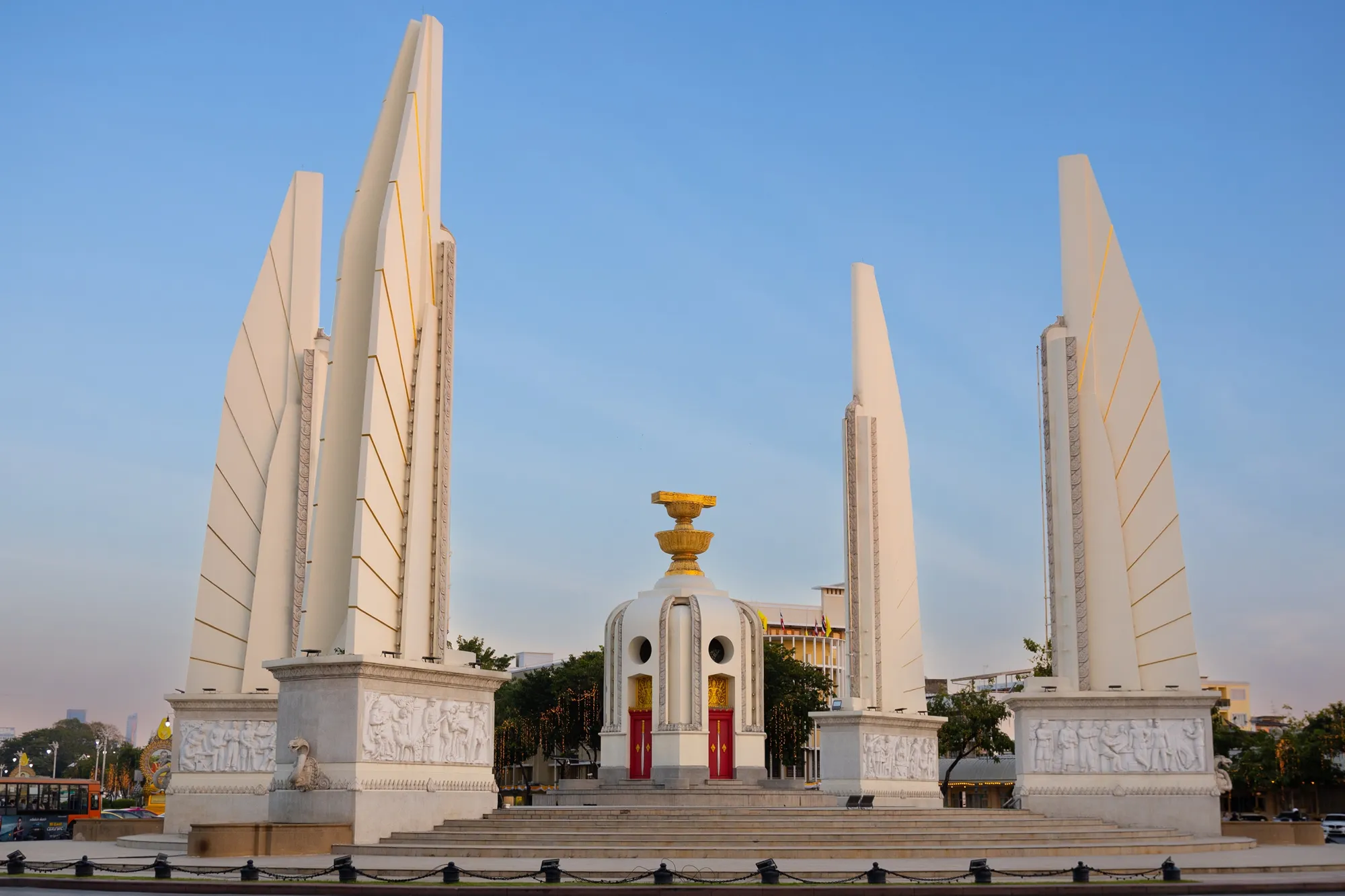
Designed by the Italian Sculptor Corrado Feroci—better known as Silpa Bhirasri — the Democracy Monument’s architecture seamlessly combines traditional Thai motifs with modern styles, encapsulating the essence of Thai identity at a crucial junction of its evolution. The central structure, an intricately carved and awe-inspiring representation of a constitution held aloft by convocation, symbolizes the nation's unity under the principles of democracy.
The grandiosity of the Monument’s stage is matched by the lively square it presides over. Dotted with fountains and inlaid with tablets representing the various fields of human knowledge, this plaza is a visual feast and a poignant reflection of Thai philosophy which celebrates knowledge, virtue, and the unity of its people.
Architectural Marvel with Symbolic Significance
The monument's design is a masterful blend of traditional Thai motifs and modern architectural styles, encapsulating the essence of Thai identity during a pivotal era of its evolution. The central structure is an intricately carved representation of a constitution held aloft by a golden arm. This awe-inspiring centerpiece symbolizes the nation's unity under the guiding principles of democracy, emphasizing the collective aspiration for fairness, justice, and equality.
The Four Wings: Guardians of Democracy
Flanking the central constitution are four towering wings, each standing as a guardian of the democratic values cherished by the Thai people. These wings are not merely decorative; they hold deep symbolic meaning:
- Military: Representing the armed forces' role in safeguarding the nation and supporting its democratic institutions.
- Bureaucracy: Symbolizing the administrative framework that ensures the efficient functioning of the government.
- Monarchy: Honoring the historical and ongoing significance of the monarchy in shaping the nation's identity and stability.
- People: Reflecting the power and will of the Thai populace, whose participation is crucial in upholding democratic principles.
Interesting Historical Points
The Democracy Monument has more than observed history; it has been a protagonist in many key events. Notably, it was the rallying point for the 1973 popular uprising, also known as the "White October," where Thais from all walks of life gathered to peacefully demand greater political freedom.
This wasn't the last time the monument found itself at the epicentre of political action; it was also a focal point for the Red Shirt protests in 2010, adding yet another chapter to its rich and complex story in relation to Thai politics and social movements.
Practical Information for Visitors
If the grandeur and historical depth weren't enticing enough, the practical aspects of visiting Bangkok’s Democracy Monument are relatively straightforward. The site is open to the public from early morning till evening, and there is no admission fee to explore the grounds. Visitors should note that the monument may be temporarily closed during national holidays or for scheduled maintenance.
For an optimal experience, it is best to avoid peak tourist hours, which generally align with typical 'rush' times throughout the day. Mid-mornings and late afternoons offer a more tranquil experience and better opportunities for in-depth exploration. Planning your visit around Thai cultural festivals can also enrich your experience, where you might encounter traditional performances and local customs in this central space of celebration.
Conclusion and Encouragement to Visit
Visiting the Democracy Monument in Bangkok is much more than a passive appreciation of a static historical monument. It is a chance to engage with living history, a marker of the community's political and spiritual heart. To stand at this monument is to immerse oneself in the passions and devotion of the Thai people to their democratic aspirations, to learn about the significance of the site’s design, and to appreciate the aesthetics that evolved from a blend of international influences and local identity.
Whether you are captivated by stories of revolution and resilience, architectural marvels, or simply the unique charm of a foreign place, a visit to the Democracy Monument offers an experience that can broaden your understanding and appreciation of Thailand's past and present.
Conclusively, we urge you to add this pivotal site to your list of must-see destinations in Bangkok. By walking in the shadows of great change-makers and appreciating the art they have left behind, a piece of Thai history becomes not just a part of your travels, but a part of you, leaving an indelible mark on your cultural voyage.
Comprehensive Travel Guide: Navigating Your Way to the Democracy Monument in Bangkok
The Democracy Monument, an iconic symbol of Thailand's democratic journey, is a must-visit landmark situated at the heart of Bangkok. This travel guide provides step-by-step directions from various parts of Bangkok, ensuring tourists can easily find their way to this significant site using the city’s comprehensive transport network.
From Sukhumvit Road
Option 1: BTS Skytrain + Bus
-
BTS Skytrain:
- Board the BTS Sukhumvit Line from any station on Sukhumvit Road (e.g., Asok, Nana, Phrom Phong).
- Travel towards Mo Chit and alight at Victory Monument Station.
- Cost: THB 30-40 depending on your starting point.
-
Bus or Taxi:
- From Victory Monument, take Bus No. 59 or 503 directly to the Democracy Monument.
- Alternatively, grab a taxi for a quicker ride. Approximate fare: THB 60-80.
Option 2: Direct Taxi
- A direct taxi ride from Sukhumvit Road to the Democracy Monument.
- Approximate fare: THB 100-150 depending on traffic.
- Travel time: About 20-30 minutes.
From Downtown Bangkok (Silom Road)
Option 1: BTS Skytrain + Bus
-
BTS Skytrain:
- Board the BTS Silom Line from any station on Silom Road (e.g., Sala Daeng, Chong Nonsi).
- Travel towards National Stadium Station and transfer to the Sukhumvit Line at Siam Station.
- Continue to Victory Monument Station.
- Cost: THB 30-40 depending on your starting point.
-
Bus or Taxi:
- From Victory Monument, take Bus No. 59 or 503 directly to the Democracy Monument.
- Alternatively, grab a taxi for a quicker ride. Approximate fare: THB 60-80.
Option 2: Direct Taxi
- A direct taxi ride from Silom Road to the Democracy Monument.
- Approximate fare: THB 100-150 depending on traffic.
- Travel time: About 20-30 minutes.
From Khao San Road
Walking
- The Democracy Monument is within walking distance from Khao San Road.
- Simply head south on Chakrabongse Road and turn left onto Ratchadamnoen Avenue.
- The monument will be visible ahead on your right.
- Walking time: Approximately 10-15 minutes.
Public Transportation Options
MRT Subway
- Nearest MRT Station: Sam Yot Station
- Board the MRT Blue Line and travel to Sam Yot Station.
- Exit at Sam Yot Station and take a short taxi ride or walk to the Democracy Monument.
- Cost: THB 16-42 depending on your starting point.
- Walking time from Sam Yot Station: Approximately 15-20 minutes.
BTS Skytrain
- Nearest BTS Station: Victory Monument Station
- Follow the directions provided from Victory Monument Station to the Democracy Monument.
Nearby Landmarks
- Wat Saket (The Golden Mount): A revered temple offering panoramic views of Bangkok.
- Khaosan Road: Known for its vibrant nightlife and diverse shopping options.
- Rattanakosin Exhibition Hall: An interactive museum showcasing Bangkok’s rich history.
- Bangkok National Museum: Home to extensive collections of Thai art and artifacts.
Environment Around Democracy Monument
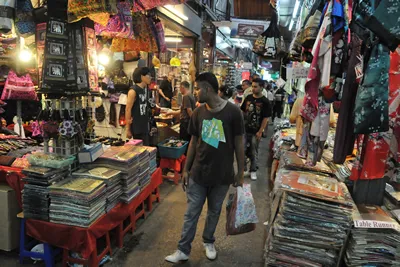
The Democracy Monument stands prominently on Ratchadamnoen Avenue, surrounded by a mix of governmental buildings, local eateries, cafes, and street vendors. The area is bustling with activity, making it a vibrant spot for cultural immersion.
Safety Tips and Local Nuances
- Traffic Awareness: The area around the Democracy Monument is busy; use pedestrian overpasses and crosswalks for safety.
- Personal Belongings: Be vigilant with your belongings, as pickpocketing can occur in crowded areas.
- Respect: The monument is a site of national pride; behave respectfully and avoid climbing on structures.
- Hydration: Bangkok’s heat can be intense; carry water to stay hydrated.
- Language: While many locals understand basic English, having directions or addresses written in Thai can be helpful for communication.
Reaching the Democracy Monument from different parts of Bangkok is straightforward, with a variety of transportation options available to suit all preferences. Whether you are traveling by taxi, BTS Skytrain, MRT Subway, or bus, this guide provides you with clear and detailed directions to ensure a smooth and enjoyable visit to one of Bangkok’s most important landmarks.
Prepare yourself for an enriching experience at the Democracy Monument, reflecting on Thailand’s democratic journey amidst the vibrant pulse of Bangkok.


















Michael Carter
Vestibulum ante ipsum primis in faucibus orci luctus et ultrices posuere cubilia curae; Donec vel erat in nulla efficitur tempor non ut nisl. Integer venenatis eros ut dui viverra fermentum.
Sophie Wilson
Nam ut turpis hendrerit, varius nunc vel, elementum dui. Morbi vulputate dolor sit amet scelerisque egestas. Vestibulum eleifend nunc ut bibendum fermentum.
Alex Morgan
Cras non velit nec purus tempor rhoncus. Sed non mauris vitae erat consequat auctor eu in elit. Class aptent taciti sociosqu ad litora torquent per conubia nostra.