Why a Journey to Wat Saket is Unmissable
What sets Wat Saket apart is its ability to encapsulate the very essence of Thai spirituality and tradition. A visit to this temple is not just a box to tick on your itinerary; it's a cultural immersion and a spiritual revelation. From scaling the iconic Golden Mount to witnessing the convergence of modernity and tradition during temple festivals, Wat Saket embodies what it means to travel with an open heart and a thirst for understanding. It's an ode to the history and resilience that marks the very core of Bangkok's soul.
A Resonant Note to Conclude
Travel is not just about moving through places; it's about allowing those places to move through you. Wat Saket, with its history steeped in the cultural fabric of Bangkok, is an indispensable chapter in any traveler's book of experiences. It beckons with the promise of panoramic views, insights into age-old traditions, and an opportunity to engage with Thailand's living heritage. Whether you're a wanderlust enthusiast or a cultural connoisseur, Wat Saket awaits, promising a sojourn to stillness that resonates long after your visit.
If your travel compass is pointing to Bangkok, chart your course to Wat Saket.
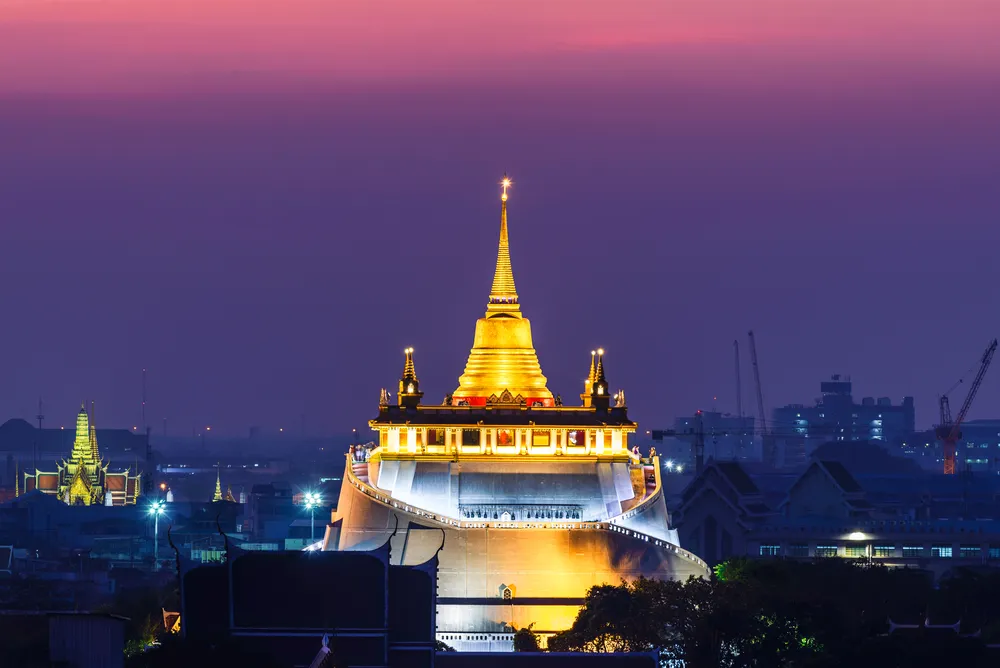
Unveiling the Story of Wat Saket
Wat Saket, also known as the 'Golden Mount Temple', stands tall as a gleaming landmark in Thailand's capital, a testament to the historical and spiritual fabric of the land. A prominent feature is its glittering chedi, offering panoramic views of the city and a serene retreat from the urban melee. The temple plays a significant role in the city's history, including its past as a refuge for plague victims and a crematorium in the mid-19th century. Despite its tragic duties, Wat Saket embodies resilience, symbolic of the essence of the Thai spirit.
Eerie Tableau Unfolds at Bangkok's Wat Saket
Nestled in the heart of Bangkok, amidst the bustle of street vendors and the hum of motorbikes, lies a monument that whispers tales from the past — Wat Saket or the Golden Mount. A beacon of spirituality by day, this historic temple transforms as night falls, its narrative cloaked in shadows and mystery.
The Legends of the Golden Mount
Popular with tourists by daylight, Wat Saket offers far more than a panoramic view of sprawling Bangkok. When night descends, it's as if the very air around the Golden Mount thickens with ancient whispers. The chill not brought by the breeze carries with it the tales of restless spirits and forgotten ghosts that are said to roam these sacred grounds.
Read More
King Rama III’s ambitions for a grand chedi (stupa) may have crumbled under the weight of its aspirations, but in their stead rose folklore as alluring as they are chilling. It is here that local lore tells of strange occurrences that defy explanation, of pilgrims who sense an unseen presence amidst the prayer chants and incense smoke. These are the stories often unheard in the daylight's dazzle but are no less a part of Wat Saket’s spiritual tapestry.
A Historical Contrast
During the day, the verdant foliage and the gleaming chedi project an aura of peace and reverence, drawing in countless visitors looking for a serene retreat. However, the rich history of Wat Saket paints a complexity that bewitches the mind. The failure of Rama III's ambitious chedi speaks volumes of a past where ambition met the limits of reality, and from which the Golden Mount rose like a phoenix.
The crumbling structure left behind, now shrouded in nature's reclaim, appears as a poignant reminder of the impermanence of man’s creations, and yet, how beautifully they can evolve. This juxtaposition of ambition and tranquillity, form and dissolution, sets the stage for a curious mind to explore and imagine.
Intimate Encounters and Local Beliefs
Talk to the residents or frequent visitors, and you'll hear intimate recollections, each a puzzle piece in the enigmatic picture of Wat Saket at night. Elders speak of ancestors' spirits protecting the holy site, while others believe the night brings a clarity of communication with the divine.
During the Loy Krathong festival, the temple’s spiritual promise burns brightest. The krathongs, set aloft with flickering candles, seem like earthly stars, carrying away the malice, leading the way to redemption and new beginnings.
The Temple’s Transformation
In the quiet after-hours, the Golden Mount seems to transform. Soft illumination casts intriguing patterns, and the cool stone underfoot reminds one of the ancient paths these steps have witnessed. By day, where children’s laughter might echo, the twilight hours invite an introspective silence, a hush that is both reverence and anticipation.
To witness Wat Saket by night is to walk alongside history and to peer through the veil between the known and the mysterious. It’s where every whisper of the leaves or the rustling robes of the monks might just intertwine with the ethereal, weaving stories that beckon the living and commune with the spirits.
Wrap up your evening with a surreal encounter — visit Wat Saket after dusk and feel the golden whispers of history and legend come to life.
The Golden Mount awaits your ascent — not just a physical climb, but a transcendental exploration, filled with the aspirational lure of heritage and the evocative tales of the past. Unlock the mysteries, sense the serenity, and allow your curiosity to soar in this place where every corner tells a story.
In the heart of Bangkok, among the golden glimmers and the echos of ancient legends, Wat Saket stands not merely as a structure but as a gateway to the extraordinary. Dare to explore—for in the cool quietude of its night-time glow, you may just find the story that unfolds is your own.
The Teachings Symbolized by the Three Monkeys at Wat Saket
Ah, the enchanting tale of the Three Wise Monkeys, a story that has traversed continents and centuries to find a place in the hearts and minds of many around the globe. Nestled within the serene confines of Wat Saket, a temple that rises like a spiritual beacon in the bustling city of Bangkok, these iconic figures hold a special place, embodying a message that is as relevant today as it was when first conceived.
The Three Wise Monkeys represent the proverbial principle to "see no evil, hear no evil, speak no evil." This timeless adage encourages us to lead a life of moral integrity by consciously choosing to avoid engaging with or spreading negativity. The monkeys are named Mizaru, covering his eyes, who sees no evil; Kikazaru, covering his ears, who hears no evil; and Iwazaru, covering his mouth, who speaks no evil. Each monkey uses a different sense to convey the message of living without spreading malice or wrongdoing.
Read More
Originating in the East, this symbolic representation has found its way into various cultures and religions, including Buddhism, where it serves as a reminder not to dwell on evil thoughts. In Buddhism, the emphasis is placed on the purity of thought, speech, and action, aligning perfectly with the teachings symbolized by the three monkeys. Their presence near the Temple of Wat Saket, as captured in various artistic depictions, underscores the importance of these values in creating a harmonious and spiritually enriched community.
Interestingly, sometimes a fourth monkey, known as Shizaru, is depicted. Shizaru embodies the principle of "do no evil," adding another layer to the already profound message by emphasizing the importance of actions in shaping our moral compass. This extension of the original trio enhances the maxim's scope, reminding us that ethical conduct extends beyond what we see, hear, and speak, to include all our actions.
At Wat Saket, these symbols serve not only as an adornment but also as a guide for reflection and self-improvement. They remind visitors of the temple's spiritual sanctuary to strive for purity in thought, word, and deed. In a world brimming with challenges and distractions, the Three Wise Monkeys at Wat Saket stand as a testament to the enduring power of simplicity, morality, and wisdom in navigating life's complexities.
Discover The Buddha statue at Wat Saket
The Buddha statue at Wat Saket, a significant symbol within the temple complex, holds a special place in both the hearts of the local devotees and the minds of visitors from around the world. Here are the key facts about this revered statue:
These facts together paint a vivid picture of the Buddha statue at Wat Saket as not just an object of veneration but as a living part of Thailand's spiritual, cultural, and historical landscape.
Read More
-
Location and Setting: The statue is situated on Phu Khao Thong, which translates to the Golden Mount. This is a steep artificial hill located within the temple's compound, providing a serene and spiritually elevated setting for the statue.
-
Historical Significance: Its completion dates back to the early reign of King Rama V, marking it as an artifact of great historical and cultural value. The period of its creation underlines the continuity of religious and artistic traditions through Thai history.
-
Material and Craftsmanship: This statue is notable for being covered in a layer of gold, a testament to the skilled craftsmanship of the era and the high reverence in which the statue is held. The use of gold not only signifies purity and spiritual wealth but also contributes to the statue's striking visual appeal.
-
Religious Importance: A relic of the Buddha was brought from Sri Lanka and placed in the chedi (a stupa) on the hill, further enhancing the spiritual significance of the statue and its surrounding structure. This act of enshrining a relic within the chedi makes the site an important pilgrimage destination.
-
Cultural and Festive Role: The Buddha statue and the chedi play central roles in an annual festival at Wat Saket. This festival features a candlelight procession up Phu Khao Thong to the chedi, illustrating the community's active participation in maintaining and celebrating their religious traditions.
-
Devotional Practices: During the festival, devotees engage in the practice of writing their names and the names of family members on a long red robe that wraps around the chedi. They pray for their wishes to be fulfilled, a ritual that underscores the personal and communal aspects of their faith.
-
Historical Continuity of the Festival: The observance of this festival has been a tradition since the reign of King Rama V, linking past generations with the present and ensuring the transmission of cultural values and practices.
-
Tourism and Symbolism: The Buddha statue at Wat Saket has transcended its religious context to become a popular tourist attraction and a symbol of Bangkok. Its fame underscores the temple's role in representing Thai culture and spirituality to the world.
The "Statue with Bells" at Wat Saket
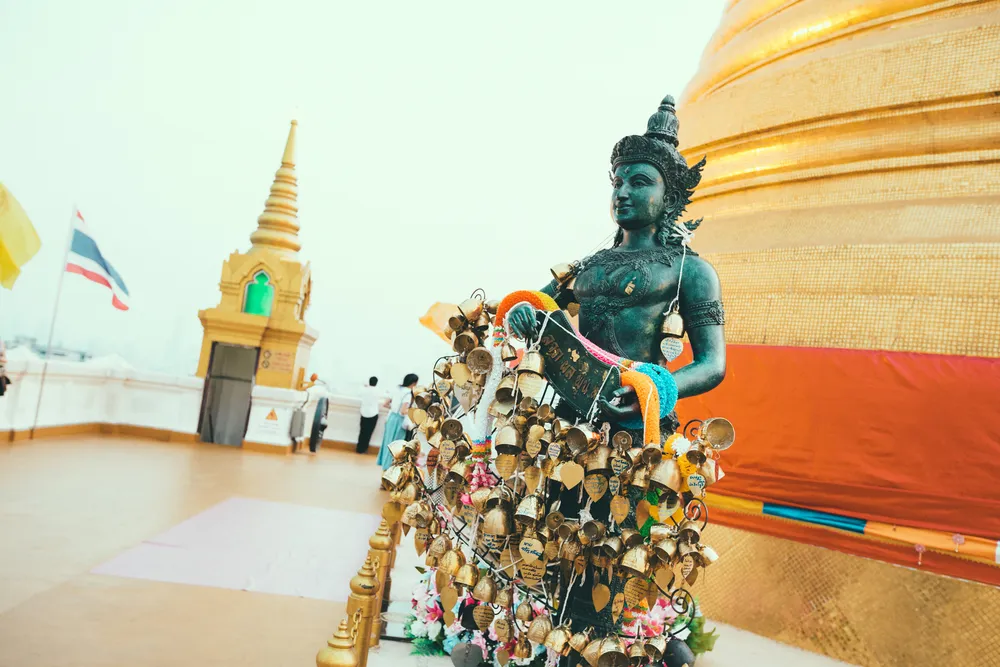
The "Statue with Bells" at Wat Saket, also known as the Temple of the Golden Mount in Bangkok, is a captivating feature that embodies both the aesthetic beauty and spiritual resonance of this historic site. Here are some fascinating facts about it:
In essence, the "Statue with Bells" at Wat Saket is not merely an artistic or religious artifact; it is a living part of Thailand's cultural and spiritual landscape, inviting participation, reflection, and connection from all who visit.
Read More
-
Symbolic Significance: In Buddhist tradition, bells are deeply symbolic, often representing wisdom and the voice of Buddha. They are used in rituals to promote mindfulness and to summon practitioners to prayer or meditation. The presence of bells around the statue at Wat Saket serves to enhance the spiritual atmosphere of the temple.
-
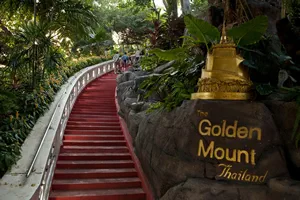
Interactive Ritual: Visitors climbing the 344 steps to reach the statue are encouraged to ring these big metal bells. This act is believed to bring good luck and fulfill wishes, creating a memorable interactive experience that connects participants with the temple's traditions.
-
Pathway to Enlightenment: The pathway leading to the statue, adorned with green leafy arches, interesting sculptures, and the resonant bells, is designed to offer an immersive journey through a tranquil and reflective environment. Ringing the bells along this path is not just a gesture for good luck; it symbolizes the shedding of worldly concerns in pursuit of enlightenment.
-
Architectural Beauty and Setting: The bells are strategically placed around the statue and along the path to the Golden Mount, contributing to the architectural beauty and serene ambiance of Wat Saket. The arrangement allows for the soft sounds of the bells to echo gently across the temple grounds, enhancing the sense of peace within this sacred space.
-
Tourist Attraction: Beyond their spiritual significance, the bells have become a popular attraction for tourists. The opportunity to engage in the temple's rituals by ringing the bells attracts visitors from around the world, making it a memorable part of their visit to Bangkok. The unique combination of spiritual activity within a historic setting adds to Wat Saket's appeal as a must-visit destination
-
Panoramic Views: Upon reaching the statue and the surrounding area of bells, visitors are rewarded with stunning panoramic views of Bangkok. This scenic vista, combined with the spiritual upliftment of the bell-ringing ritual, offers a profound sense of accomplishment and peace, marking the culmination of the climb to the top of the Golden Mount.
-
Cultural and Historical Context: The presence of the statue with bells at Wat Saket is a testament to the temple's rich cultural and historical heritage. It reflects the integration of artistic expression, religious practice, and community tradition, offering insights into the spiritual life and historical continuity of Thai Buddhism.
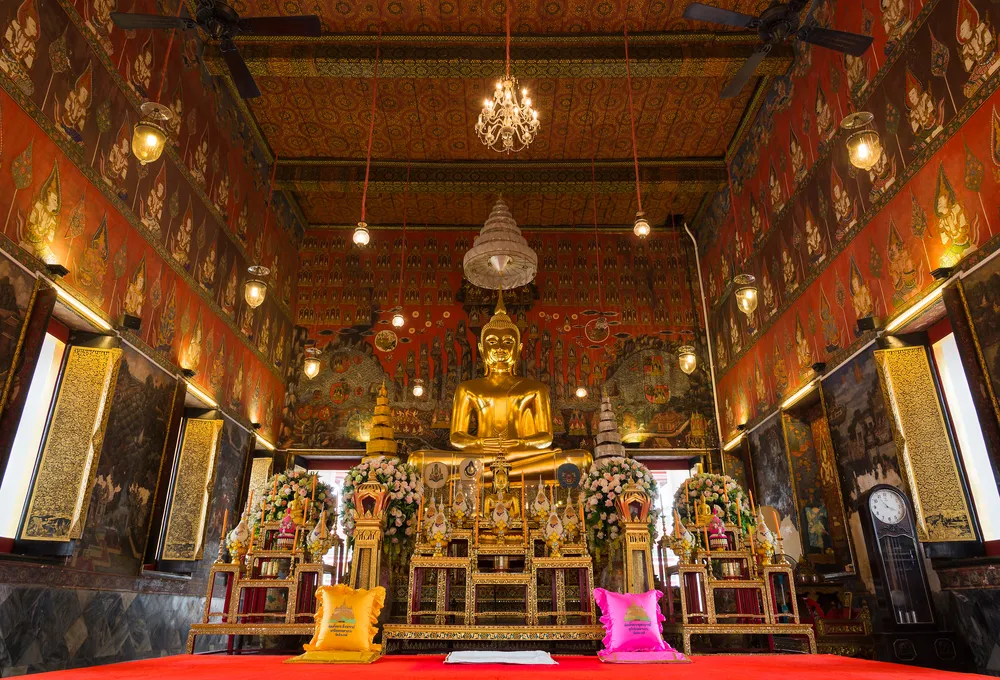
"Luang Por To" is the large gilded Buddha statue inset into the cave of Wat Saket
Dive into the heart of Bangkok, where the Golden Mount at Wat Saket cradles a treasure beyond mere gold or stone — "Luang Por To," a majestic Buddha statue that beckons with whispers of serenity and ancient wisdom. "Luang Por" translates to "Venerable Father," a term of deep respect and veneration used in Thai culture, especially to address very senior monks. This title imbues the statue with a spiritual significance, elevating it from a mere artistic creation to a revered fatherly figure guiding souls towards enlightenment.
Read More
Imagine standing before "Luang Por To," its gilded presence a beacon of tranquility amidst the bustling city. This magnificent statue is not just a figure of worship but a testament to the rich tapestry of Thai heritage and Buddhist faith. While specific details such as the age, height, material composition, and designer of "Luang Por To" are shrouded in the mists of time, it's the aura of mystery that surrounds it which stirs the imagination and fuels the wanderlust within us.
Crafted with devotion, each curve of "Luang Por To" tells a story of meticulous craftsmanship and unwavering faith. Picture the hands that sculpted its form, the dedication of those who transported this embodiment of spiritual guidance to its sacred nook within the cave. The making and the journey of "Luang Por To" to its current resting place atop Wat Saket are tales of human endeavor and spiritual pursuit.
"Luang Por To" isn't merely admired for its physical attributes but cherished for the soul-stirring experiences it offers. Visitors are drawn to its serene gaze, seeking moments of reflection in its venerable presence. This statue serves as a bridge connecting the earthly to the divine, inviting all who gaze upon it to explore deeper realms of self-understanding and tranquility.
Surrounded by the whispering leaves and the gentle caress of the breeze, "Luang Por To" stands as a guardian of peace, its golden hue mirroring the first light of dawn that bathes Wat Saket in an ethereal glow. It is a reminder of the transcendent beauty that awaits those who seek with open hearts and minds.
In this oasis of calm, every detail about "Luang Por To" — from its ancient lineage and spiritual significance to the enigmatic tales of its creation — weaves a compelling narrative that calls out to the curious soul. Embark on a pilgrimage to Wat Saket, ascend the Golden Mount, and immerse yourself in the captivating allure of "Luang Por To." This is not just a visit; it is a voyage into the heart of Thai spirituality, an invitation to experience the profound peace that resides within.
It beckons you to explore beyond the surface, to connect with the soul of Thailand, and to leave with stories that resonate with the spirit of wanderlust. Don't miss the chance to weave this extraordinary experience into the tapestry of your travels.
The 12 Thai Zodiac Paintings at Wat Saket
Prepare to be whisked away into the enchanting realm of Wat Saket, an illustrious gem nestled in the vibrant heart of Bangkok. This ancient temple, a beacon of spiritual serenity and cultural richness, is not only famed for its towering grandeur but also for the captivating allure of the 12 Thai zodiac paintings that adorn its sacred walls. These paintings are more than mere art; they are a window into the soul of Thailand, a narrative woven from the threads of time and tradition.
As you ascend the spiraling pathway that leads to the Golden Mount, each step brings you closer to an extraordinary encounter with history and mythology. The 12 Thai zodiac paintings, a vivid tapestry of colors and emotions, unfold the story of celestial influence over human destiny. Drawing inspiration from the Chinese zodiac, these paintings harmonize with the cosmic rhythm, charting the course of life, love, and fortune under the watchful gaze of the heavens.
Read More
The zodiac cycle, an intricate dance of animals and elements, is a testament to the profound connection between the people of Thailand and the natural world. Each sign, represented by an animal, symbolizes unique traits and fortunes, guiding individuals in understanding their path in life. From the courageous Tiger to the wise Snake, every creature tells a tale of strength, challenge, and hope. These paintings, richly adorned and meticulously crafted, serve as a vibrant reminder of the enduring power of belief and tradition in shaping the human experience.
Imagine standing before these majestic artworks, where each brushstroke tells a story of faith and aspiration. The zodiac paintings are not just an artistic achievement; they are a cultural treasure, encapsulating the essence of Thai identity and spirituality. They invite you to explore the depths of your soul, to discover the echoes of ancient wisdom that resonate within, urging you to seek harmony with the cosmic forces that guide your journey through life.
Wat Saket offers an immersive experience that transcends the boundaries of time. It invites you on a voyage of discovery, where art, history, and spirituality converge in a symphony of beauty and mystery. The 12 Thai zodiac paintings are a highlight of this magical journey, a series of celestial signposts that beckon you to explore further, to immerse yourself in the wonders of Thai culture and heritage.
This is your invitation to wander, to dream, and to connect with the timeless allure of Thailand through the mesmerizing art of the 12 Thai zodiac paintings at Wat Saket. Embark on this captivating adventure, and allow your spirit to soar on wings of curiosity and awe. Who knows what fortunes the stars hold for you?
Tips for a Wisened Wat Saket Visit
Every traveler is afforded the opportunity to be a respectful guest at Wat Saket. Adhering to local customs enhances the experience and fosters global connection. Here are some recommended guidelines to make the most of your visit:
The Dress Code
Prioritize comfort without compromising on respect. Wear clothes that cover your shoulders and knees, out of deference to the sacred environment.
Timing Your Trip
To experience the temple's rituals and perhaps catch an enchanting sunset, mornings and late afternoons are ideal. However, each time of day bestows a unique atmosphere that's worth savoring.
Silent Lens, Respectful Gestures
While photography is permitted in certain areas, be judicious with your camera. Silently observing and experiencing the moments can often be more profound than capturing them through a lens.
In Conclusion: An Invitation to Immersion
Wat Saket and Banglamphu beckon to the adventurer within you, extending an invitation beyond fleeting travel to immersive cultural exchange. Rekindle your spirit with the essence of Thai tradition, and engage with the locals who offer a warm and sincere welcome. Dare to uncover the tales etched in the nooks and crannies of these profound sites. In the end, your memories and transcendental moments spent in this district lay the foundation for a deeper connection with Thailand's soul.
Your encounter with Wat Saket and Banglamphu is more than a mere passage through locales; it's a voyage of self-discovery and enlightenment. Establishing a connection with this corner of Bangkok will forever embed the indomitable spirit of the destination in your own heart. Go forth, solo traveler. You have an enlightened path to tread.

























Michael Carter
Vestibulum ante ipsum primis in faucibus orci luctus et ultrices posuere cubilia curae; Donec vel erat in nulla efficitur tempor non ut nisl. Integer venenatis eros ut dui viverra fermentum.
Sophie Wilson
Nam ut turpis hendrerit, varius nunc vel, elementum dui. Morbi vulputate dolor sit amet scelerisque egestas. Vestibulum eleifend nunc ut bibendum fermentum.
Alex Morgan
Cras non velit nec purus tempor rhoncus. Sed non mauris vitae erat consequat auctor eu in elit. Class aptent taciti sociosqu ad litora torquent per conubia nostra.