The Legend of the Emerald Buddha
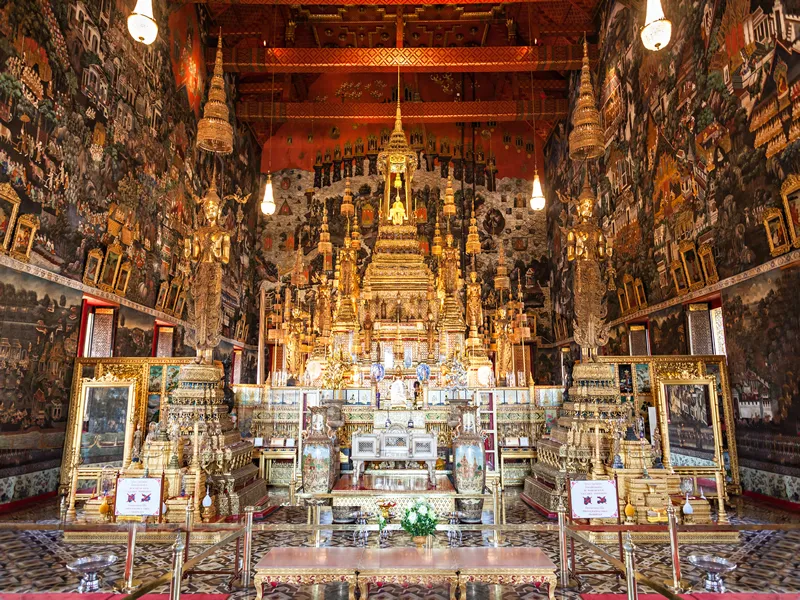
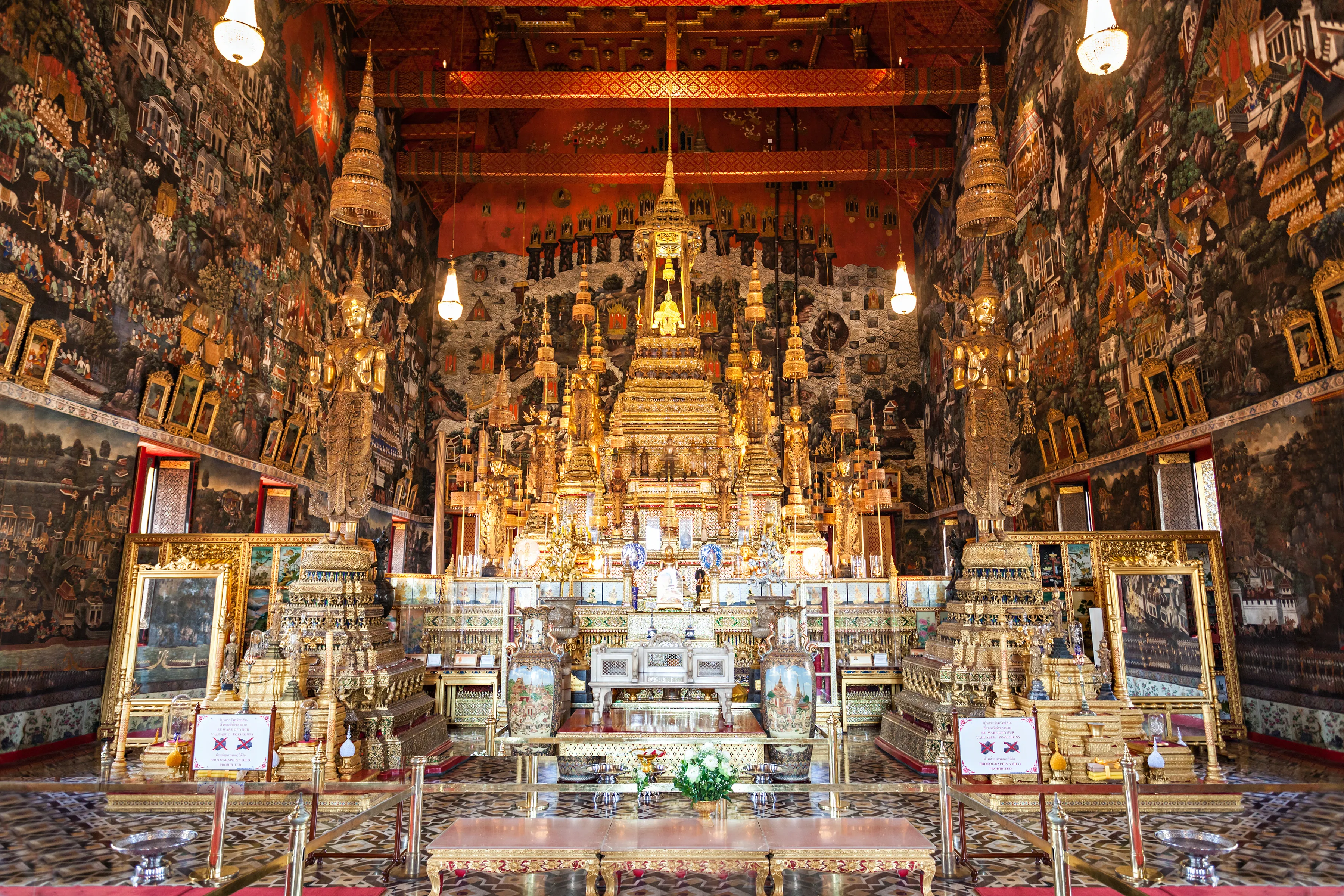
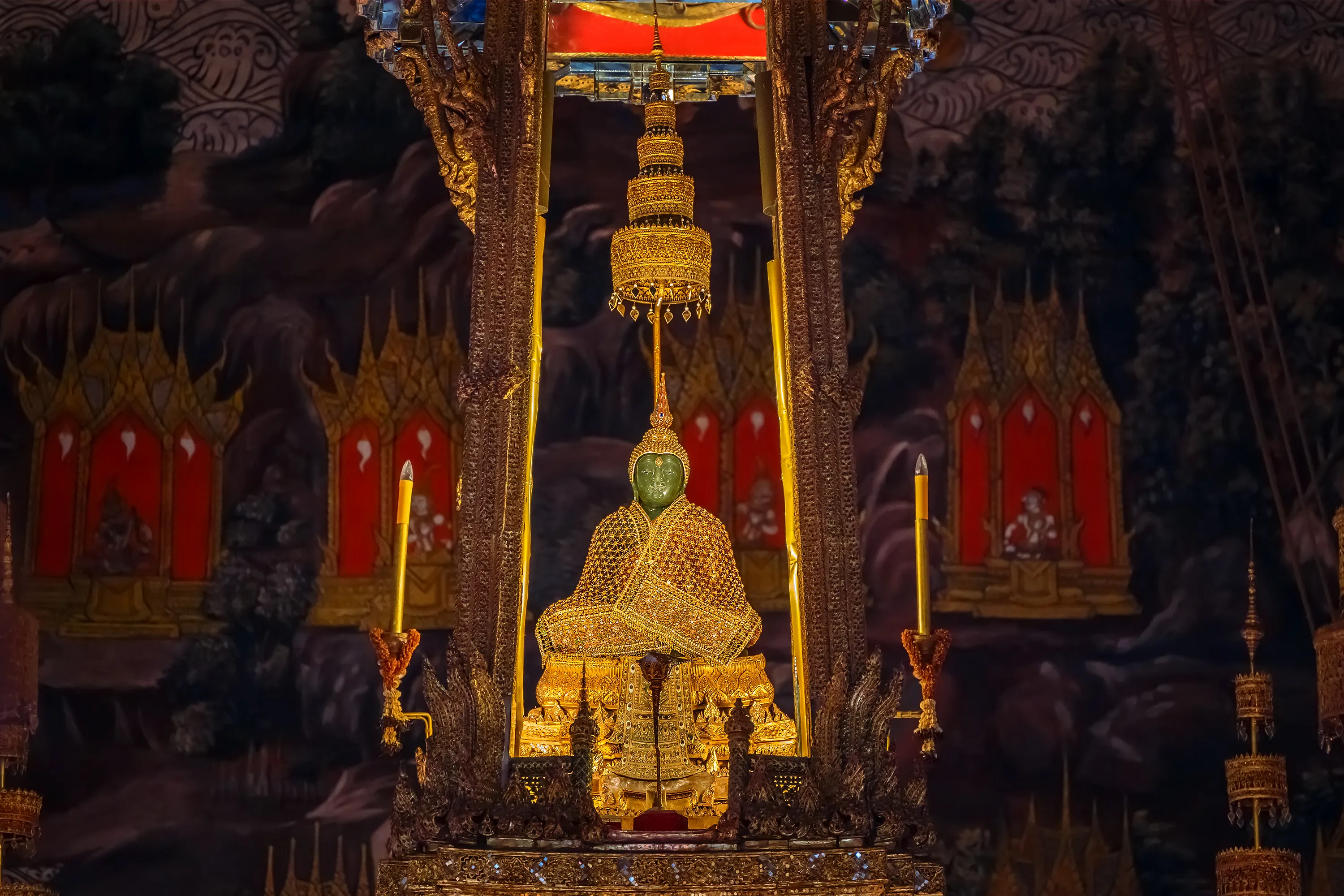
At the centre of the complex sits the Ubosot, or ordination hall, home to the temple’s namesake: the Emerald Buddha. Despite its name, this revered statue is actually carved from a single block of green jasper (a semi-precious stone), not emerald. Standing at about 66 centimetres tall, the Buddha sits in a meditative posture on a soaring golden pedestal, surrounded by elaborate decorations that seem to glow in the dimly lit hall.
One of the most fascinating aspects of the Emerald Buddha is its seasonal wardrobe. In a tradition dating back generations, the King of Thailand (or a designated royal representative) climbs up to the pedestal three times a year to change the Buddha’s golden robes. These changes mark the beginning of the summer, rainy, and cool seasons. It is a ritual of immense significance, believed to bring good fortune and seasonal prosperity to the country.
Note regarding photography: While the beauty of the Emerald Buddha is captivating, please remember that photography is strictly forbidden inside the main ordination hall. This rule helps maintain the sanctity of the space and encourages visitors to be present in the moment rather than viewing it through a lens.
A Masterpiece of Rattanakosin Architecture
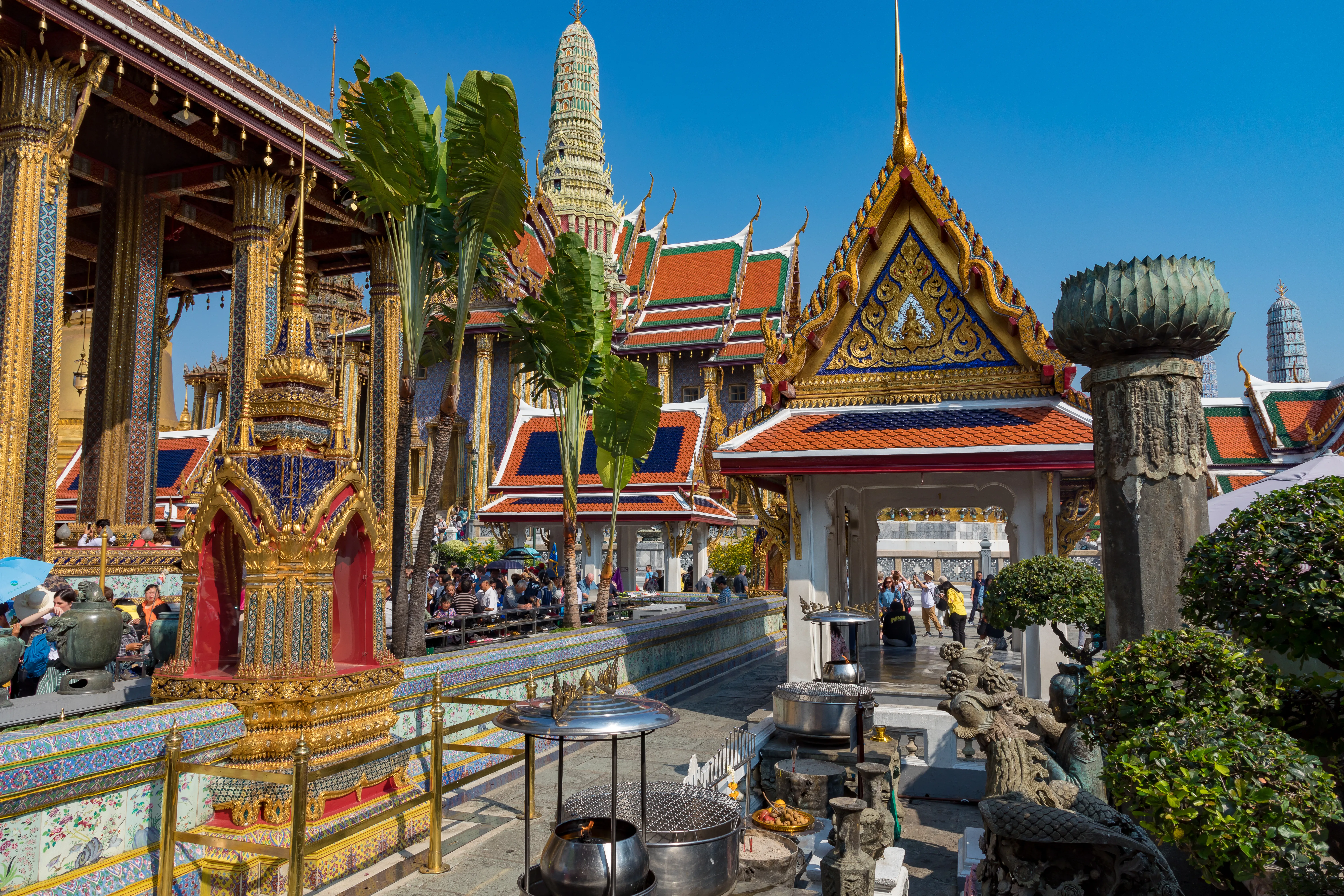
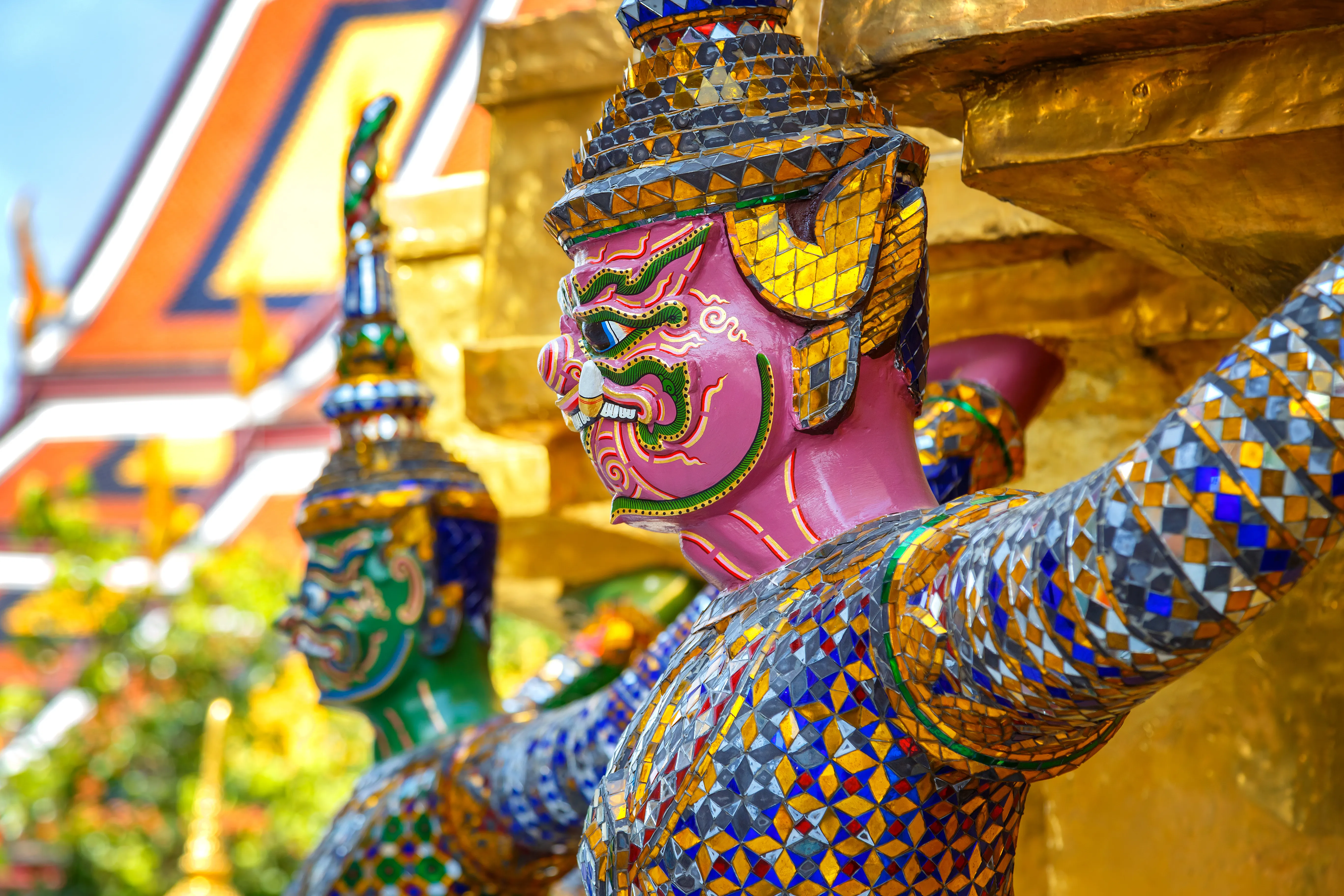
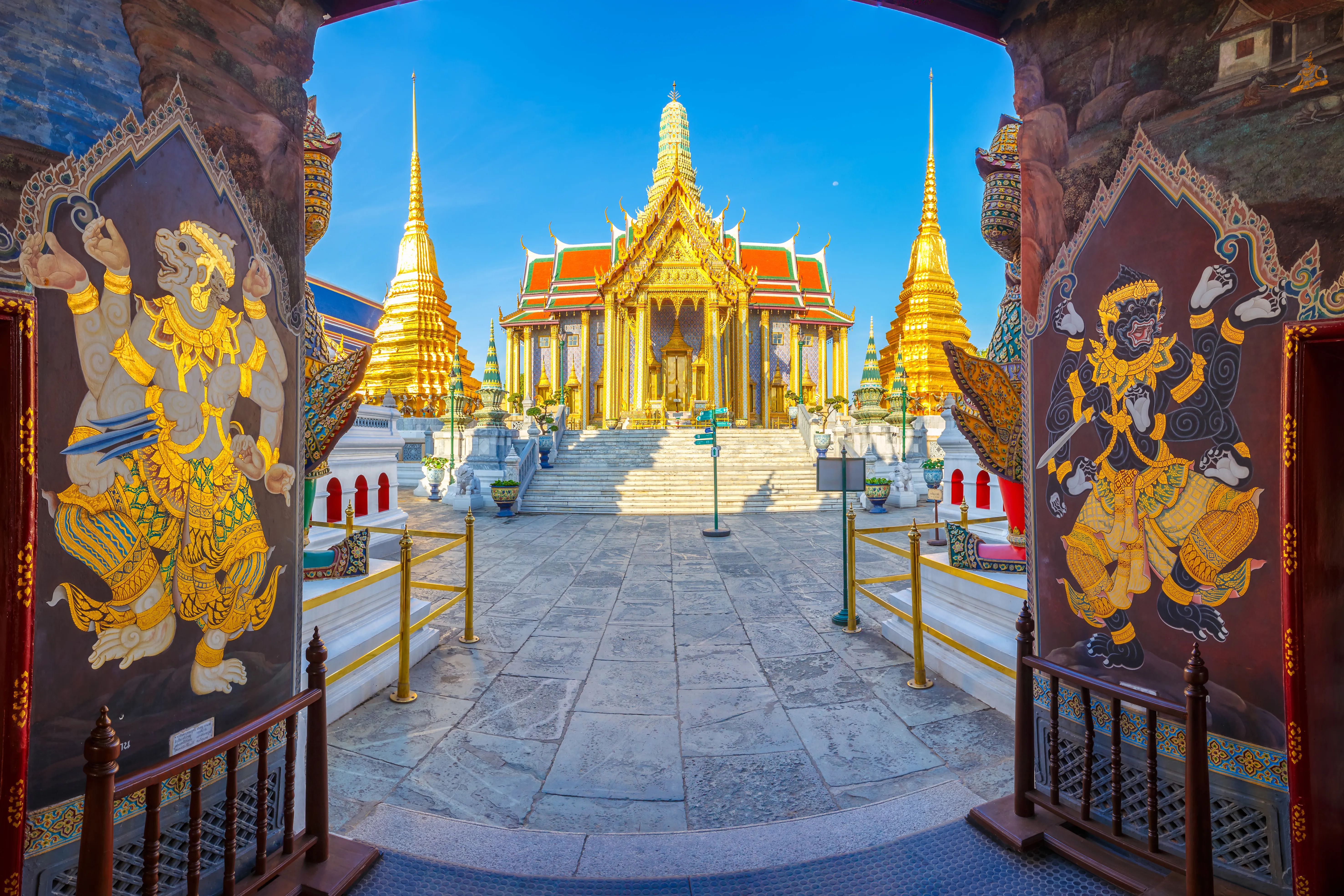
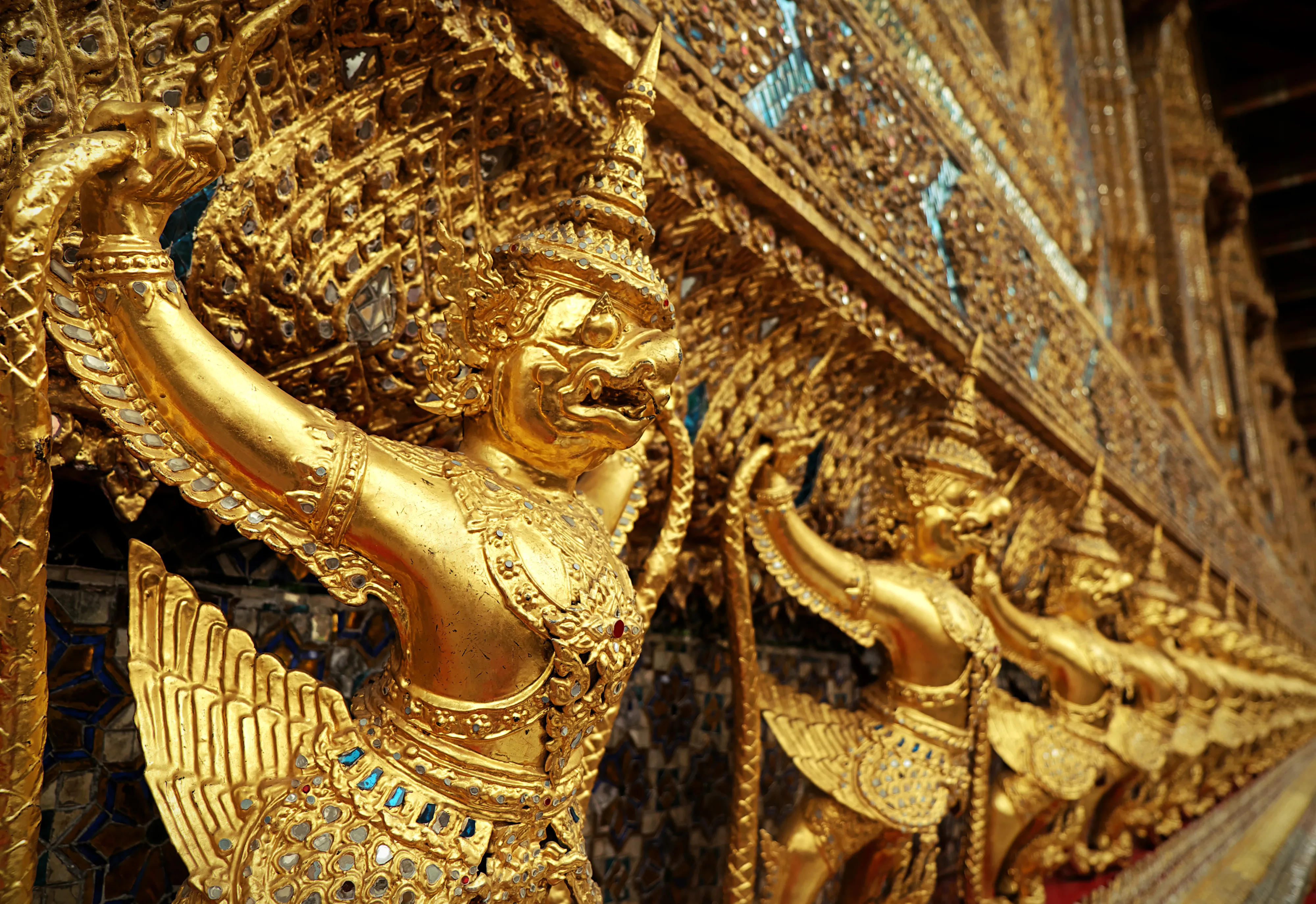
The architectural grandeur of Wat Phra Kaew is overwhelming in the best possible way. Every inch of the complex appears to be covered in glass mosaics, gold leaf, or porcelain, reflecting the tropical sun in a kaleidoscope of colour.
The Ramakien Gallery
Wrapping around the cloisters of the temple is the Ramakien Gallery, which features 178 incredibly detailed mural panels. These paintings depict the Ramakien, Thailand’s national epic derived from the Hindu Ramayana. The murals tell the story of the triumph of good over evil, featuring the hero Rama, his loyal monkey general Hanuman, and the demon king Tosakan. Taking the time to walk along these shaded corridors offers a visual storytelling experience that rivals any museum.
The Golden Chedi and Royal Pantheon
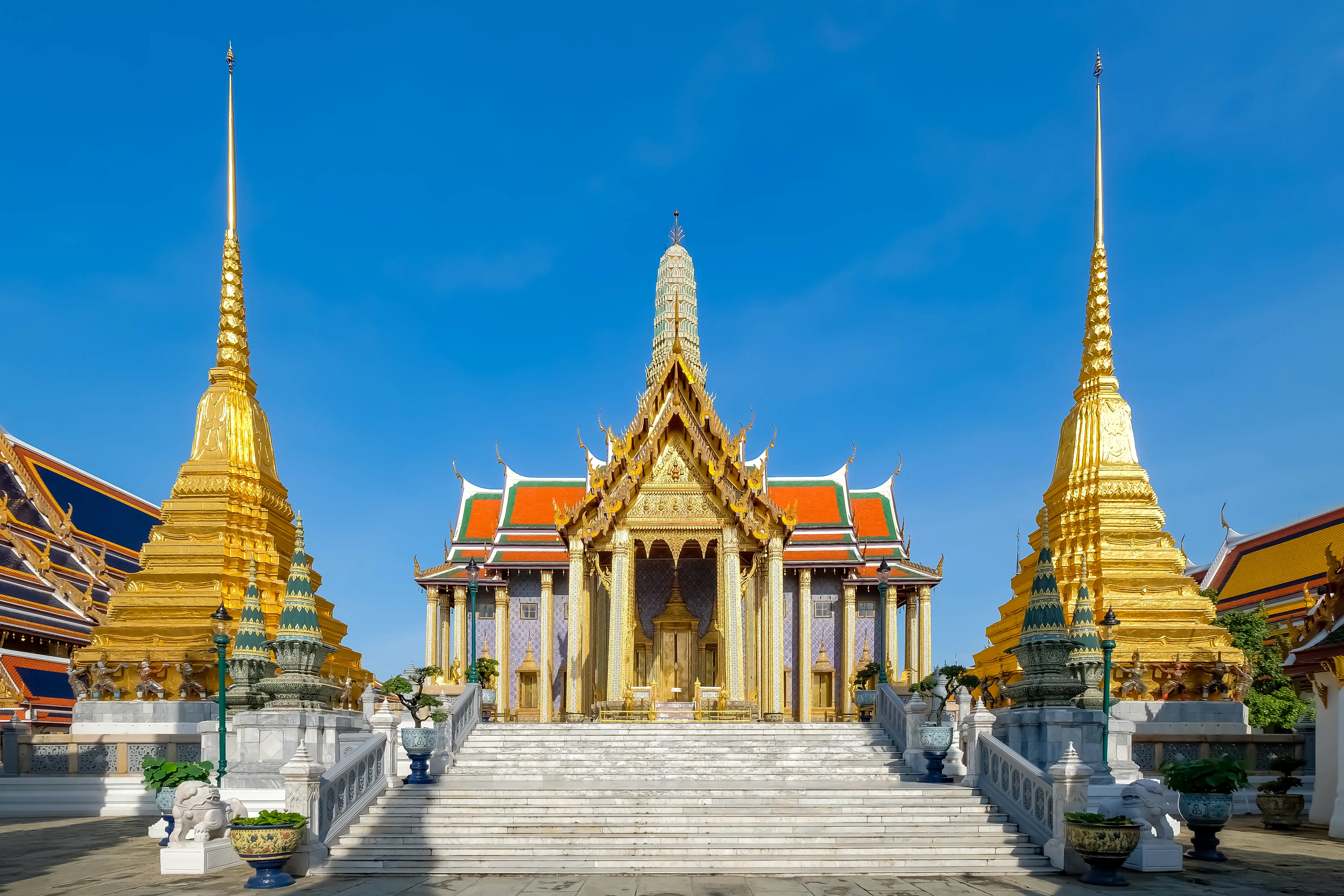
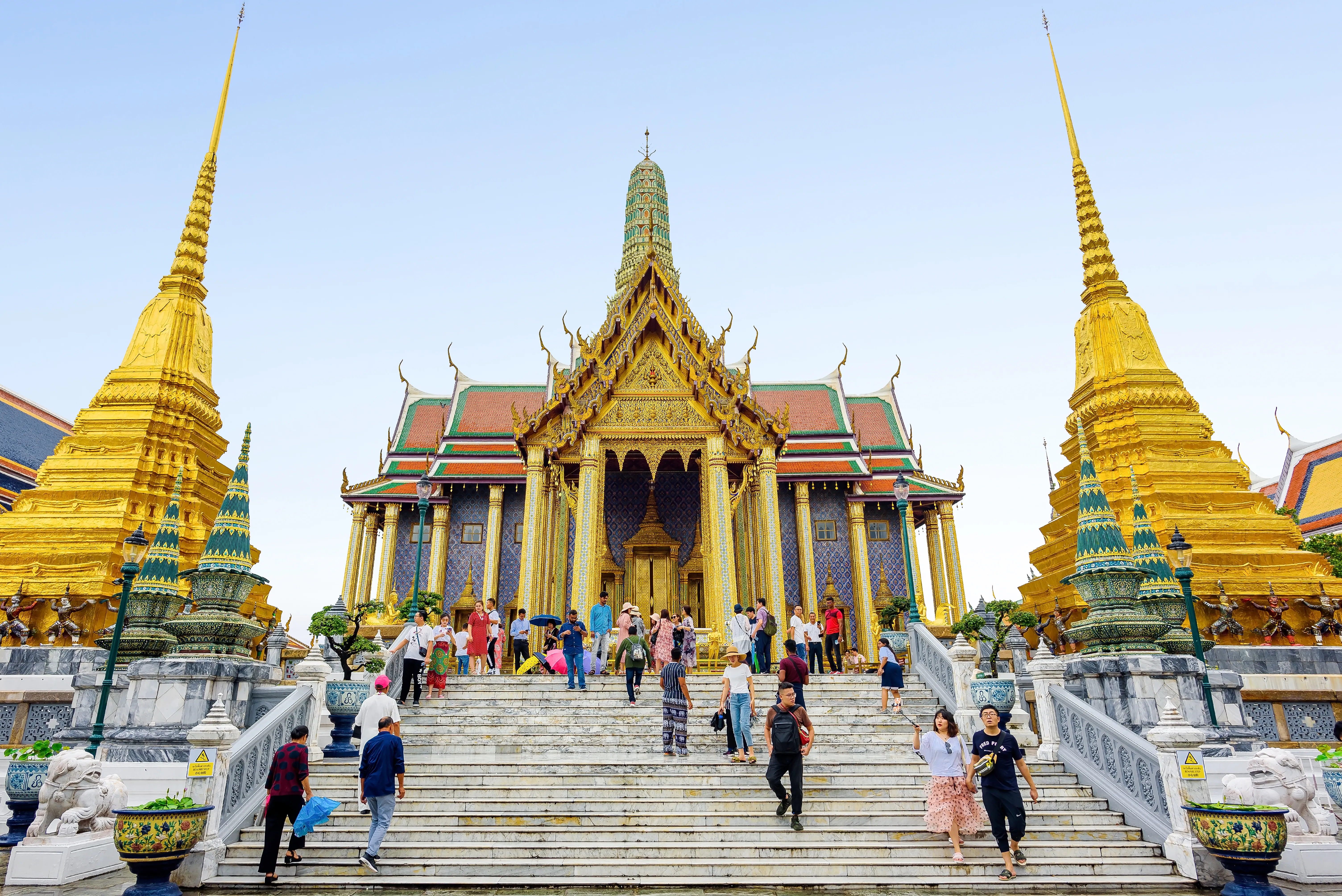
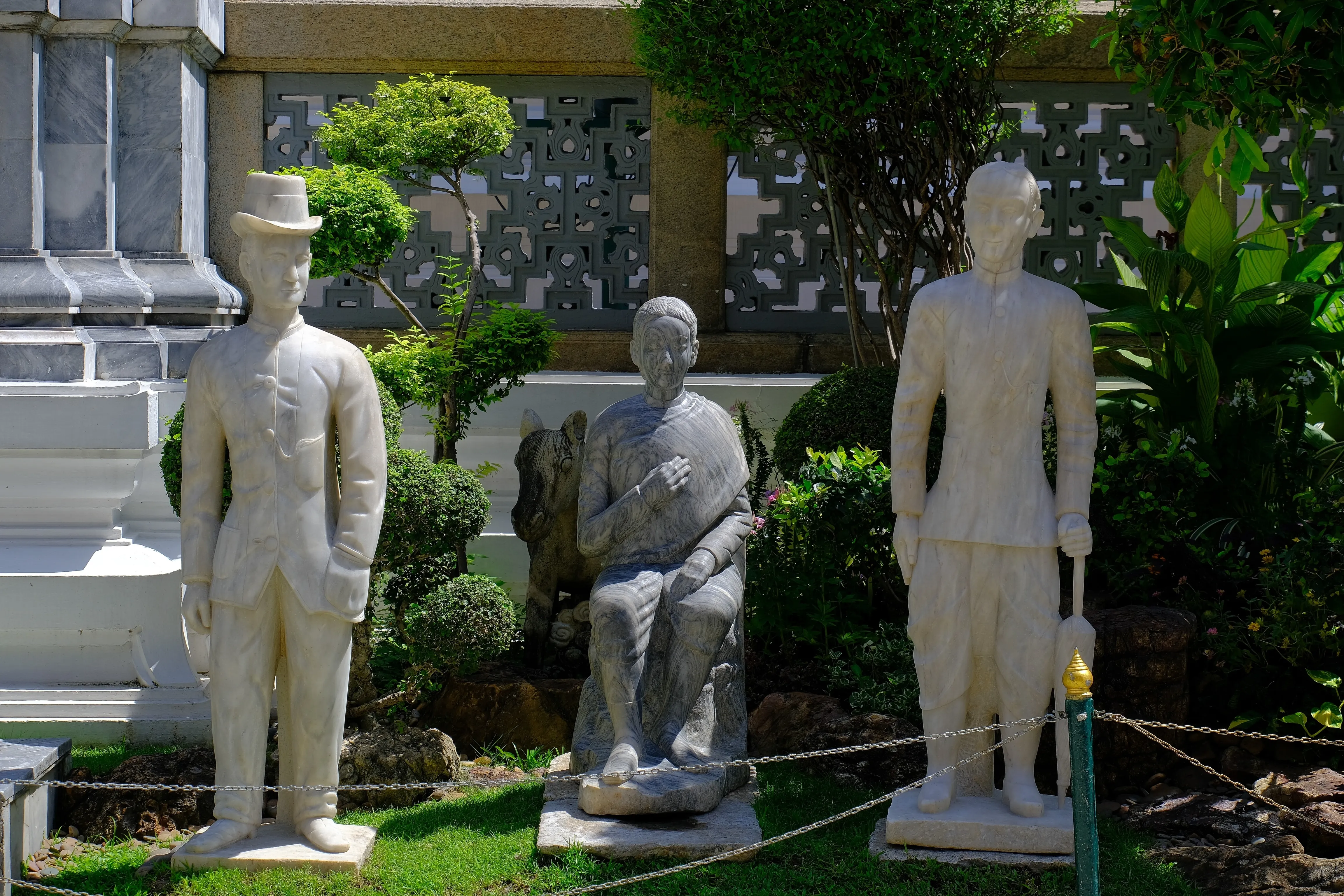
The skyline of the temple complex is dominated by three main pagodas. The most striking is the Phra Si Rattana Chedi, a bell-shaped stupa covered entirely in gold tiles, which houses relics of the Lord Buddha. Nearby stands the Prasat Phra Thep Bidon, or the Royal Pantheon, a cross-shaped building adorned with mixed Khmer and Thai styles, housing life-sized statues of the deceased kings of the Chakri dynasty.
The Yaksha Guardians
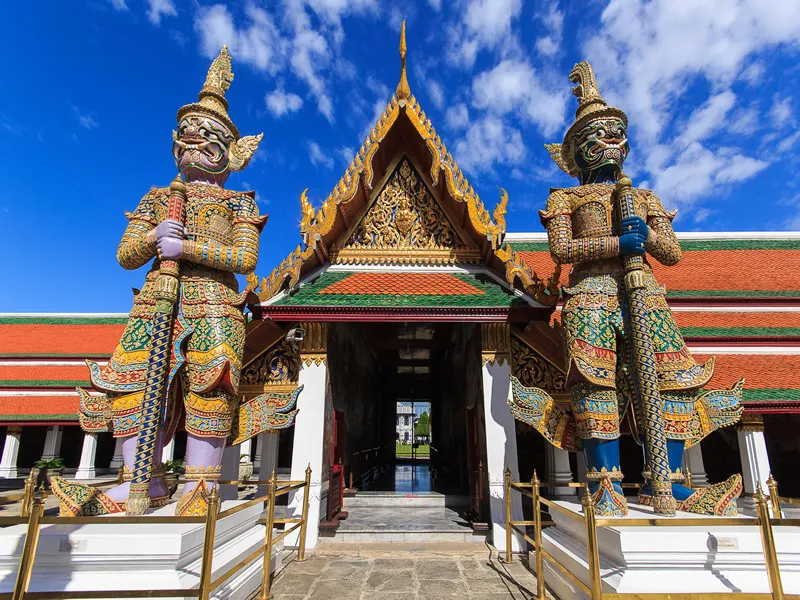
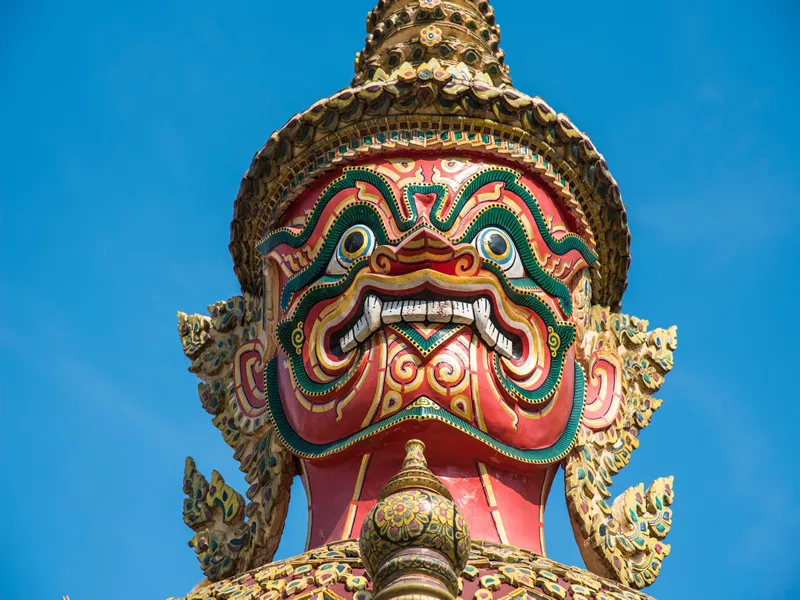
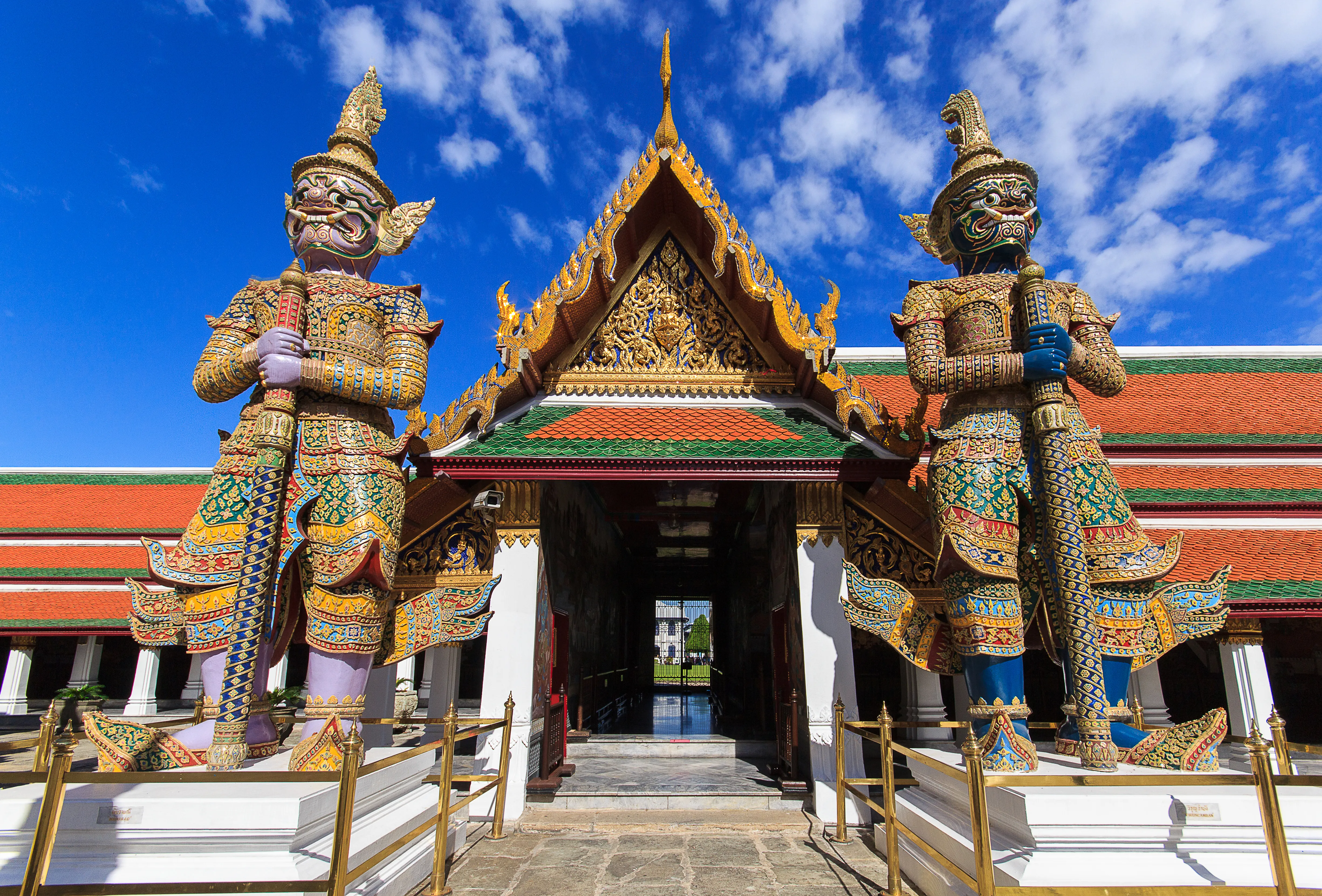
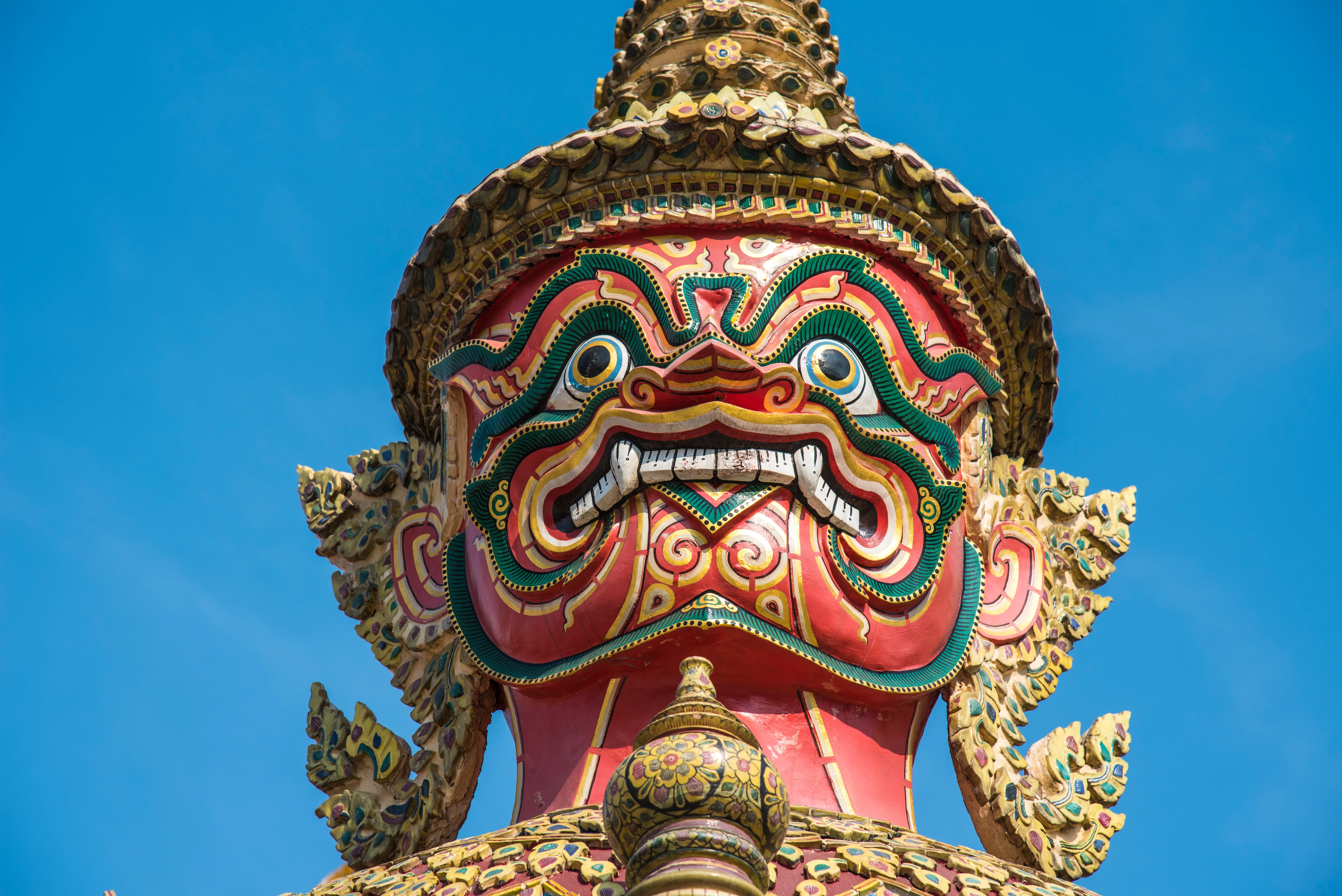
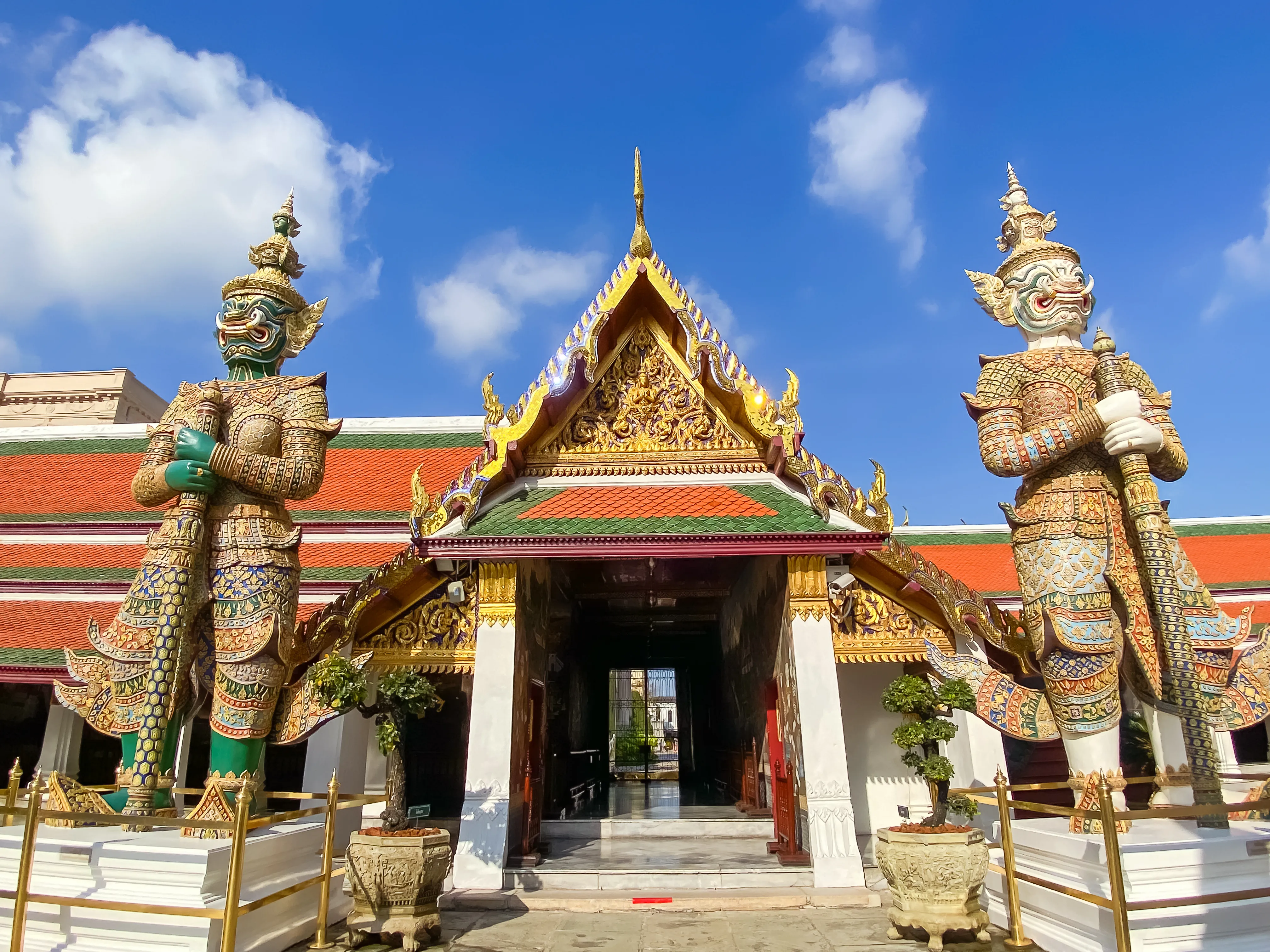
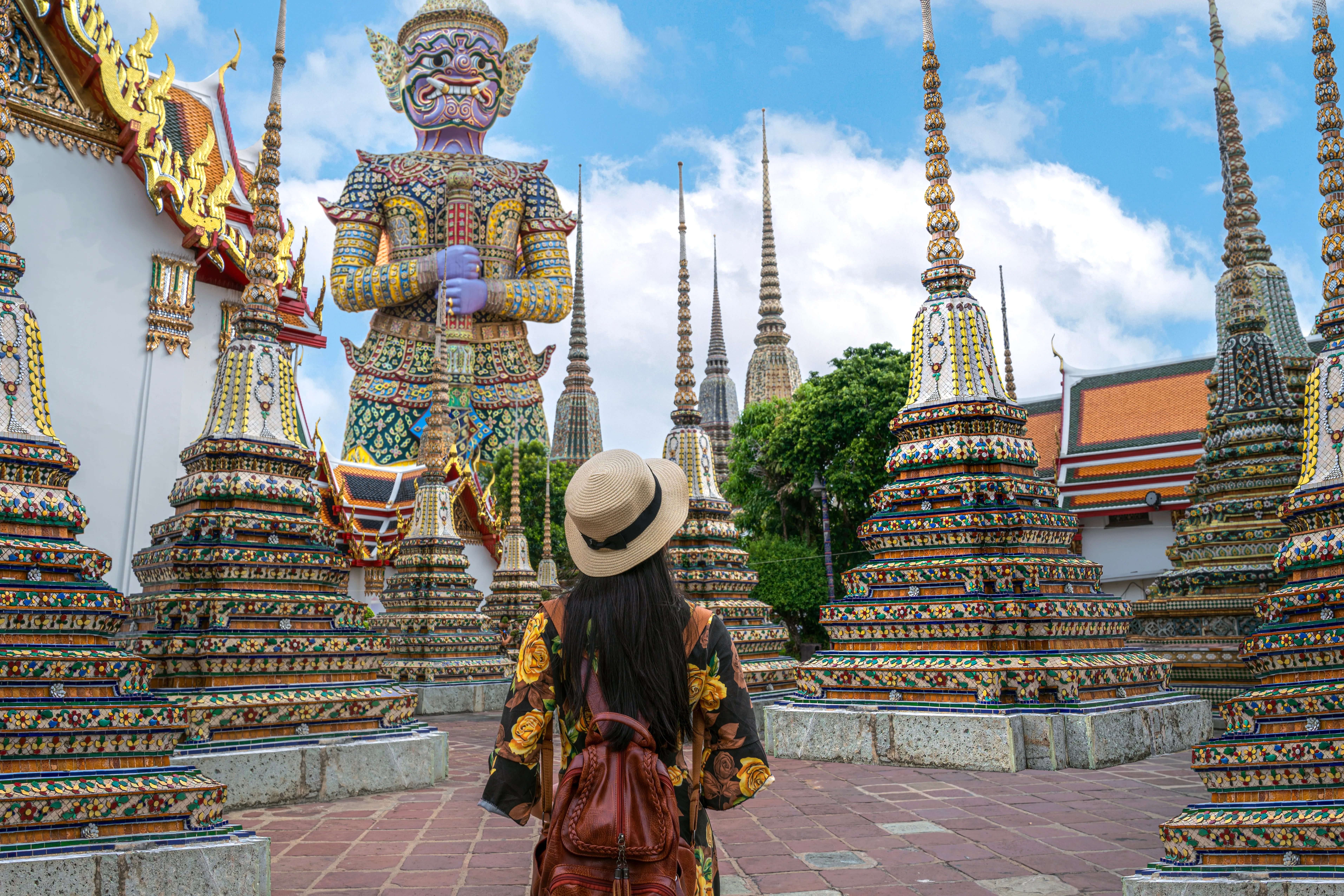
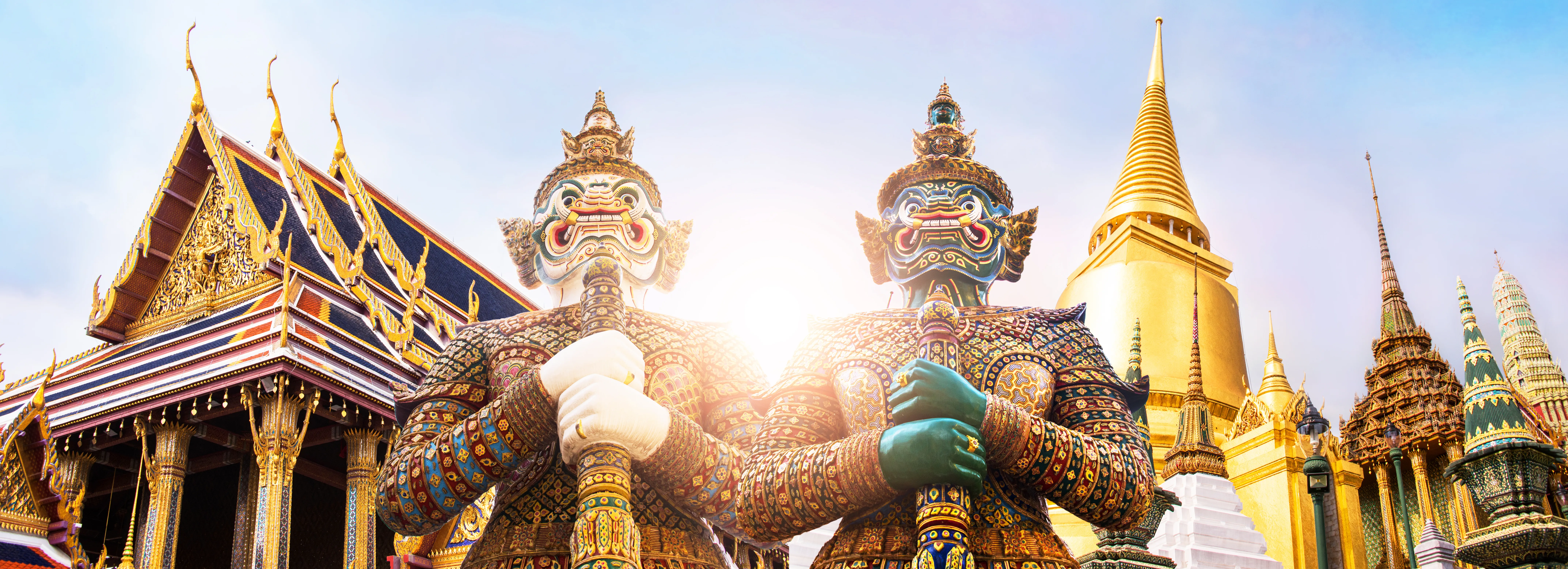
Guarding the gates of the temple are the Yaksha—towering, colourfully decorated demon figures standing roughly five metres tall. With their bulging eyes, fanged teeth, and gripping weapons, they are tasked with protecting the Emerald Buddha from evil spirits. These giants are among the most photographed icons in Bangkok, standing as vibrant sentinels against the blue sky.
Practical Tips for a Seamless Visit
Visiting a site of such national importance comes with a specific set of rules and logistical considerations. A little preparation goes a long way in ensuring your visit is respectful and enjoyable.
Decoding the Dress Code
The dress code at Wat Phra Kaew is strictly enforced—more so than at any other temple in Thailand. It is a sign of respect for the sanctity of the place and the monarchy.
- Do Wear: Shirts with sleeves (covering shoulders) and long trousers or skirts that cover your knees and ankles.
- Don’t Wear: Sleeveless tops, vests, see-through clothing, torn jeans (even if they are fashionable), or shorts.
- The Solution: If you arrive unprepared, don't worry. You can often buy affordable "elephant pants" or sarongs from vendors just outside the palace walls. It’s almost a rite of passage for tourists in Thailand!
Opening Hours and Entry Fees
The temple is open daily from 08:30 to 15:30. It is best to arrive as early as possible, ideally right at opening time, to avoid the midday heat and the largest crowds.
The entry fee for foreign visitors is approximately 500 THB. This ticket is great value as it includes entry to the Wat Phra Kaew complex, the Grand Palace grounds, and the Queen Sirikit Museum of Textiles, located nearby.
Getting There by River
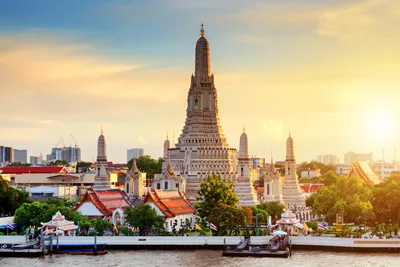
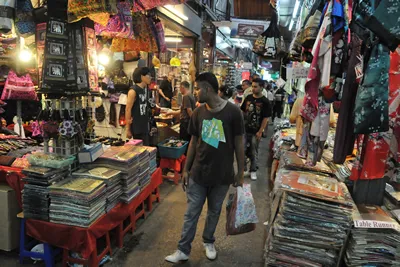
Skip the Bangkok traffic and arrive in style. The most scenic and efficient way to get to the Grand Palace is via the Chao Phraya Express Boat. Take the boat to Tha Chang Pier (N9). From the pier, it is a short, bustling walk through a market area to the white walls of the palace. The river journey itself offers fantastic views of Wat Arun and the city skyline.
Avoiding the "It's Closed" Scam
As you approach the temple, friendly locals or tuk-tuk drivers may approach you claiming that the Grand Palace is "closed" for a special ceremony or cleaning. They will then offer to take you on a cheap tour to other temples (which usually involves stops at high-pressure gem shops). Ignore this advice. Wat Phra Kaew rarely closes. Walk straight to the main gate to check for yourself.
Unmissable Highlights Nearby
Since your ticket includes access to the Grand Palace, take the time to wander through the courtyards of the royal residence. Although you cannot enter the private royal living quarters, the exterior architecture is a stunning blend of Thai and European styles.
Just a short walk from the Grand Palace is Wat Pho, home to the famous Reclining Buddha. It is one of the oldest and largest temples in Bangkok and is also known as the birthplace of traditional Thai massage. Pairing these two temples makes for a perfect day of cultural immersion in the historic district.
Respectful Behaviour
Remember that you are visiting a functioning place of worship. When inside the buildings, keep your voice low. If you sit down on the floor in front of a Buddha image, ensure your feet are tucked behind you; pointing your feet at the Buddha (or any person) is considered highly rude in Thai culture.
Your Adventure Awaits
A visit to Wat Phra Kaew is more than a sightseeing excursion; it is an immersion into the vibrant tapestry of Thai culture. From the glittering gold chedis to the solemn beauty of the Emerald Buddha, the memories you make here will define your Thai holiday. So, pack your water bottle, dress respectfully, and prepare to be dazzled by one of the world’s most spectacular wonders.

















Michael Carter
Vestibulum ante ipsum primis in faucibus orci luctus et ultrices posuere cubilia curae; Donec vel erat in nulla efficitur tempor non ut nisl. Integer venenatis eros ut dui viverra fermentum.
Sophie Wilson
Nam ut turpis hendrerit, varius nunc vel, elementum dui. Morbi vulputate dolor sit amet scelerisque egestas. Vestibulum eleifend nunc ut bibendum fermentum.
Alex Morgan
Cras non velit nec purus tempor rhoncus. Sed non mauris vitae erat consequat auctor eu in elit. Class aptent taciti sociosqu ad litora torquent per conubia nostra.