The Four Faces of Phra Phrom: Significance and Worship
When you visit the Erawan Shrine, you are witnessing a perfect example of Thai religious syncretism. Although Phra Phrom is a Hindu deity (Brahma), he is worshipped within a distinctly Thai Buddhist and animist framework. In Thailand, boundaries between religions are porous; one can be a devout Buddhist and still offer incense to Hindu gods for worldly assistance.
Understanding the Deity
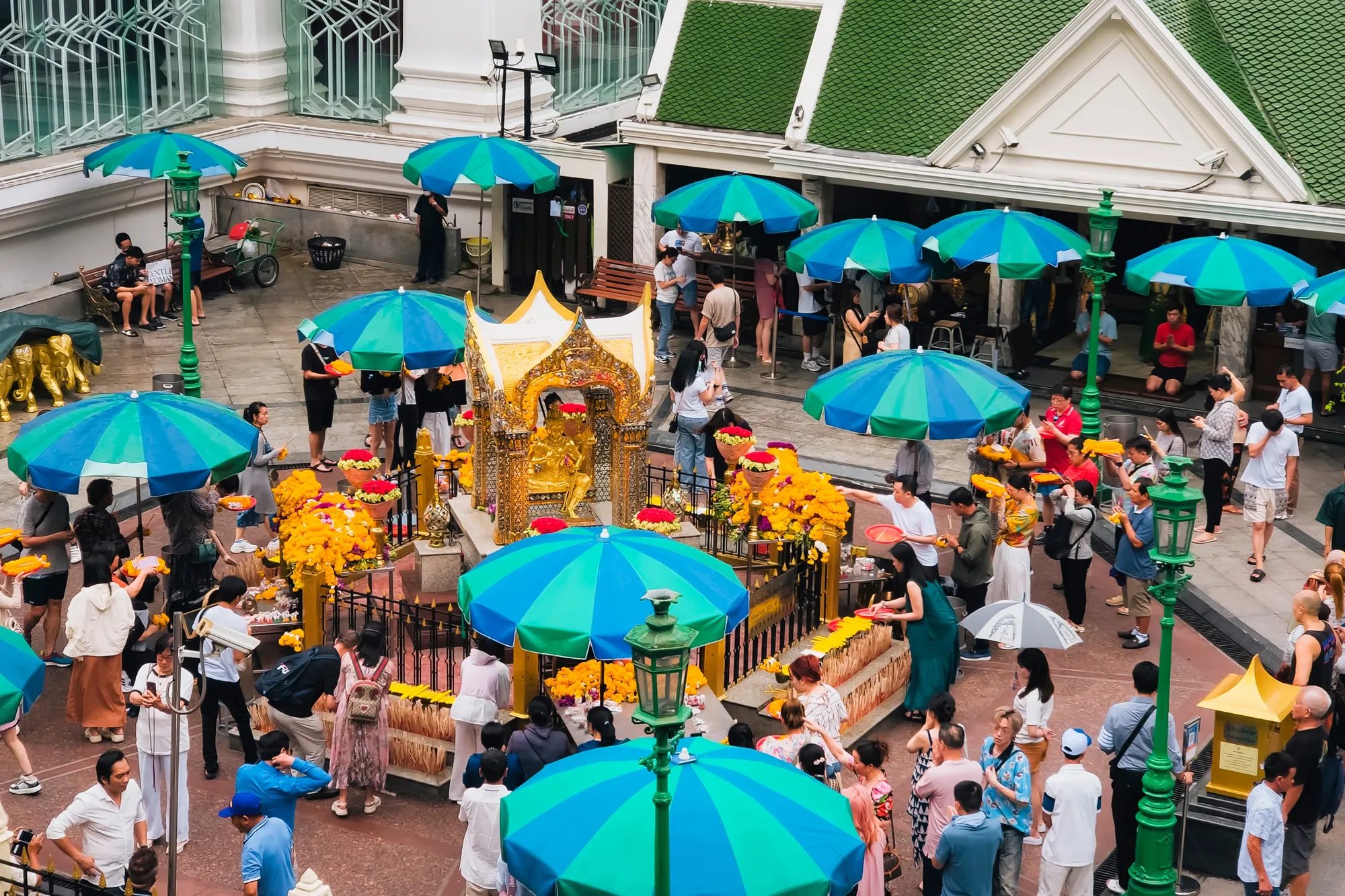
Phra Phrom is the God of Creation, known for his kindness, mercy, sympathy, and impartiality. He possesses four faces, each looking in a cardinal direction, symbolising his ability to see and offer help to everyone, everywhere. Unlike some deities who require austere penance, Phra Phrom is viewed as a benevolent grandfather figure—approachable and willing to grant wishes to those who ask with a pure heart.
The Power of Dance
As you stand by the railing, your attention will likely be drawn to the covered pavilion at the back of the shrine. Here, a troupe of dancers in shimmering, sequinned traditional costumes perform to the rhythm of a ranat (Thai xylophone).
This is the Lakorn Chatri. These performances are not for the tourists; they are paid for by grateful worshippers. When a devotee makes a significant wish at the shrine—be it for a promotion, a child, or a lottery win—they often promise (make a kae bon) that if the wish is granted, they will hire the dancers to perform for the god. The more elaborate the dance, the greater the gratitude. It is a stunning visual and auditory spectacle that keeps the energy of the shrine pulsing from dawn until dusk.
Worship Protocol: How to Make a Wish
If you wish to pay your respects or ask for a blessing, it is important to follow the local customs. You will see stalls inside the compound selling sets of marigold garlands, candles, and incense (though lighting them is currently restricted).
The standard protocol involves walking around the shrine in a clockwise direction. You should stop and pay respect to all four faces, as each face represents a different aspect of life:
- The First Face (Front Entrance): This face represents career, education, and progress in life. This is where you pray for that promotion or for passing your exams.
- The Second Face (Left): Continuing clockwise, this face is dedicated to romance and social life. It is the spot for those seeking love or harmony in their relationships.
- The Third Face (Back): This face governs money, wealth, and property. If you are looking to close a business deal or pay off a mortgage, pay your respects here.
- The Fourth Face (Right): The final face represents health and family. Prayers here are often for the well-being of parents or recovery from illness.
Traditionally, worshippers would place a garland and three sticks of incense at each face. While you may still place the flowers, be mindful of the current regulations regarding smoke.

Resilience and Restoration: A Timeline of Change
The serene smile of the golden statue belies a turbulent history. The Erawan Shrine has been a lightning rod for Thailand's triumphs and its tragedies, yet it always emerges stronger.
Overcoming Adversity
In the early hours of 21 March 2006, the city woke to shocking news: a man suffering from mental illness had attacked the statue with a hammer, shattering it to pieces. It was a moment of national mourning. However, the pieces were collected, and a new statue was cast using fragments of the original, mixed with precious metals and plaster. It was reinstated just two months later, proving that the spirit of the place was far stronger than the physical object.
Tragedy struck again on 17 August 2015, when a bomb detonated at the shrine, claiming 20 lives and injuring many more. It was a dark day for Bangkok. Yet, the response was a testament to Thai resilience. The damage was repaired, and the shrine reopened within days. Locals and tourists returned almost immediately, lighting candles and laying flowers to show that fear would not stop the spiritual life of the city.
Modern Changes (The Green Move)
In recent years, the shrine has undergone a quieter, but significant transformation. In 2020, to combat the thick smog that sometimes blankets Bangkok and to protect the health of visitors, the lighting of incense and candles was banned.
While some traditionalists miss the clouds of fragrant smoke that used to obscure the statue, the "Green Move" has made the visitor experience much more pleasant. You can now admire the intricate details of the pavilion and breathe easily, making the site more sustainable for the millions who visit.

Beyond Erawan: The Intersection of Gods
Once you have paid your respects at the Erawan Shrine, do not rush back to the skytrain. You are standing at the "Intersection of Gods." The Ratchaprasong district is unique in that it hosts several other major shrines within walking distance, creating a spiritual pilgrimage route right in the middle of the shopping district.
For the "explorer" traveller, this is an unmissable opportunity:
- Phra Trimurati (The God of Love): Located in front of CentralWorld (a short walk via the skywalk), this shrine comes alive on Thursday evenings. You will see crowds of young Thais wearing red, offering red roses and red soda, praying for their soulmates.
- Phra Khanet (Ganesha): Located right next to the Trimurati shrine, this elephant-headed deity is the Remover of Obstacles and the patron of the arts and success. It is a favourite spot for artists and entrepreneurs.
- Phra Laksami (Goddess of Wealth): Hidden on the 4th-floor terrace of Gaysorn Village (across the street from Erawan), this beautiful statue is dedicated to Lakshmi, the consort of Vishnu. It is a quieter, more serene spot to pray for wealth and beauty.
- Phra In (Indra): Located in front of Amarin Plaza, this green-skinned deity is the King of Gods who watches over humanity.
- Phra Narai Song Suban: A stunning statue of Narayana riding a Garuda, located in front of the InterContinental Hotel, offering protection and business success.

Plan Your Visit: Getting There and Practical Tips
The Erawan Shrine is incredibly accessible, making it an easy addition to any Bangkok itinerary.
Location:
The shrine is located at the corner of the Ratchaprasong intersection, nestled beside the Grand Hyatt Erawan Hotel.
Transport:
The easiest way to arrive is via the BTS Skytrain.
- Take the Sukhumvit Line to Chit Lom Station.
- Take Exit 2.
- Do not go down to street level immediately. Follow the elevated R-Walk (skywalk) towards Siam. From up here, you get a fantastic bird's-eye view of the shrine, allowing you to see the layout and the dancers before you descend.
- Take the stairs down directly in front of the shrine.
Best Time to Visit:
The shrine is open from 6:00 AM to 10:00 PM.
- Early Morning (6:00 AM - 8:00 AM): This is the most serene time. The air is cooler, the crowds are thinner, and you can watch the city wake up.
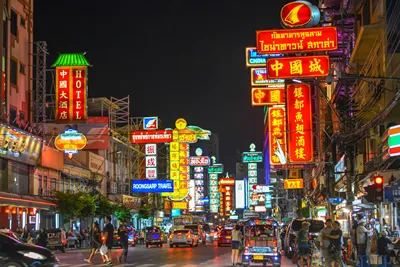
- Late Evening (8:00 PM - 10:00 PM): The shrine is beautifully lit at night. The contrast between the golden statue and the neon lights of the surrounding malls creates a magical atmosphere.
Dress Code:
While not as strict as the Grand Palace, this is still a place of worship. It is respectful to dress modestly. Avoid ultra-short skirts or sleeveless tops.
Experience the Magic Yourself
The Erawan Shrine is more than just a tourist attraction; it is a living, breathing testament to the Thai people's ability to find sacredness in the centre of the profane. It is a place where history, tragedy, hope, and commerce intersect in a way that is uniquely Bangkok.
Whether you are there to ask for a blessing, to watch the hypnotic movements of the dancers, or simply to observe the quiet dignity of a grandmother praying amidst the roar of the city, the energy of Ratchaprasong is undeniable.
Don't just read about the magic—feel it. Book your trip to Thailand today and discover why the Erawan Shrine captures the hearts of millions.

















Community Feedback