The Architectural Splendour of Wat Suthat
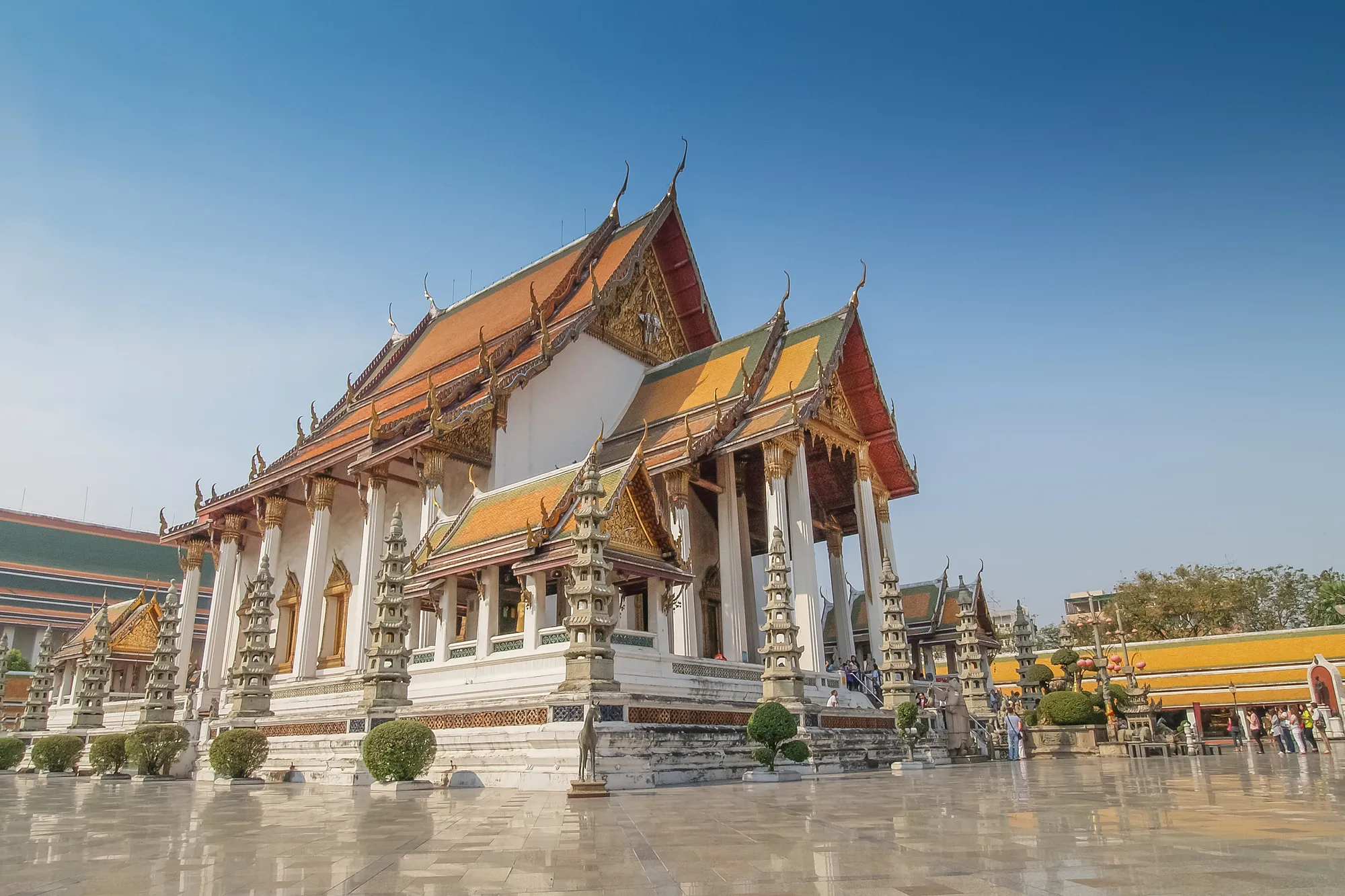
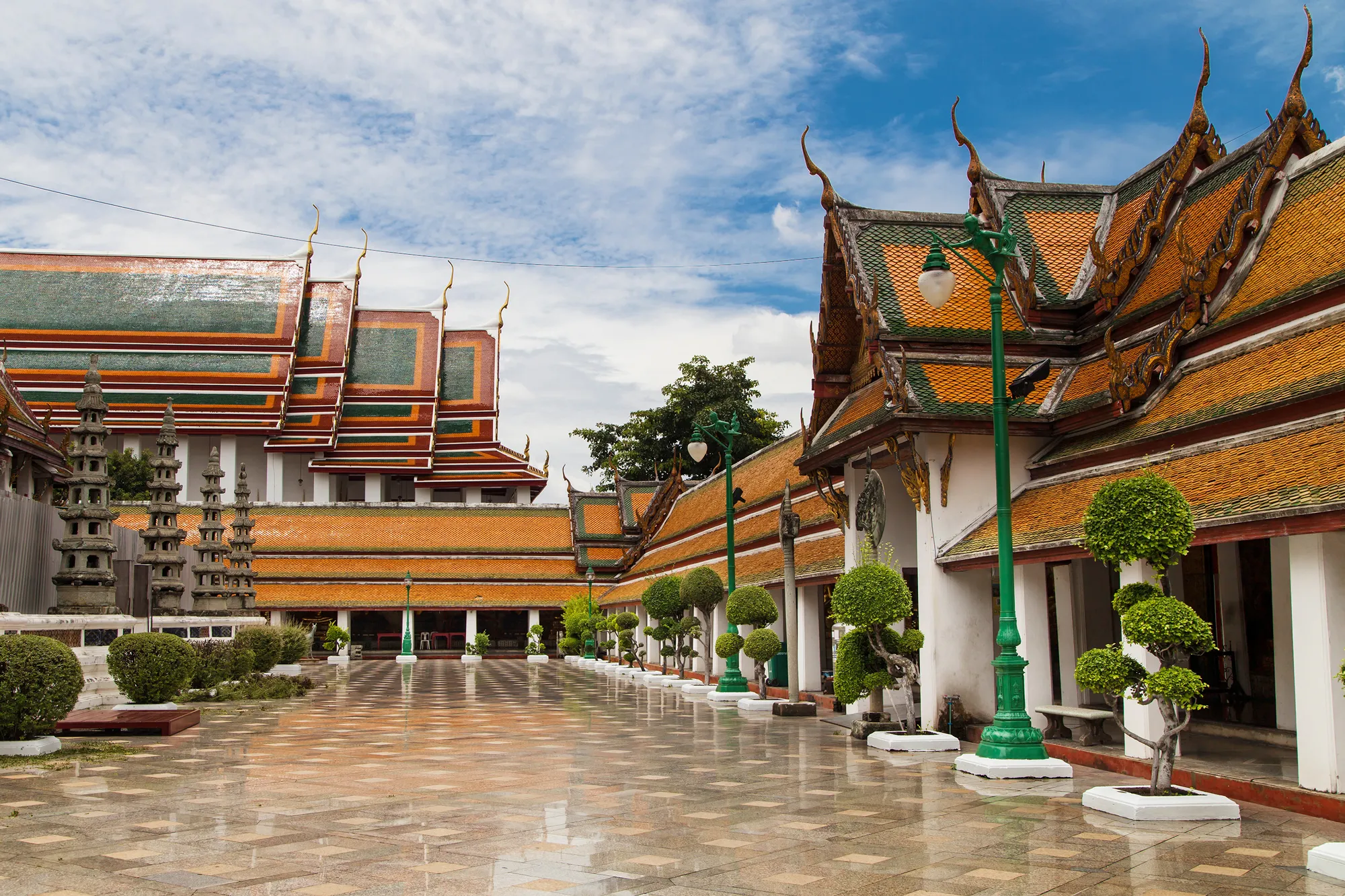
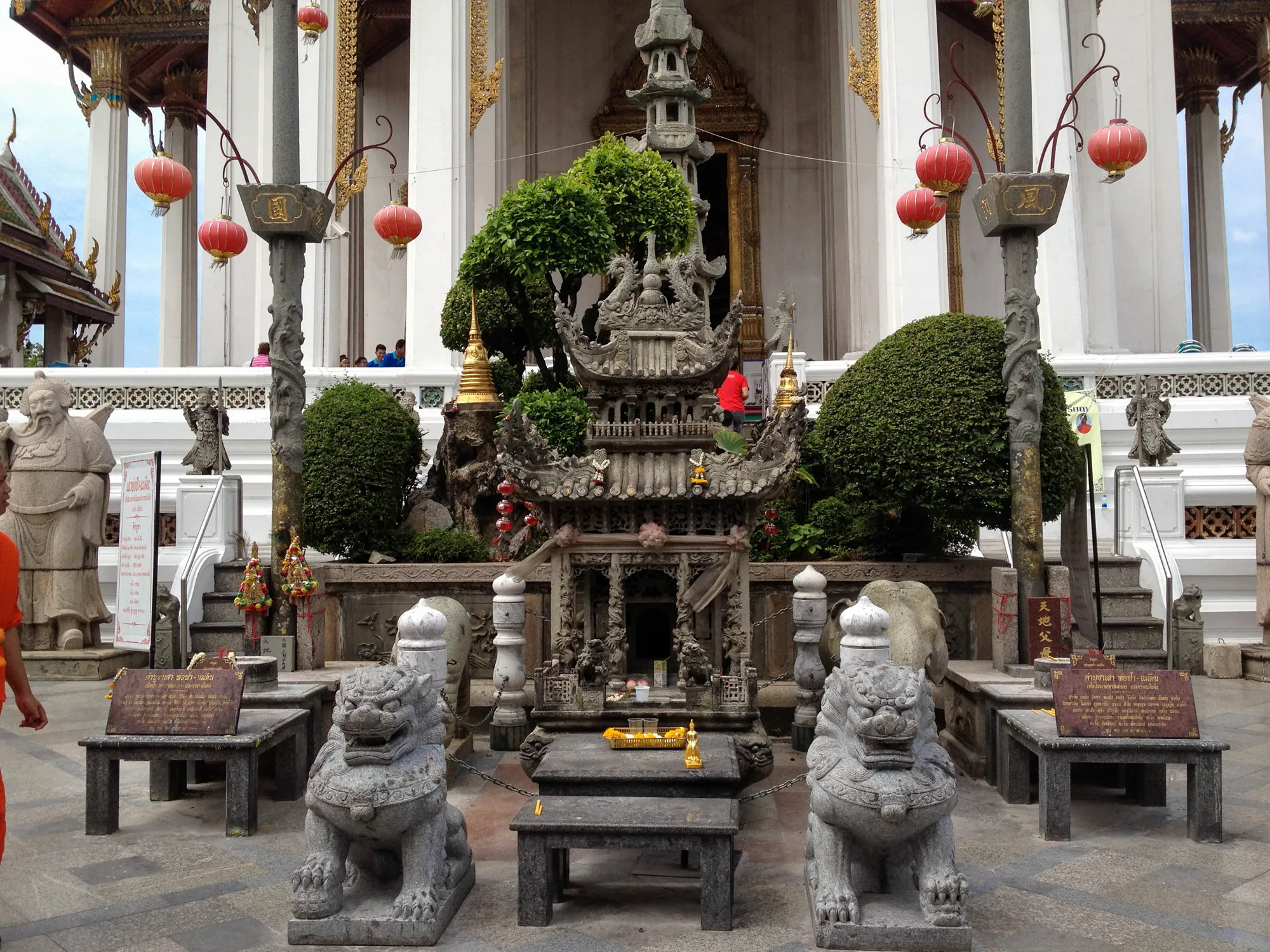
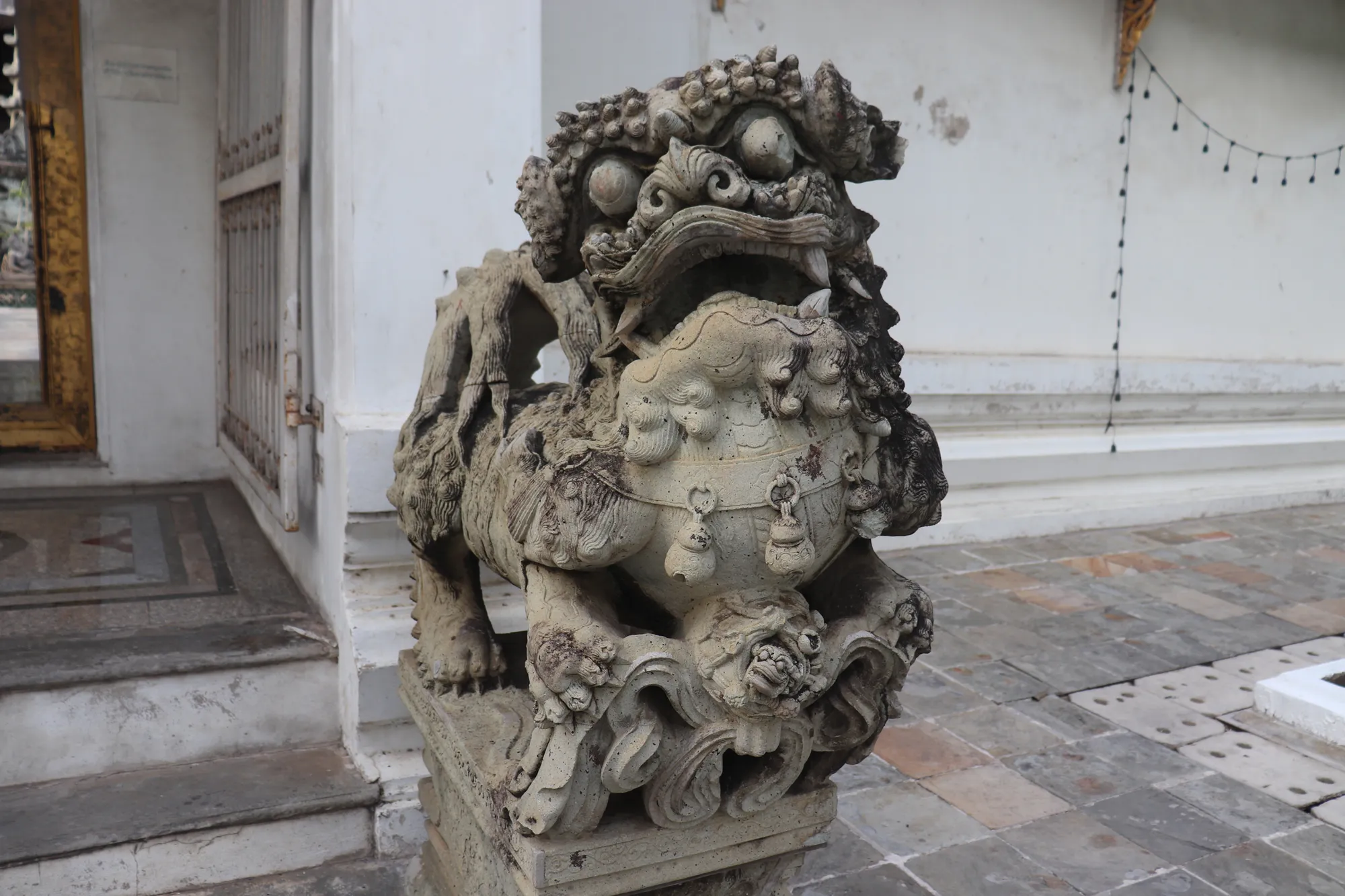
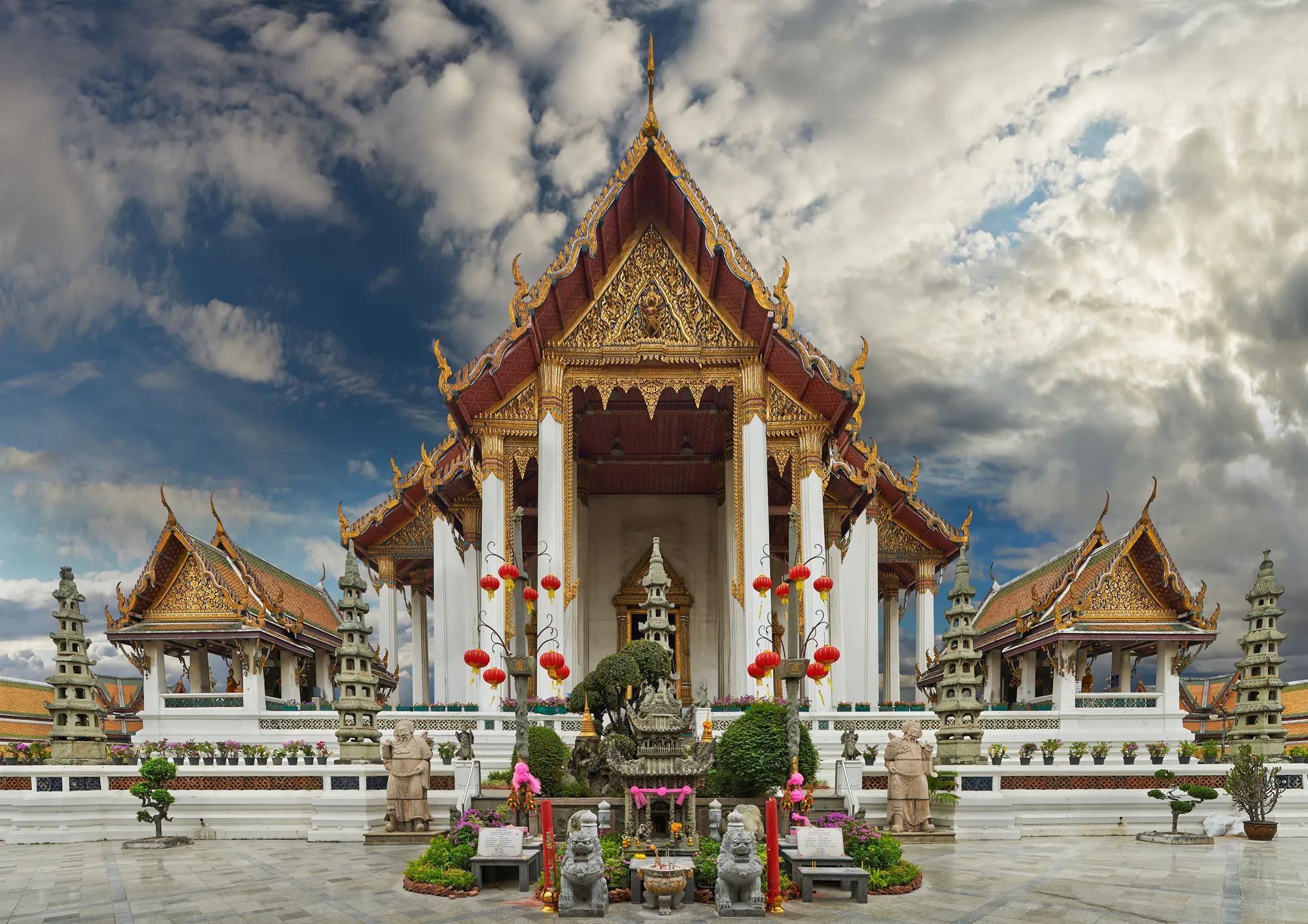
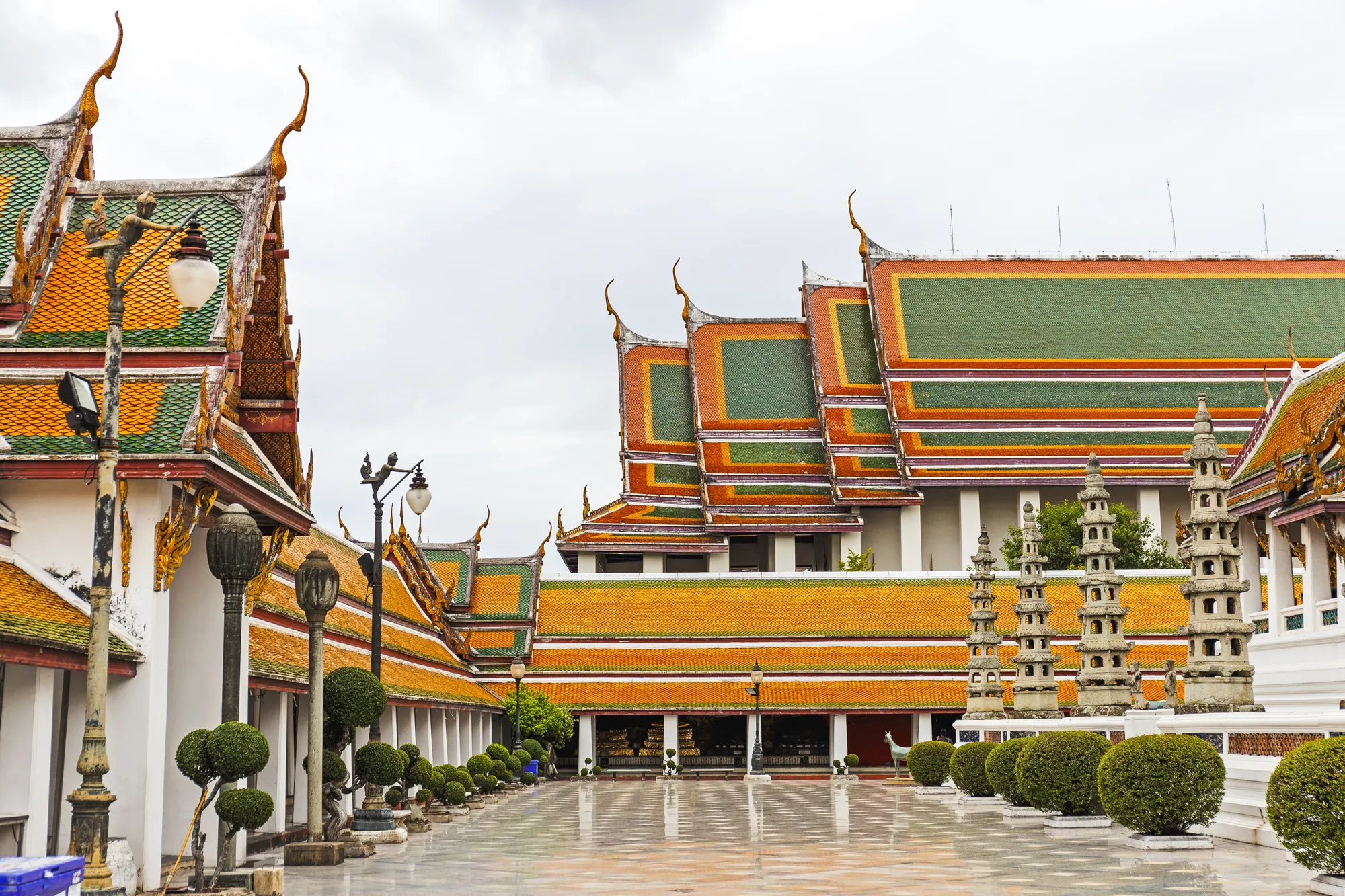
Wat Suthat Thepphawararam is not just a temple; it is a masterpiece of Thai architecture. Completed during the reign of King Rama III, this temple is famous for its grand design and meticulous attention to detail. The structure itself boasts a fusion of traditional Thai and Chinese influences, with its sweeping roofs adorned with colourful ceramic tiles and elaborate carvings that tell stories of myth and legend.
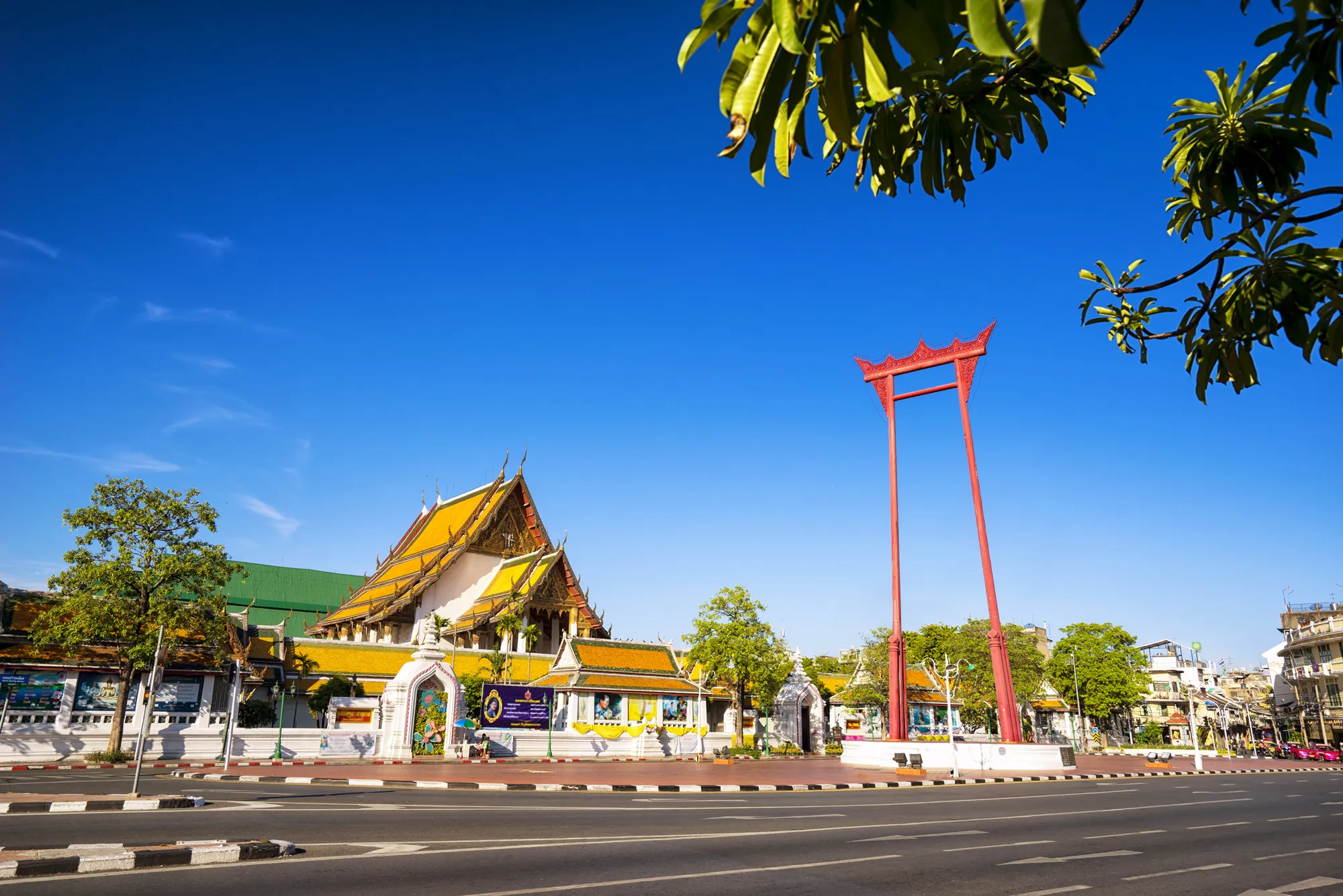
One cannot mention Wat Suthat without highlighting the iconic Giant Swing standing outside its gates. Once used in an ancient Brahmin ceremony, this red teak structure reaches a height of 21 metres and offers a striking contrast against the temple's serene backdrop. Although the swing is no longer in use, it remains a symbol of Bangkok's rich cultural tapestry, drawing in curious onlookers who marvel at its history and significance.
One cannot help but marvel at the architectural genius that defines Wat Suthat. The temple is renowned for its majestic main chapel, or ubosot, which houses the bronze Phra Sri Sakayamuni Buddha statue. This chapel is a masterpiece in itself, with intricate carvings and gilded details that exemplify Siamese artistry.
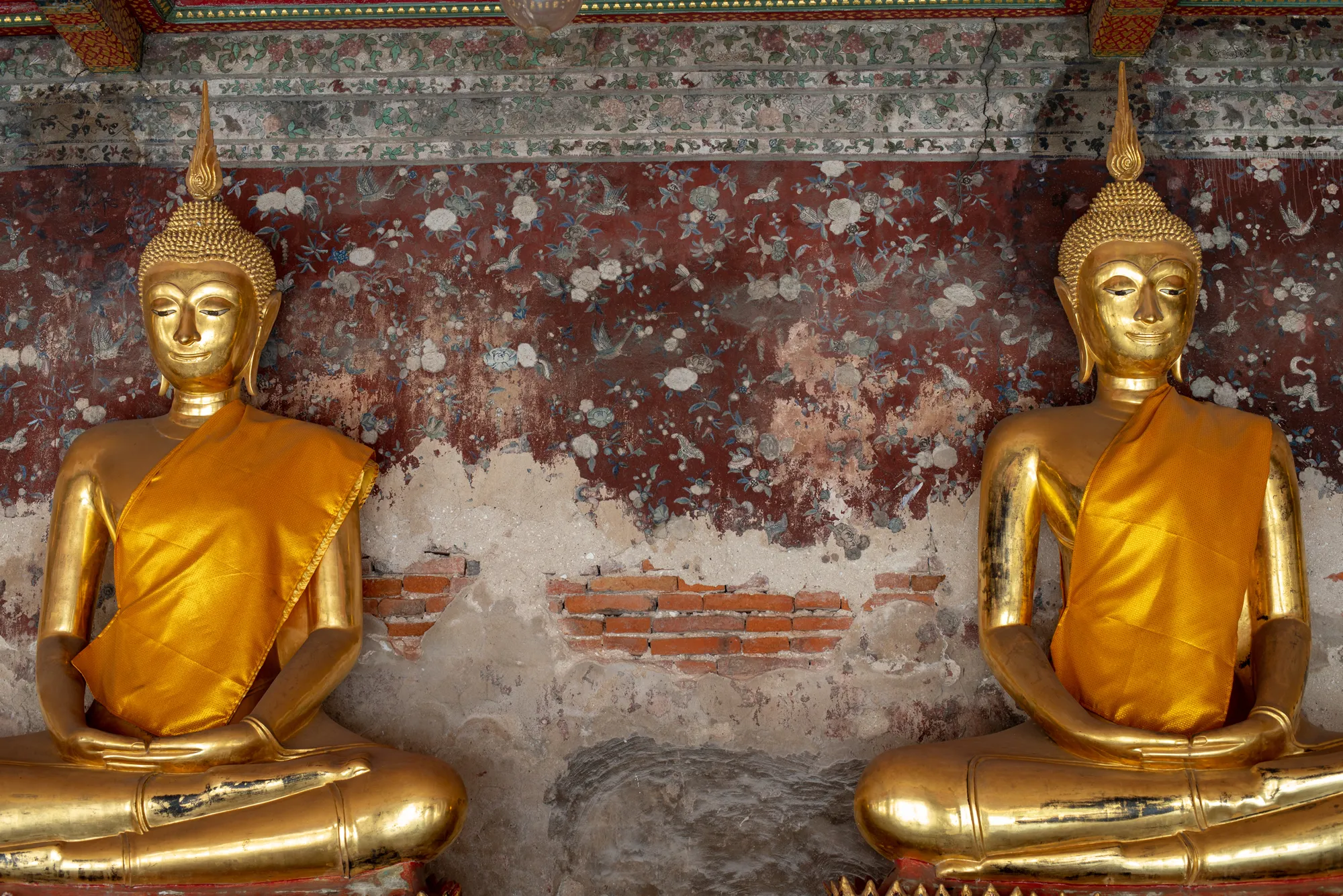
Beyond its main structure, Wat Suthat boasts a series of breathtaking murals that adorn its walls. These murals, depicting Jataka tales and scenes from the Buddha's life, are considered some of the finest examples of Thai mural art. They provide a visual narrative that complements the spiritual teachings within the temple.
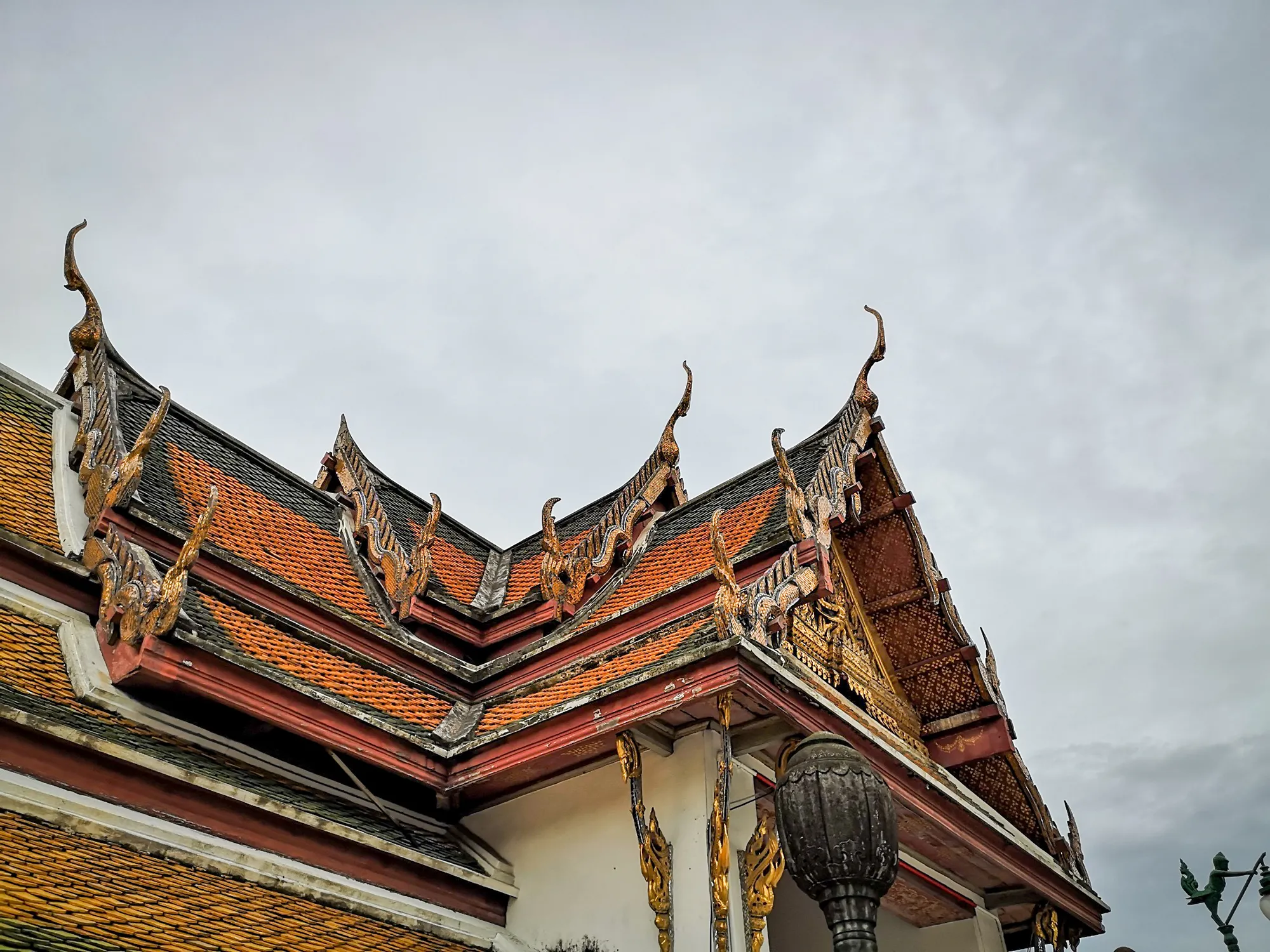
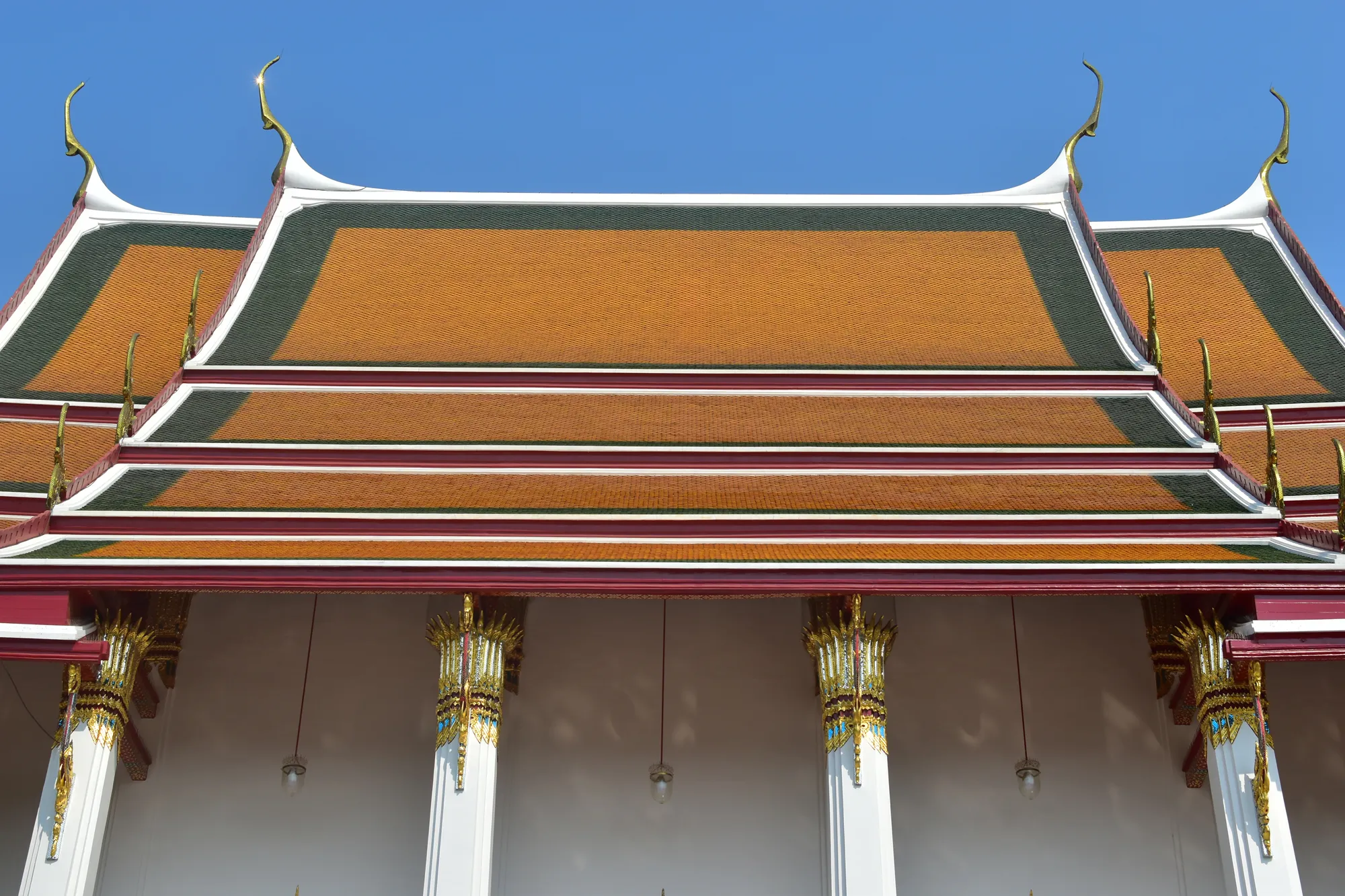
The craftsmanship extends to the temple's roof, a tiered wonder adorned with ornate tiles and guardian figures. Each element of Wat Suthat's design serves a purpose, both aesthetic and symbolic, creating a harmonious blend that captivates both the eye and the spirit.
Inside the temple, visitors are greeted by the sight of stunning murals that grace the walls of the ordination hall. These intricate paintings depict scenes from the previous lives of the Buddha, capturing the essence of Thai religious art at its finest. Each panel offers a story, inviting contemplation and appreciation, reflecting the skill and dedication of the artisans who crafted them.
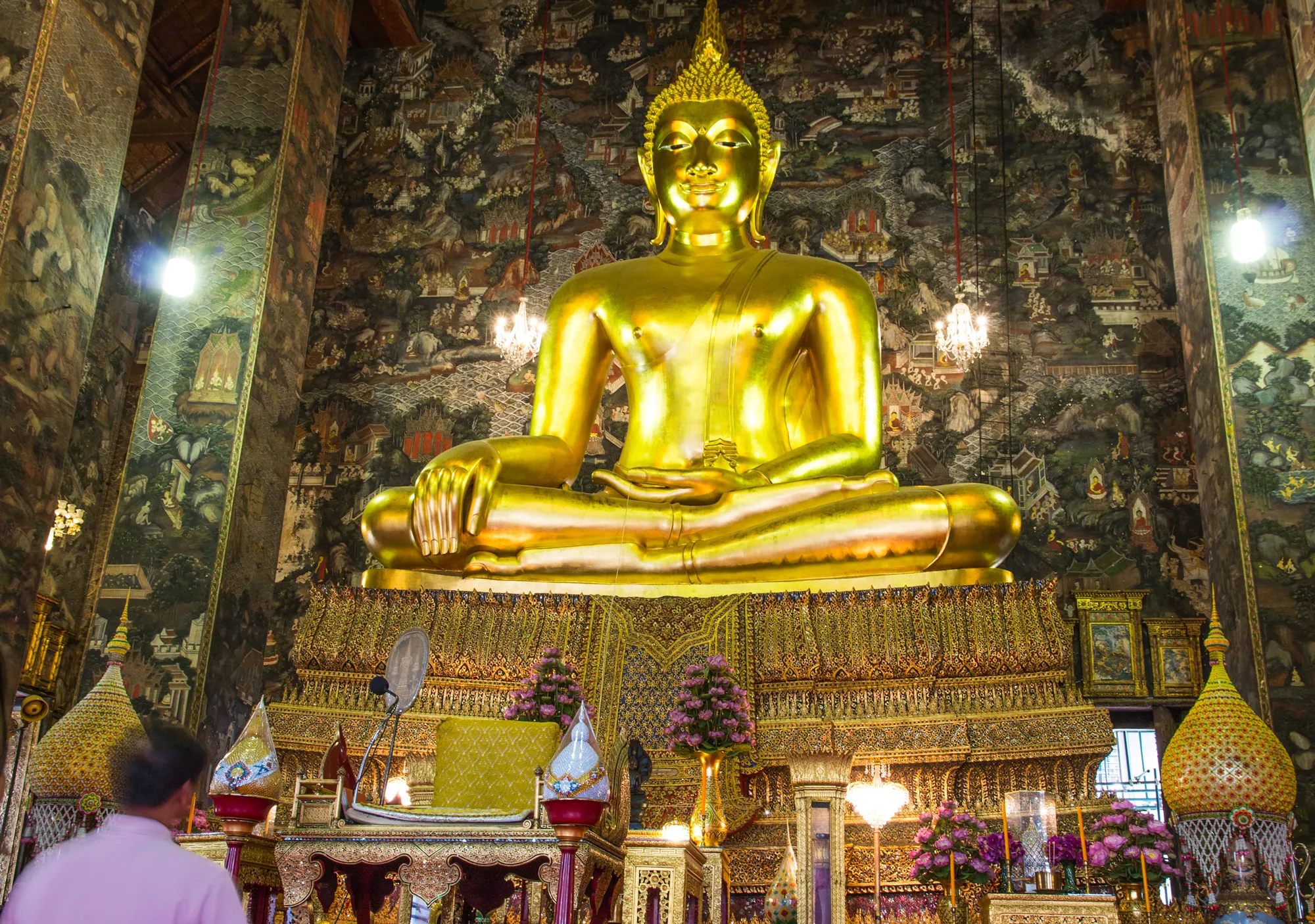
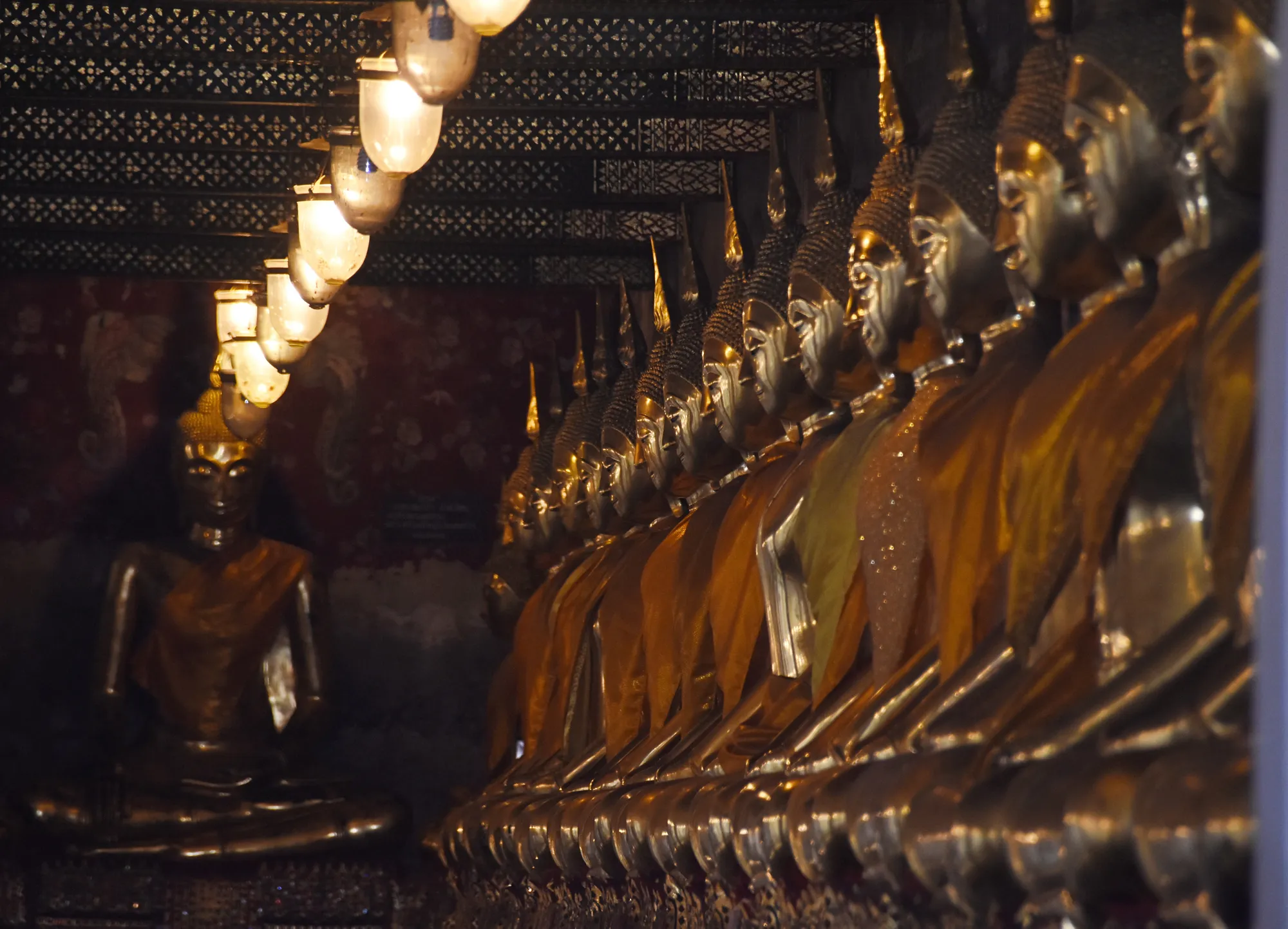
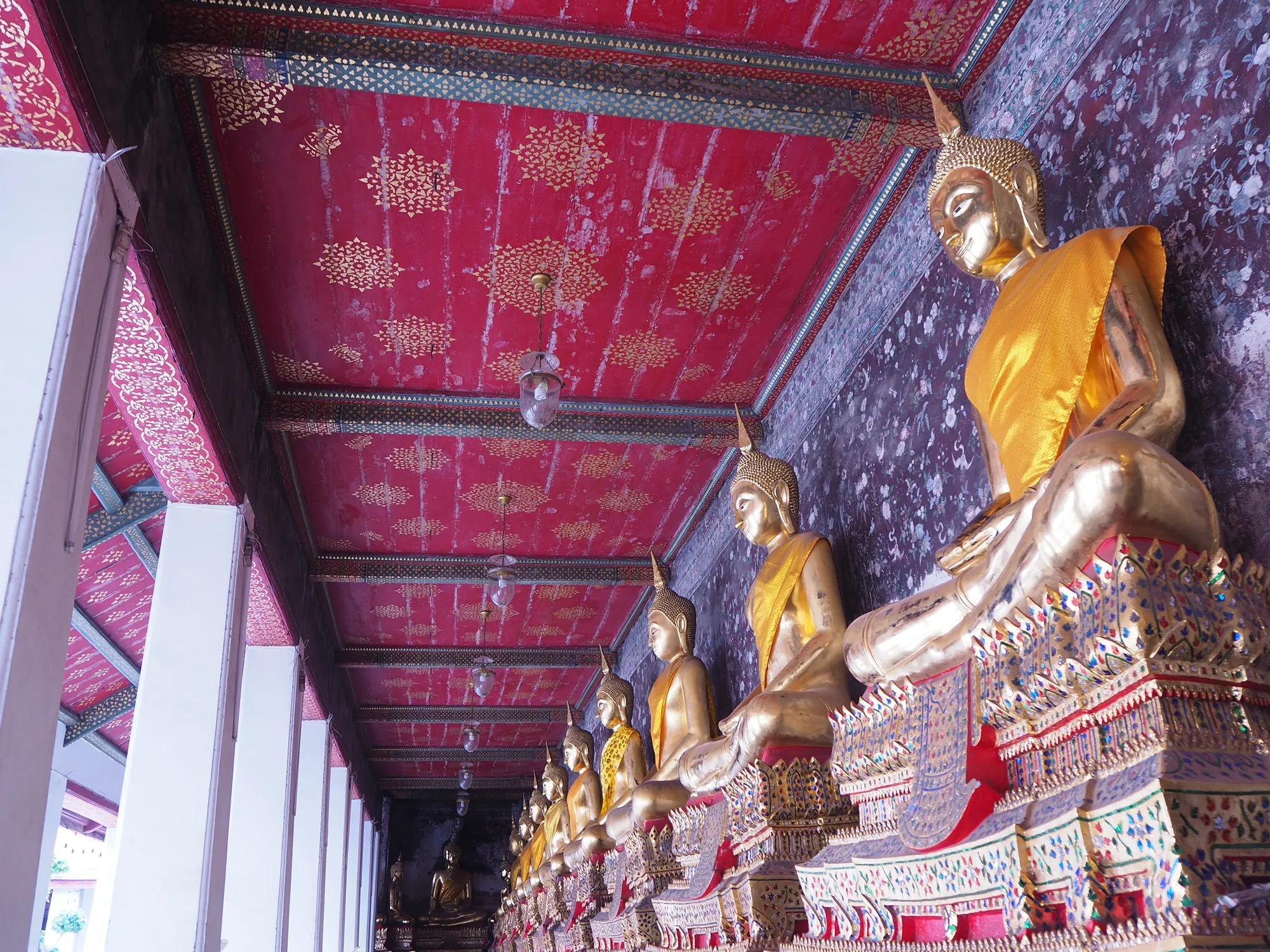
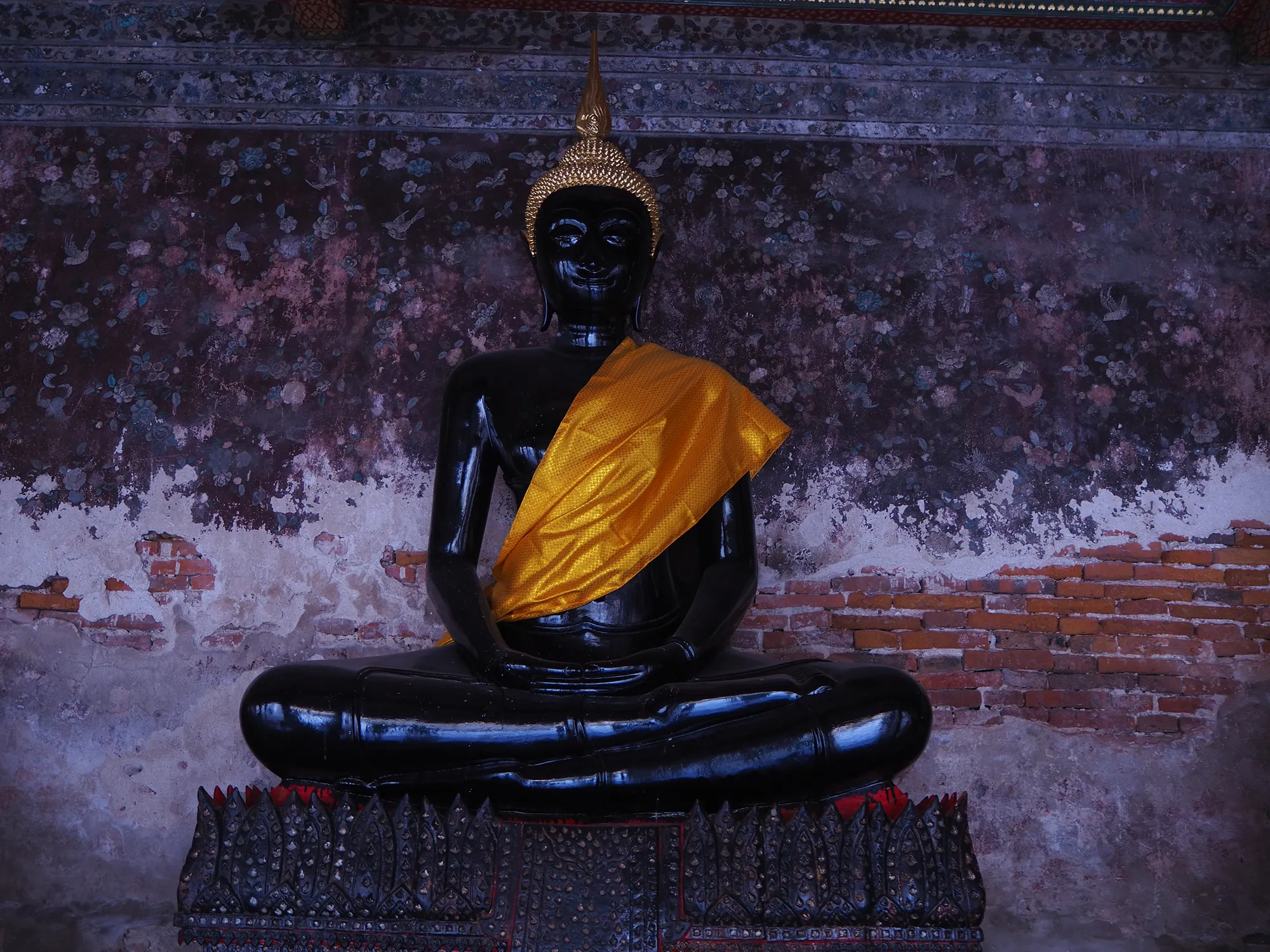
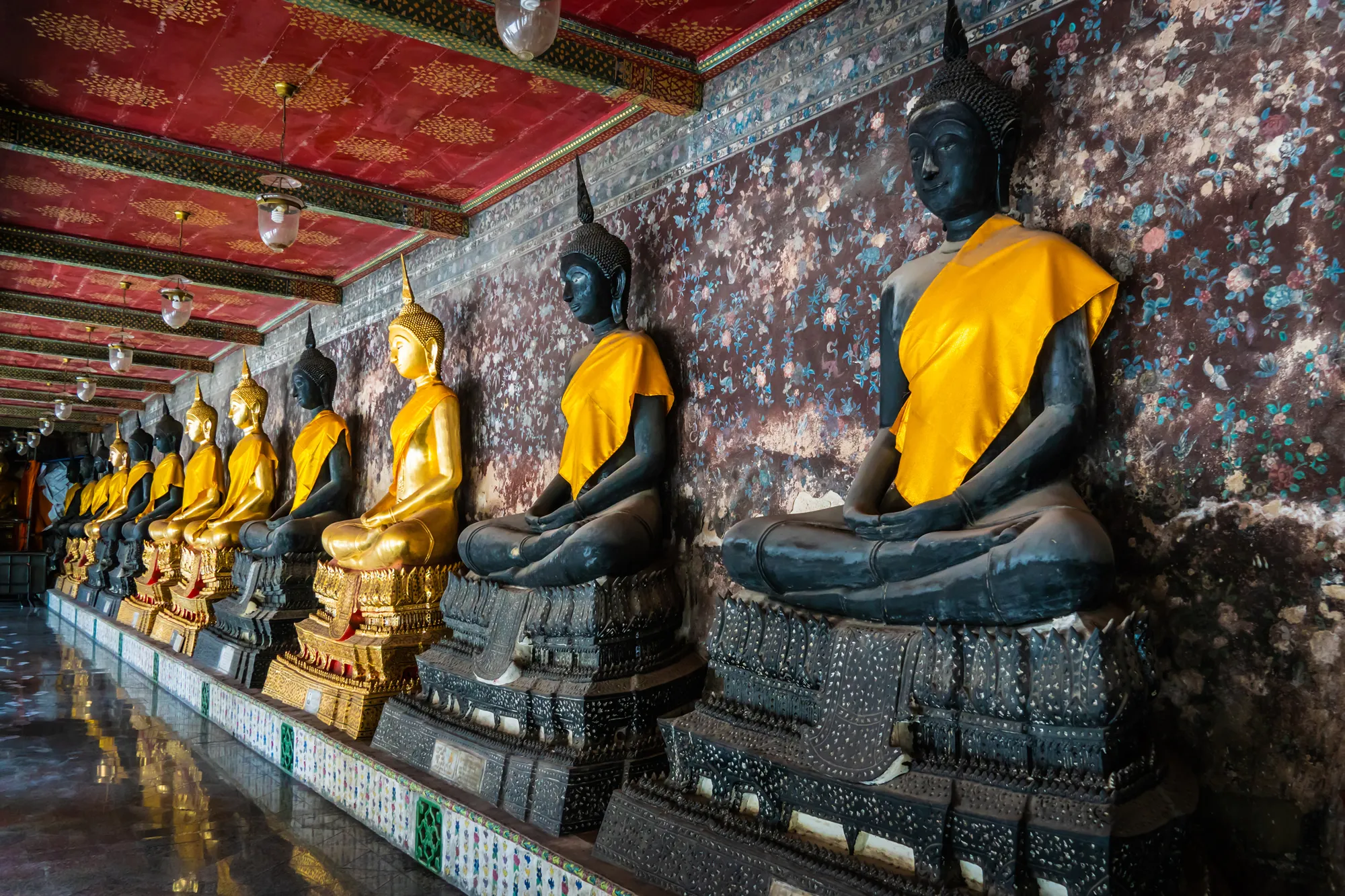
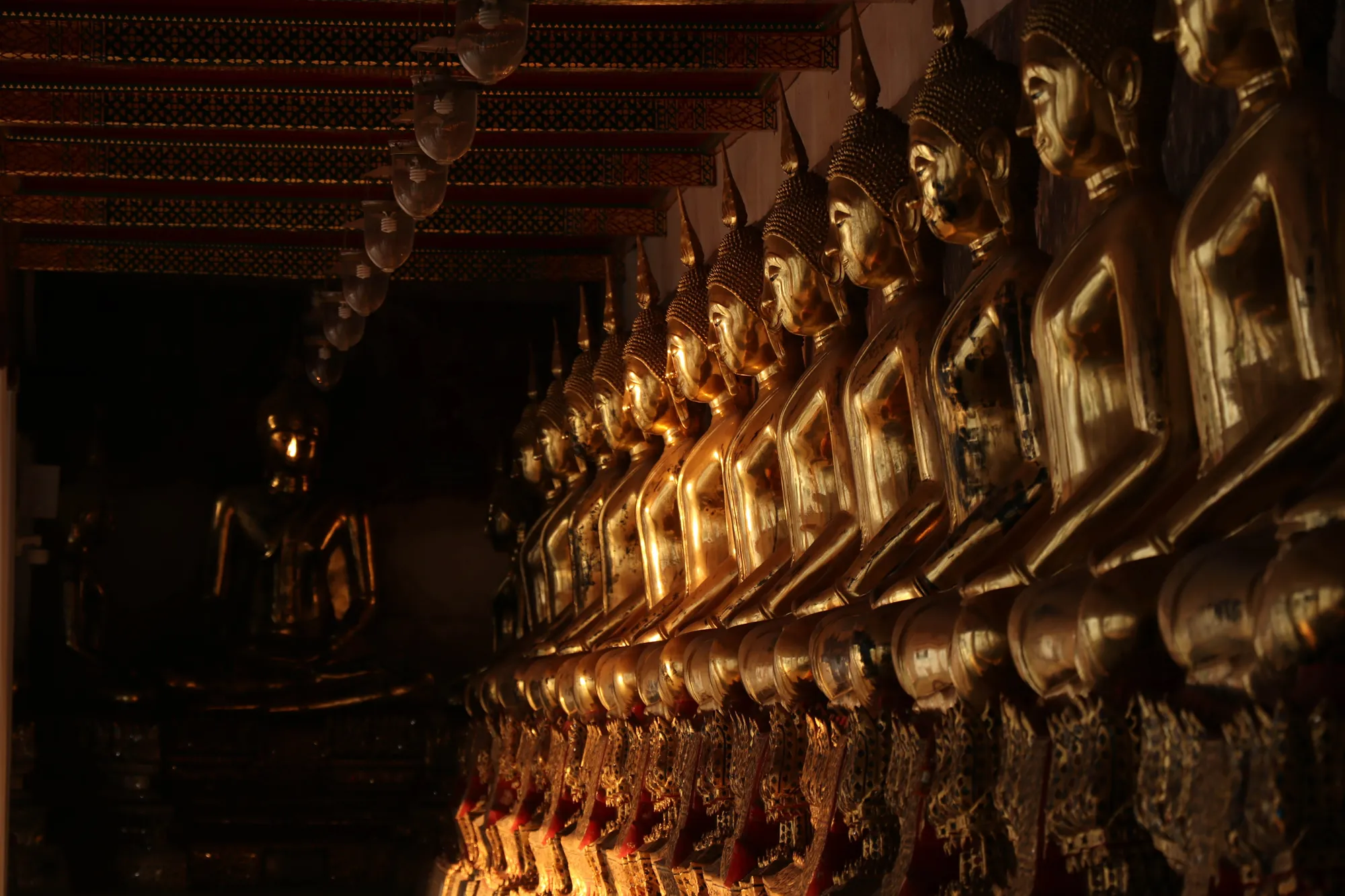
BANGKOK, THAILAND, MAY 16, 2017: Golden Buddha inside Wat Suthat Thepphawararam, Bangkok, Thailand
Architectural Features
The Grand Viharn: The main chapel houses a towering Buddha image, Phra Sri Sakayamunee, which was transported from Sukhothai and is revered for its beauty and serenity. The viharn's intricate murals depict the life of the Buddha and are considered some of the finest in the country.
The Ubosot: Known for its stunning carved teak door panels, the ordination hall is a marvel of craftsmanship. These panels depict scenes from the Ramakien, the Thai version of the Indian epic Ramayana.
The Giant Swing: Located just outside the temple grounds, the Giant Swing is one of Bangkok's most photographed landmarks. It was traditionally used in Brahmin ceremonies and is a symbol of the cultural fusion present in Thai history.
The Cultural Heritage Embedded in the Temple
Wat Suthat is more than just an architectural wonder; it is a living embodiment of Thai culture and spirituality. As one of the ten royal temples in Bangkok, it holds a place of great importance in religious ceremonies and is a hub for cultural activities throughout the year. The temple plays a pivotal role in festivals such as Songkran and Loy Krathong, where locals and tourists come together to celebrate and pay their respects.
The temple's significance extends beyond its walls, serving as a centre for community gatherings and traditional practices. Monks residing within the temple grounds offer teachings and guidance to those seeking spiritual enrichment, while the temple's tranquil environment provides a sanctuary for meditation and reflection amidst the city's hustle and bustle.
Visitors to Wat Suthat can witness firsthand the rituals and offerings made by devotees, gaining insight into the practices and beliefs that form the backbone of Thai Buddhism. Engaging with these cultural traditions offers a deeper understanding of Thailand's rich spiritual heritage, making a visit to Wat Suthat a truly enlightening experience.
Wat Suthat's role in Thai Buddhism transcends its physical beauty. It is a spiritual hub where devotees gather to participate in religious ceremonies and festivals. The temple's location near the Giant Swing, an iconic landmark used in the Brahmin ceremony of Triyampavai-Tripavai, further cements its cultural importance.
The temple is also a centre for monastic education, contributing to the preservation and dissemination of Buddhist teachings. Its monks are regarded as custodians of spiritual wisdom, guiding the faithful in their quest for enlightenment.
In the broader community, Wat Suthat serves as a symbol of unity and continuity. It has witnessed countless generations pass through its gates, each carrying forward the traditions and values that define Thai culture. Its presence is a reminder of the enduring power of faith and the shared heritage that binds the people of Thailand.
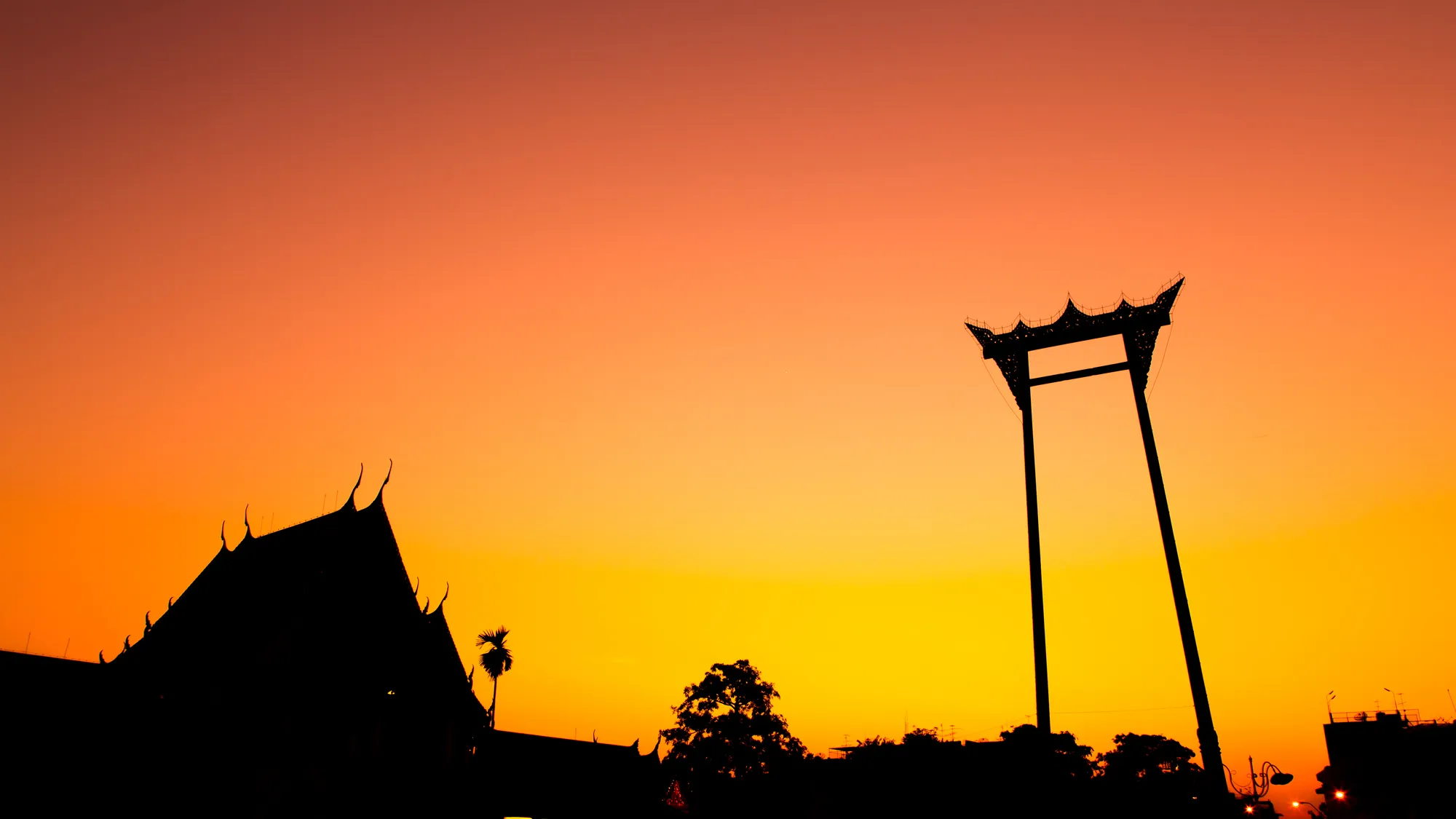
Silhouette of the giant swing at the Suthat Thepphawararam temple in central of Bangkok.
Restoration Efforts Preserving a Historical Legacy
Preserving Wat Suthat's grandeur has been a priority for both the Thai government and cultural heritage organizations. Over the years, the temple has undergone several restoration projects aimed at safeguarding its architectural integrity and artistic treasures.
These efforts have not been without challenges. The humid climate of Thailand poses a constant threat to the temple's delicate murals and wooden structures. Additionally, the bustling urban environment of modern Bangkok adds pressure to the site's conservation.
However, through meticulous planning and international collaboration, these challenges have been addressed. Restoration teams have employed advanced techniques to stabilize and rejuvenate the temple's features, ensuring that Wat Suthat remains a vibrant link to Thailand's past.
Experiencing Wat Suthat A Journey for the Senses
Visiting Wat Suthat is an experience that engages all the senses. The temple's serene atmosphere provides a tranquil escape from the city's hustle and bustle. As you explore its grounds, the sound of chanting monks and the scent of incense envelop you, enhancing the spiritual ambiance.
For cultural explorers, practical tips can enhance your visit. It's advisable to wear respectful clothing, as the temple is a sacred site. Taking part in a guided tour can enrich your understanding of its historical and religious context.
The temple's proximity to other attractions, such as the Giant Swing and the bustling streets of Bangkok, allows for a comprehensive exploration of the area's rich heritage. Whether you're a history enthusiast or a cultural traveler, Wat Suthat offers a unique window into Thailand's soul.
Wat Suthat A Timeless Connection to Thailand's Heritage
In conclusion, Wat Suthat Thepphawararam stands as a magnificent testament to the artistry, spirituality, and resilience of Thailand. Its history is woven into the fabric of the nation's identity, making it an essential destination for those seeking to understand the depth of Thai culture.
As you explore its halls, consider the generations that have contributed to its legacy and the timeless teachings it houses. Wat Suthat is more than a temple; it is a living embodiment of a nation's devotion and a beacon for future generations to cherish and protect.
For those eager to deepen their connection with Thai culture, a visit to Wat Suthat is a step towards understanding the profound significance of this remarkable temple. Engage with its history, admire its beauty, and become part of a community that values the preservation of cultural heritage.
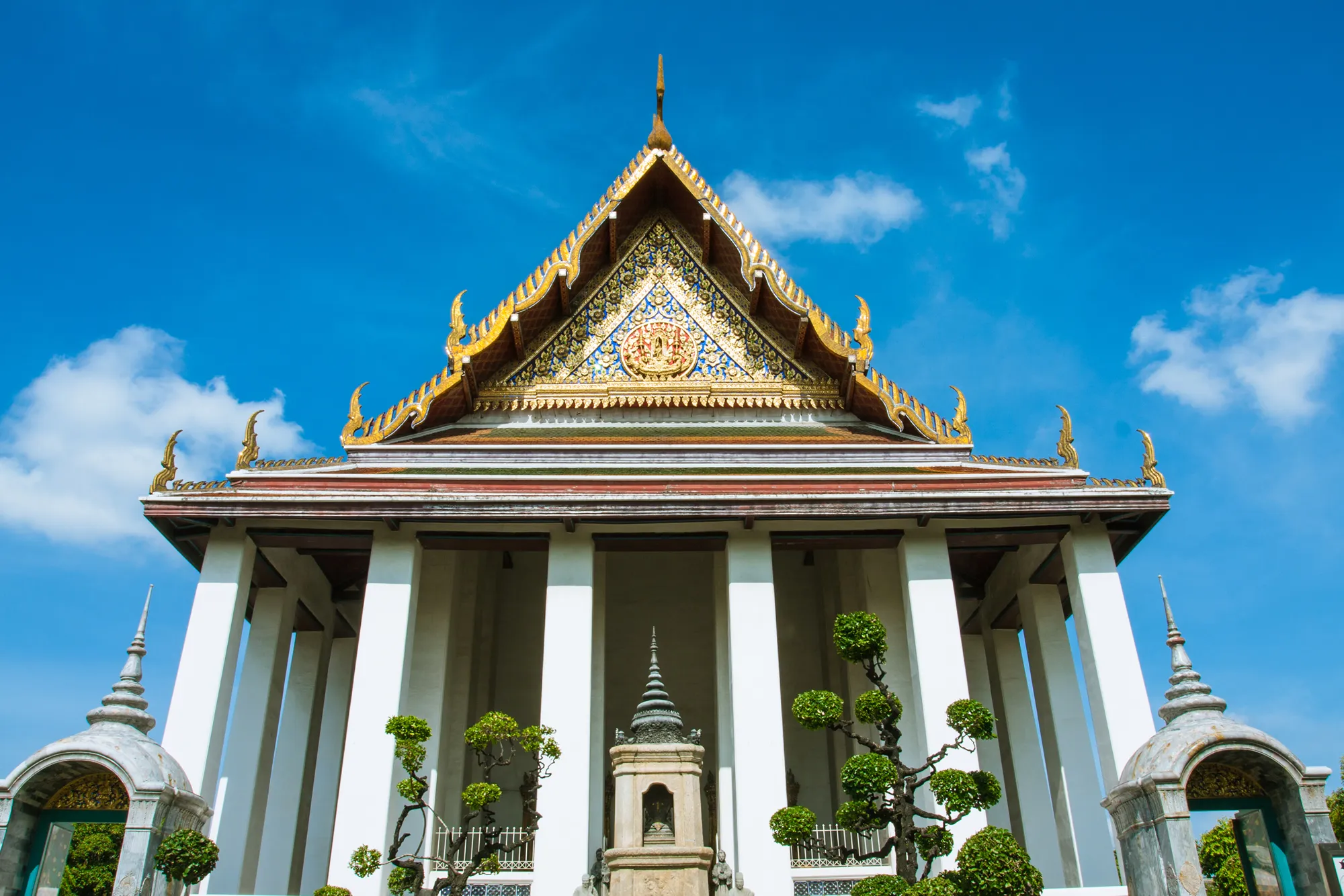
Wat Suthat Thepphawararam is a Buddhist temple in Bangkok, Thailand. It is a royal temple of the first grade, one of ten such temples in Bangkok
Exploring the Surroundings
A trip to Wat Suthat would be incomplete without exploring the vibrant surroundings that add to its allure. Nestled in the historic area of Rattanakosin Island, the temple is within walking distance of several other notable attractions. Just a stone's throw away is the Grand Palace, a dazzling complex that once served as the official residence of the Kings of Siam, offering a glimpse into the opulence of Thailand's royal history.
For those interested in local life, a visit to the nearby Pak Khlong Talat, Bangkok's largest flower market, is a must. Here, visitors can immerse themselves in a sensory feast of colours and fragrances, witnessing the bustling energy as vendors sell everything from fresh blooms to exotic plants.
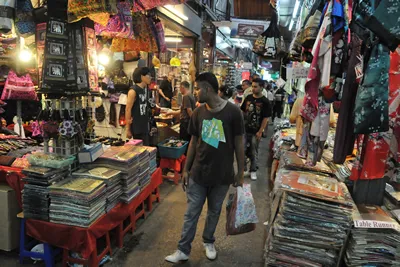
Food enthusiasts will find delight in exploring the nearby streets, which are lined with stalls offering a variety of delectable Thai dishes. From steaming bowls of noodle soup to fragrant curries and sweet mango sticky rice, the culinary offerings around Wat Suthat provide a taste of authentic Thai flavours that are sure to satisfy any palate.
How to Visit Wat Suthat
Planning a visit to Wat Suthat is easy with a bit of practical information. The temple is open daily from 8.30 a.m. to 9 p.m., with an entrance fee of 100 baht. Getting there is convenient; visitors can take the MRT to Sam Yot station and enjoy a short walk to the temple, or opt for a taxi or tuk-tuk for a more direct route.
Once at the temple, respectful attire is required, as with all religious sites in Thailand. Visitors should ensure shoulders and knees are covered as a sign of respect, and removing shoes is customary when entering the ordination hall.
To enhance the experience, consider visiting Wat Suthat in the late afternoon when the golden hues of the setting sun illuminate the temple's intricate details, creating a magical atmosphere. Guided tours are available for those interested in a deeper exploration of the temple's history and significance.
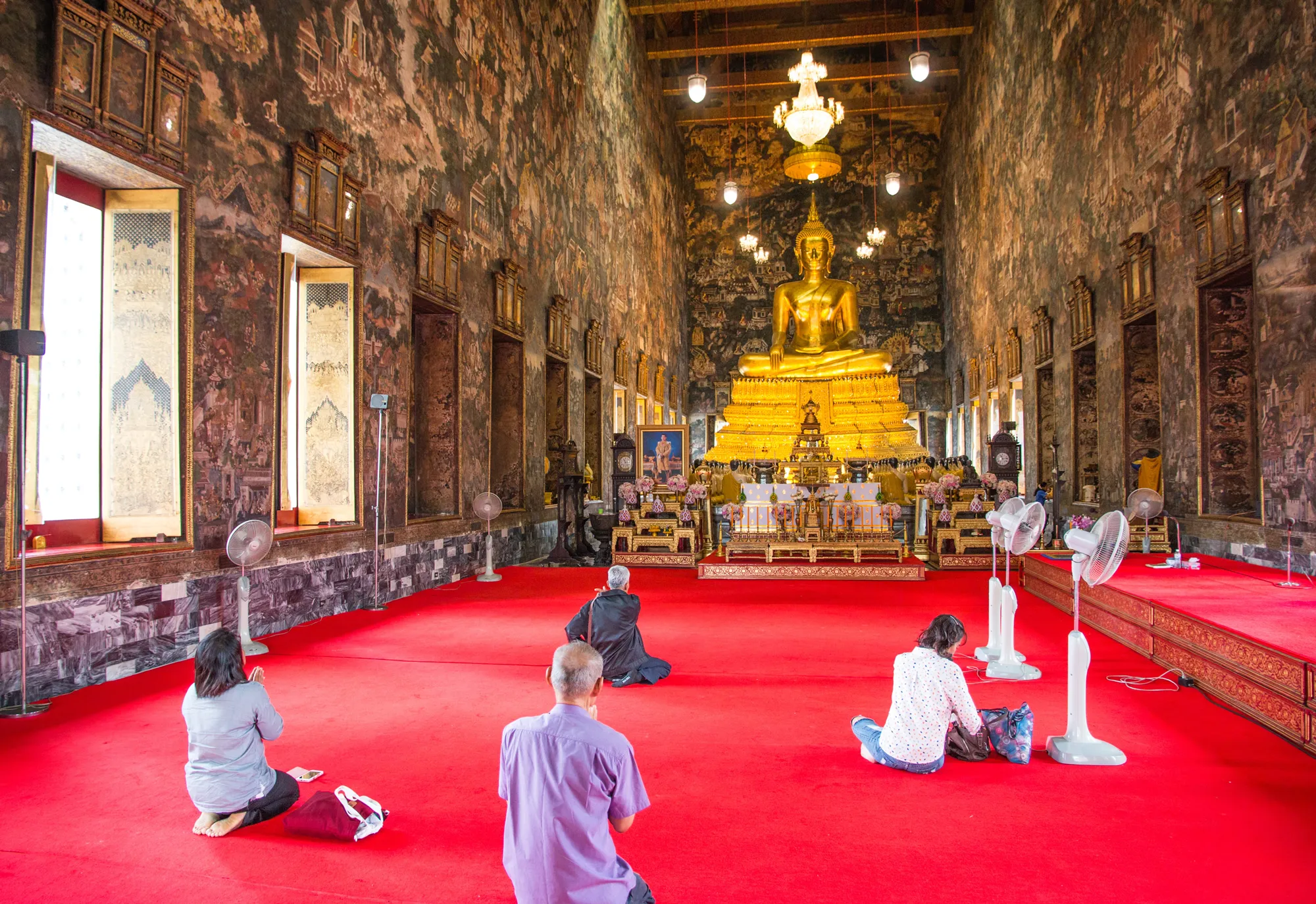
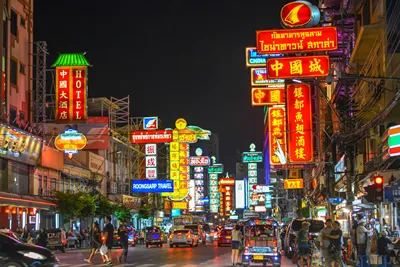
a view of Wat Traimit Withayaram Worawihan in China Town in the city of Bangkok in Thailand. November, 6, 2023
Visitor Information
- Opening Hours: Daily from 8:30 AM to 9:00 PM
- Entrance Fees: Approximately 100 THB for foreigners, free for Thai nationals
- Dress Code: Respectful attire is required; shoulders and knees should be covered
Tips for Exploring
- Best Time to Visit: Early morning or late afternoon when the light is ideal for photography and the temple is less crowded.
- Guided Tours: Consider joining a guided tour to gain deeper insights into the temple's history and art.
- Photography: While photography is allowed, always be respectful of worshippers and avoid using flash near murals.
Must-See Features
- Mural Paintings: Take your time to appreciate the detailed and expansive murals within the main viharn, which narrate the Jataka tales.
- Roof Architecture: Observe the multi-tiered roofs adorned with intricate Naga sculptures, reflecting traditional Thai architectural style.
Navigating Bangkok to reach Wat Suthat Thepphawararam can be an exciting part of your journey, offering a taste of the city’s bustling transport options. Here's a guide to help you choose the best way to get there:
BTS Skytrain and MRT
- BTS Skytrain to MRT: Take the BTS Skytrain to Siam Station and transfer to the MRT at Sukhumvit Station. From there, head to Sam Yot Station, which is the closest MRT stop to Wat Suthat. The temple is about a 15-minute walk from the station. This route provides a quick and air-conditioned journey through the city, ideal for avoiding traffic congestion.
- Estimated Travel Time: 40-50 minutes.
- Cost: Around 70-100 THB.
Public Buses
- Buses: Several public buses stop near Wat Suthat, including routes 12, 15, and 47. Buses are an economical option and offer a chance to see more of the city’s street life, though they are subject to traffic conditions.
- Estimated Travel Time: Varies based on traffic, typically 60-90 minutes.
- Cost: Approximately 10-20 THB.
Taxis and Ride-Sharing
-
Taxis: Widely available throughout Bangkok, taxis offer a door-to-door service to Wat Suthat. Ensure the driver uses the meter or agree on a fare before starting your journey.
- Estimated Travel Time: 20-40 minutes, depending on traffic.
- Cost: Typically 100-200 THB.
-
Ride-Sharing Apps: Services like Grab provide a convenient alternative to traditional taxis, often with fixed pricing and the option to pay by credit card.
Tuk-Tuks
- Tuk-Tuks: For a quintessential Bangkok experience, hire a tuk-tuk. These three-wheeled vehicles are perfect for short distances and navigating through traffic, though they may be pricier than taxis.
- Estimated Travel Time: Similar to taxis, around 20-40 minutes.
- Cost: 150-250 THB; negotiate the fare beforehand.
Walking
- Walking: If you're in the nearby area, walking to Wat Suthat is a delightful way to soak in the local atmosphere. From Khaosan Road, for example, it's about a 20-minute walk.
Tips for Navigating Bangkok
- Rush Hours: Avoid traveling during peak hours (7-9 AM and 5-7 PM) to minimize time spent in traffic.
- Navigation Apps: Use apps like Google Maps or local alternatives to check real-time traffic conditions and public transport schedules.
- Cash: Always carry some cash, as not all transport options accept cards, particularly buses and tuk-tuks.
By choosing the right mode of transport, you can enjoy a seamless journey to Wat Suthat Thepphawararam, making your visit to this historical and cultural gem a hassle-free experience.
Experience the Beauty and Richness of Wat Suthat
In conclusion, Wat Suthat Thepphawararam stands as a beacon of Thailand's architectural brilliance and cultural depth. Its unique blend of history, spirituality, and artistry offers a captivating experience for all who visit. Whether you're a cultural explorer eager to learn about Thai traditions or a tourist seeking the beauty of Bangkok's temples, Wat Suthat promises to leave a lasting impression.
As you plan your travels, consider adding Wat Suthat to your itinerary and immerse yourself in its timeless beauty. Share your experiences with fellow travellers and engage with the rich tapestry of stories that this majestic temple has to offer. For those inspired to explore further, discover other cultural destinations that await your visit, each with its own unique charm and history.


















Michael Carter
Vestibulum ante ipsum primis in faucibus orci luctus et ultrices posuere cubilia curae; Donec vel erat in nulla efficitur tempor non ut nisl. Integer venenatis eros ut dui viverra fermentum.
Sophie Wilson
Nam ut turpis hendrerit, varius nunc vel, elementum dui. Morbi vulputate dolor sit amet scelerisque egestas. Vestibulum eleifend nunc ut bibendum fermentum.
Alex Morgan
Cras non velit nec purus tempor rhoncus. Sed non mauris vitae erat consequat auctor eu in elit. Class aptent taciti sociosqu ad litora torquent per conubia nostra.